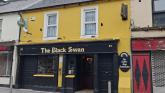
Permission is being sought to convert The Black Swan pub at Davis Street in the city centre into a residential unit
Search


05 Apr 2026

Please allow ads as they help fund our trusted local news content.
Kindly add us to your ad blocker whitelist.
If you want further access to Ireland's best local journalism, consider contributing and/or subscribing to our free daily Newsletter .
Support our mission and join our community now.
To continue reading this article, you can subscribe for as little as €0.50 per week which will also give you access to all of our premium content and archived articles!
Alternatively, you can pay €0.50 per article, capped at €1 per day.
Thank you for supporting Ireland's best local journalism!


As CEO of UL Hospitals Group Colette Cowan is navigating a staff of 4,500 through the unchartered waters of Covid-19 THE chief executive officer of University of Limerick Hospitals Group, Colette Cowan has found herself at the coalface of Covid-19.
Over the past two months she has navigated some 4,500 employees in the Mid-West through uncharted waters.
Here, in the first of a two-part interview, the former intensive care nurse and mother-of-two reveals when she first saw trouble on the horizon in terms of the coronavirus and what is has been like leading six hospitals, namely University Hospital Limerick, University Maternity Hospital Limerick, Croom Orthopaedic Hospital, St John's Hospital, Nenagh Hospital and Ennis Hospital, through a global pandemic.
THREAT OF COVID-19
I was studying Asia for a long time because my daughter is out there travelling the world. I was watching what was happening out there so I was planning in my own mind for my team if we were to be hit, how bad it would be. We started talking about the coronavirus in general in January.
We started looking at what we had then. We acted immediately. We all came in on the evening of March 4th and we were in the hospital until nearly 3am setting up everything because we had our first indication that we needed to start locking down. I think that is what I will remember my staff for - that they actually got control of the situation very quickly and we are in control now, thankfully. I’m very, very lucky to have a very good microbiology team. To them this is their Olympics. They are geniuses at managing contagions.
PREPARING FOR THE SURGE
If we go all the way back to seven weeks ago - it’s eight in our case - that’s when we actually stood up the Hospital Crisis Management Team and the Executive Crisis Management Team to get ready for the surge. We could see it happening in the likes of Europe and in particular Italy. Of course at that time we had to reconfigure the entire hospital group especially at UHL to get ready for a critical care surge.
Normally, we would have a single floor 10-bed ICU intensive care facility where patients could be ventilated and we had to change the Critical Care Block significantly over a very short period of time to provide additional intensive care beds and critical care high dependency beds. That was done with huge effort by the staff and with the compliance of staff from the other hospitals in the group and particularly from the theatres.
We ended up having the capacity for two floors in case patients arrived that required ventilation. On the first floor we have 12 ICU beds and then a further 16 ICU or high dependency beds if required.
FLATTENING THE CURVE
Thankfully, with the big campaign in Ireland and the public adhering to social distancing and really making an effort, the curve was flattened which did prevent a big surge on our ICU.
However, we still are seeing significantly sick people in intensive care over the two floors.
Some of those are ventilated and some of those are Covid positive. What we are finding is that they are sick for a long time so they are many days in intensive care, whereas traditionally you go into intensive care and hope you recover over a shorter period. That aside we are glad we didn’t have to go into a major surge. We are managing it and in my view the surge has changed somewhat, due to the good work of the country, into a surge of a lot of sick patients coming into the hospital both Covid and non Covid.
You see that in our figures every day. So we are surging differently to a critical care burden. We are surging at ward level with a lot of admissions.
STAFFING
We have 4,500 staff in the group. A few weeks ago we had anything up to 300 and more staff out on any given day. On a given day we would have 1,100 staff working in UHL. As of today we have just over 170 out so we have seen an improvement in the amount of staff who have to go out as a result of close or casual contact (with Covid-19) which is evidence that the personal protective equipment is working. Staff are protected so they are not becoming close contacts.
UHL is very busy. We have seen high numbers during the week. The wards are full. What we don’t have is elective surgery happening so a lot of staff are redeployed and that is definitely helping the service. We will be very carefully phasing how we go back to normal in the coming months. But at the moment we are just doing emergency surgery, trauma surgery and we are looking at the more urgent elective cancer surgery from this week.
All the staff are redeployed so we are actually managing the high numbers out because of that along with the fact that we have a big recruitment campaign underway and we have had a lot of applications. We had over 500 applications for all sorts of jobs within the group and we have 100 nurses starting over the next three to four weeks which fits nicely with what we are trying to do with capital development.
CRITICAL CARE DOCTORS
In the initial stages when I convened the Executive Crisis Management Team - which have met twice a day over the last eight weeks - while we were awaiting the surge and closed the services we had extensive training of staff particularly in critical care.
We were lucky that some new consultants had already been interviewed - anaesthetists in particular - pre- Covid, who actually had start dates this month and next month. We equally have a team of doctors from all over the world who are coming home and some of them are starting in Limerick - that’s the nationwide scheme to go back to work for your own country. So we are actually OK and we can manage the current surge but if a major surge hit it would be a challenge for us to make sure that we could focus all of our attention on the care of the critically ill patients. We are training staff continually.
BE ON CALL FOR IRELAND
(There were reports last week that just 54 of the 73,000 people who answered the Be On Call for Ireland recruitment drive in the battle against coronavirus have taken up posts)
I think what happened with the Be On Call for Ireland is that there was a huge response from the whole country. A lot of people wanted to help out, we see that every day, but the number of professionals was a little bit lower because, of course, they are already employed in the country or else they are on their way back.
So at the last count for me there were eight nurses who came out of that who have started with us so that’s very good. I didn’t expect high numbers to come into the professional grades for us because, as I’ve just said, a lot of them are already gainfully employed elsewhere. We have a good footfall of staff starting with us and we are encouraging that more because we have a 60-bed block and a number of other beds being opened so those staff will have a future with us and I hope they stay with us.
They have all started out on initial Covid contracts but they have a future in our hospital group if they so wish and we would be happy to keep them.
MCMANUS DONATION
(Last week it was announced that a skin temperature monitoring system has been introduced at UHL to minimise the risk of Covid-19 infection among patients and staff at the region's main acute hospital. Other hospitals in Ireland with thermal screening include Beaumont Hospital and Navan).
Thanks to Adare Manor and the McManus family we have put in one thermal screening unit which they donated to us which captures the temperature of patients and staff.
Hundreds of staff are coming in every morning. If it’s over 37.5 they are reviewed and sent home if necessary.
And they very kindly donated two more to us in the last week so we are putting them in on all the entry points at the hospital.
COMPLACENCY
What I’m finding and probably what everybody is finding is that it is getting harder and harder for people to just confine themselves at home. There seems to be more people on the roads for sure. They may be going to and from work, however, I definitely think there is some complacency and that would concern me.
For the young people I think it is very tough for them because their nature is to be mixing with their peers so I know it’s been very difficult but they are very, very lucky to have social media. Of course we wouldn't have had it when we were young.
What I feel is they see in the media ‘X number of patients have died’ and then when you look at the mean age, and they are intelligent beings, they will see that the people dying are between the ages of 70 and 85 and when you are young you think you are invincible and you don’t think about mortality a lot. But I can tell you that there are young people and young adults coming into the hospital and they are very sick (with Covid-19). We maintain confidentiality in looking after them but they are quite sick and equally we have had sick children as well.
I think what the youth can do for us is continue to do what they are doing - stay at home because they really are protecting us and they are responsible for flattening the curve. They have prevented our staff from getting Covid-19 which is the other thing which allows us to give care and thankfully we have had no healthcare worker deaths.
Next week Ms Cowan discusses the workings of the ICU, the situation in the ED, the plan for winter, capital projects and the responsibility that goes with managing six hospitals.

Subscribe or register today to discover more from DonegalLive.ie
Buy the e-paper of the Donegal Democrat, Donegal People's Press, Donegal Post and Inish Times here for instant access to Donegal's premier news titles.
Keep up with the latest news from Donegal with our daily newsletter featuring the most important stories of the day delivered to your inbox every evening at 5pm.

This publication supports the work of the Press Council of Ireland and Office of the Press Ombudsman, and our staff operate within the Code of Practice of the Press Council. You can obtain a copy of the Code, or contact the Council, at www.presscouncil.ie, Lo-call 1800 208 080 or email: info@presscouncil.ie.