Prayers are being said for Scarlett Faulkner, 29
Search


26 Mar 2026

Please allow ads as they help fund our trusted local news content.
Kindly add us to your ad blocker whitelist.
If you want further access to Ireland's best local journalism, consider contributing and/or subscribing to our free daily Newsletter .
Support our mission and join our community now.
To continue reading this article, you can subscribe for as little as €0.50 per week which will also give you access to all of our premium content and archived articles!
Alternatively, you can pay €0.50 per article, capped at €1 per day.
Thank you for supporting Ireland's best local journalism!

The late Dylan McCarthy from Kilmallock

EAMON McCarthy had been having a great night. Along with his son Dylan, he had gone out to celebrate the birth of his grandchild, with singing, dancing and rounds of drinks.
Within hours however, Dylan would be fatally injured, his father witnessing his struggle to hold onto life after he was punched and kicked to the ground outside a pub.
“I knew my son was gone at that stage,” Eamon McCarthy told the Central Criminal Court. “His eyes were rolling in his head and he was gurgling.”
It was the State's case that, during this melee outside the Bellyard pub in Monasterevin, Dylan McCarthy received a number of punches - from Sean Kavanagh, aged 26, of St Mary’s Lane, Church Avenue, Monasterevin and one from Calvin Dunne, aged 24, of Abbey View, Monasterevin - that knocked him to the ground.
The prosecution argued that Dunne then kicked Mr McCarthy’s exposed head.
It was the prosecution's position that the two accused men inflicted the injuries that caused Dylan McCarthy’s death.
Calvin Dunne, however, said he did not kick Dylan McCarthy in the head, while both accused maintained that it was Dylan and his father who were the aggressors and that they had been acting in self-defence. It fell on the prosecution to disprove this beyond reasonable doubt.
ENJOYING A NIGHT OUT
In his direct evidence to the trial, Eamon McCarthy said he had travelled to Monasterevin from his home in Limerick on August 21, 2022 with his son Dylan and Dylan’s partner Aoife Talty to celebrate the birth of his daughter Orla’s baby.
He said they arrived at around 3pm, watched a soccer game and had some food and drinks before deciding to go to a pub at approximately 6:45pm. Mr McCarthy told the court that his wife Marita stayed at home to look after their grandson while he, Dylan, Ms Talty, Orla and her partner Glen Brogan went out.
Mr McCarthy said that when they left the first pub they heard music coming from another establishment, which he now knows to be the Bellyard pub, with someone in the group saying “we’ll go in for one”.
This was around 11:45pm, he said, and after ordering drinks, the group started to dance to the band who were playing and were all “enjoying ourselves”.
Mr McCarthy said when a drink was spilled, a barman came out and was cleaning the floor with blue kitchen roll when Dylan’s girlfriend said she would give him a hand. “She put her leg on it and he basically pushed her leg away and said ‘F**k away from it’.
“I said: ‘You’re a gas man to do that to a woman’,” Mr McCarthy told counsel.
“He immediately turned to me and said: ‘Do you want a piece of me?’. I said ‘no we’re here to enjoy ourselves’.”
Mr McCarthy claimed the barman then “went for” Glen and he “got in-between” them. He said there was another barman who “came in on Dylan’s face”.
He said he didn’t know any of these men and that after he broke up what was happening, the barmen began “dragging” Aoife and Dylan out the door.
He said when he got to the porch at the front door, he saw a man who had Dylan “by the throat” and he was “gouging his eyes”.
“‘That’s my f***ing son’ that’s what I said,” Mr McCarthy told the jury. “I pulled your man’s hands off Dylan. I got a dig into the back of the head and I was shoved out the door.”
He said at this point he put his foot in the door to stop them closing it and there were two men who were outside who said: “Don’t let them close the door, they’ll kill him inside there.”
Mr McCarthy said the next thing he recalled was getting up off the ground.
He said there was a man walking down towards him who said: “I’m already after bursting your face twice: don’t come back for a third time.”
The witness said he told the man he was going up to his son but the man then hit “a belt” into his face.
Mr McCarthy said after he was punched, he fell to the ground and when he eventually got up, he went up to Dylan.
He said an ambulance arrived and gave medical assistance to his son, who was brought to hospital as he was unresponsive. A short time later, Eamon McCarthy was also removed from the scene by ambulance and brought to Midland Regional Hospital in Portlaoise before being transferred to Dublin.
Dylan McCarthy was pronounced dead the next day.
Eamon McCarthy sustained a fractured jaw that required surgery and five plates to rectify. He also suffered a broken nose and a hairline fracture around one of his eye sockets.
He told the jury that he waited until after Dylan’s funeral had taken place to have the operation.
THE AGGRESSORS
Both of the accused men would tell a very different story to gardai.
Calvin Dunne said that he and Sean Kavanagh were outside the Bellyard pub with a number of friends when he heard “a commotion” that sounded like a fight going on inside.
Dunne said that when a group of people came out of the pub and a melee broke out, he saw Kavanagh fighting with Dylan and Eamon McCarthy. Dunne said that at one point, Dylan McCarthy went to hit Kavanagh from behind, so Dunne grabbed Dylan by the wrist.
“I catch his arm, he turns and throws his head forward, instigating an argument,” said Dunne, going on to say that he took this movement as Dylan McCarthy “squaring up” to him.
The accused told gardaí that Dylan McCarthy turned around to punch him, so he punched Mr McCarthy to the chin or jaw area, which caused him to fall.
Dunne said that as Dylan McCarthy was getting back up: “I lightly kicked him to what I believed was the chest area.”
He told gardaí that both Dylan and Eamon McCarthy were being “extremely violent”.
“I believe 100% that I kicked him in the upper chest area. Everything I did was to stop them attacking Sean, I didn’t drill him or kick him viciously,” Dunne said.
In a prepared statement given to gardaí, Dunne wrote: “I want to clearly state that I only got involved in this fight as Dylan and his party were out of control and extremely violent... I felt (Dylan McCarthy) was going to attack me, so I hit him.”
In the statement, Dunne also said he “only used force after peacefully trying to break up the fight”.
Sean Kavanagh also gave a prepared statement to gardaí, in which he said that he heard “screaming and shouting” coming from the Bellyard, which led him to believe a fight was taking place.
Kavanagh told gardaí that he looked through the window of the pub and saw staff members being assaulted, so he attempted to assist the staff in removing the group that were causing the disturbance.
The defendant told gardaí that “the fight spilled out onto the street”, at which point members of this group started to punch and assault him as he attempted to remove them.
He said that a large man, in his 50s, attacked and got him in a headlock, which caused him to feel “extremely fearful” for his safety.
Kavanagh said he got out of the headlock, before “punches were exchanged”. He said the man in his 50s was still shouting and roaring at him with his hands raised, so he defended himself and punched the man.
Kavanagh told gardaí that he believed his only interaction with Dylan McCarthy was in attempting to stop him assaulting a friend of his. He said he was extremely fearful for his personal safety as he was being assaulted by the man’s father.
“I believe if I did not take those actions, I was likely to be significantly assaulted,” Kavanagh told gardai.
Kavanagh said that Dylan and Eamon McCarthy were “both big men”, as he could remember them “punching down” at his friend.
He said that “punches started flying” and “all of a sudden, it was madness, it just went off”.
“They were the aggressors in the situation,” said Kavanagh.
After Kavanagh viewed CCTV of the fight, he said he could see Dylan McCarthy punching another man in the head.
“After punch three, they were going at me, just missing my neck,” said Kavanagh, who went on to say that he grabbed Dylan McCarthy and threw “five punches”, but he did not think any of his punches connected.
The court heard that Kavanagh was wearing a medical boot on the night, having broken four bones in his foot.
‘THINGS GOT OUT OF HAND’
Under cross-examination by Michael Lynn SC, representing Sean Kavanagh, Eamon McCarthy was told that a Bellyard barman said it was the family group who became aggressive and that Mr McCarthy had commented to the owner: “You come outside with me and I’ll pull the eyes out of your head”.
Mr McCarthy said this was “not true”.
Counsel said the licence owner of the bar said he told the group: “Lads I think it’s time to go” and they told him to “Go f*** myself. F*** you. F*** off. Don’t be acting the prick”.
“No, I don’t recall that,” Eamon McCarthy replied.
Mr Lynn then played CCTV footage from inside and outside the pub at the time of the melee for the witness.
Counsel put it to Eamon McCarthy that he had placed Sean Kavanagh in a headlock. “It looks like I pulled him away from my son,” said Mr McCarthy.
The witness denied a suggestion by John Fitzgerald SC, representing Calvin Dunne, that Ms Talty was “getting in the way” or “making a nuisance of herself” rather than trying to help the bar staff.
Mr Fitzgerald asked the witness if, having viewed the footage, he still maintained that he had only made one comment to the barman. “That was the extent of what the jury has just watched, is that right?” counsel asked.
“That’s why I recall yes,” said Mr McCarthy, before refuting suggestions that his recollection “might be wrong”.
During the trial, the jury also heard evidence from a number of civilian witnesses, who gave accounts of what they saw happening both inside and outside the Bellyard pub.
Conleth Heavey said that there was “bedlam” in the pub, as he witnessed “a young fella being dragged out by staff”, while Pamela Mooney said she saw “fists were being thrown” and recalled that the barmen were trying to separate people.
Bellyard patron Edward Byrne gave evidence that he saw a group of five people in the pub that night, three men and two girls. Just after midnight, he said, a staff member came from behind the bar with kitchen roll and a mop as there was drink spilled on the floor.
Mr Byrne said that he saw one of the females in the group trying to kick the mop, so the barman asked her to step back.
The witness said that a taller man, in his 50s, stepped in, so the group was asked to leave, but they would not do so. He said that the taller man “got up into” the barman’s face, so another staff member told them to leave.
“That’s when things got out of hand,” said Mr Byrne, adding that a staff member “got a box”, before a lot of other people got involved.
“One of the lads in the group struck him, I can’t recall which,” he said, explaining that a “smaller fella” struck the staff member.
Stephen Donohue gave evidence that he was parked near the front gate of Moore Abbey when “trouble broke out outside the pub”.
He said he saw a male lying on the ground before another male, who was about six-foot tall with blondish hair, “took a run at the chap on the ground and kicked him in the head”.
He said this male ran for about a yard and a half before delivering the kick, with the witness saying he heard “a loud thud” that was “like kicking a football”.
David O’Neill gave evidence that he saw a group of about 10 or 15 people outside the Bellyard pub and a man lying on the ground.
He said the man, who he now knew to be Dylan McCarthy, had ended up on the ground after he was “punched”. The witness said he went to help him up, but as he did so Mr McCarthy was kicked “in the head”.
The witness said after Mr McCarthy was kicked, he “fell over onto his back facing up” and his eyes “rolled back into his head”.
He confirmed that the noise he heard just after Mr McCarthy was kicked sounded “like a car door” shutting.
Mr O’Neill said he wasn’t “certain” who had punched Mr McCarthy but, when pressed, said he was “about 70%” it was Calvin (Dunne).”
However, under cross-examination, Mr O’Neill confirmed that he had been out drinking with friends that day from about 4:30pm and was “highly intoxicated”. Mr O’Neill agreed it was “possible” that Dunne had connected with Mr McCarthy’s chest rather than his face.
‘EITHER A PUNCH OR KICK’
State pathologist Dr Heidi Okkers gave evidence during the trial that Mr McCarthy died as the result of a traumatic head and spinal injury caused by blunt force trauma, but she was unable to determine which blow caused the injury.
Dr Okkers said Mr McCarthy’s brain weighed 1.72 kilogrammes, meaning it was significantly swollen. There was also a haemorrhage over the left side of his jaw and neck. She said there was extensive haemorrhaging in the tissue around his left cervical spine which extended to the base of the brain.
She referenced a report by Dr Francesca Brett, who found evidence of hypoxic brain damage due to a lack of oxygen to the brain. Dr Brett found that the “most striking abnormality” was to the spinal cord, where she observed the cells were dying.
Dr Brett found that a tear to the vertebral artery caused internal bleeding that deprived the brain of oxygen.
Dr Okkers told the jury that, from what she observed on CCTV footage of the incident, it was difficult to say which blow caused the injury, but it could have been either a punch or a kick, while further blows could have exacerbated the injury and contributed to the tearing of the artery.
She said this injury can be caused either by direct trauma to the area or when there is an impact to the head that causes it to hyperextend and rotate. She explained that this occurs when there is either a punch or kick to the face that causes the head to go back and rotate, with this sudden movement backwards causing the tear.
‘THE FUEL INJECTION’
In his closing speech at the conclusion of the prosecution case, prosecuting counsel Seoirse O’Dúnlaing SC said that CCTV footage showed Dunne delivering “a vicious kick” to Mr McCarthy when he was on the ground and posing no threat.
He acknowledged that an incident inside the pub broke out onto the street, where it was quite clear that Mr McCarthy “was engaged in the violence that was there”.
Counsel argued that a substantial cause of Mr McCarthy’s death was the injuries caused by the punches and the kick delivered by Dunne.
Mr O’Dúnlaing said that the tear to Dylan's vertebral artery began the train of events that led to his death, and while a punch delivered by Dunne was enough to knock Mr McCarthy to the ground, the kick was “the fuel injection needed to bring the train into the station”.
Counsel said that while Dylan and his father Eamon McCarthy “had been violent” on the night, Dylan McCarthy was not being “extremely violent”, as Mr Dunne had put it, while he was on the ground.
In his closing speech John D Fitzgerald SC, representing Calvin Dunne, said that his client and Kavanagh were “wandering past” the pub when the fight started inside.
When Dylan and Eamon McCarthy emerged onto the street, Dunne did not “embrace the violence”, counsel argued.
He said it was not disputed that Dunne punched Dylan McCarthy, knocking him down, before he kicked him.
However, where Dunne kicked him was in dispute, counsel reminded the jury.
“If you have a doubt that he kicked him in the face, you decide in his favour. That’s the law,” Mr Fitzgerald told the 12 jurors.
On the issue of self-defence, Mr Fitzgerald said that “the law doesn’t require you to stand back and take a punch or watch your friend take a punch”, adding that a person is entitled to defend themselves or another person from an attack or continued attack.
Counsel told the jury that, if they decided Dunne had used unreasonable force but that he might have believed it was necessary, they should acquit him of murder but convict him of manslaughter.
In her legal charge to the jury, Ms Justice Caroline Biggs said that there were three verdicts open to them: guilty of murder; not guilty of murder but guilty of manslaughter; or not guilty of murder or manslaughter.
She said that for a verdict of guilty of murder, the jury had to be convinced that Dunne’s actions substantially contributed to the death of Mr McCarthy and that he intended to kill or cause him serious injury.
On the issue of self-defence, Ms Justice Biggs said a person may lawfully use force to defend themselves or another person under attack, but the force that can be used is only such as is reasonable in the circumstances as the person believes it to be.
The ten men and two women of the Central Criminal Court jury deliberated for 10 hours and 13 minutes before returning the 10-2 majority manslaughter verdict against Dunne.
The jury also unanimously found Dunne guilty of violent disorder.
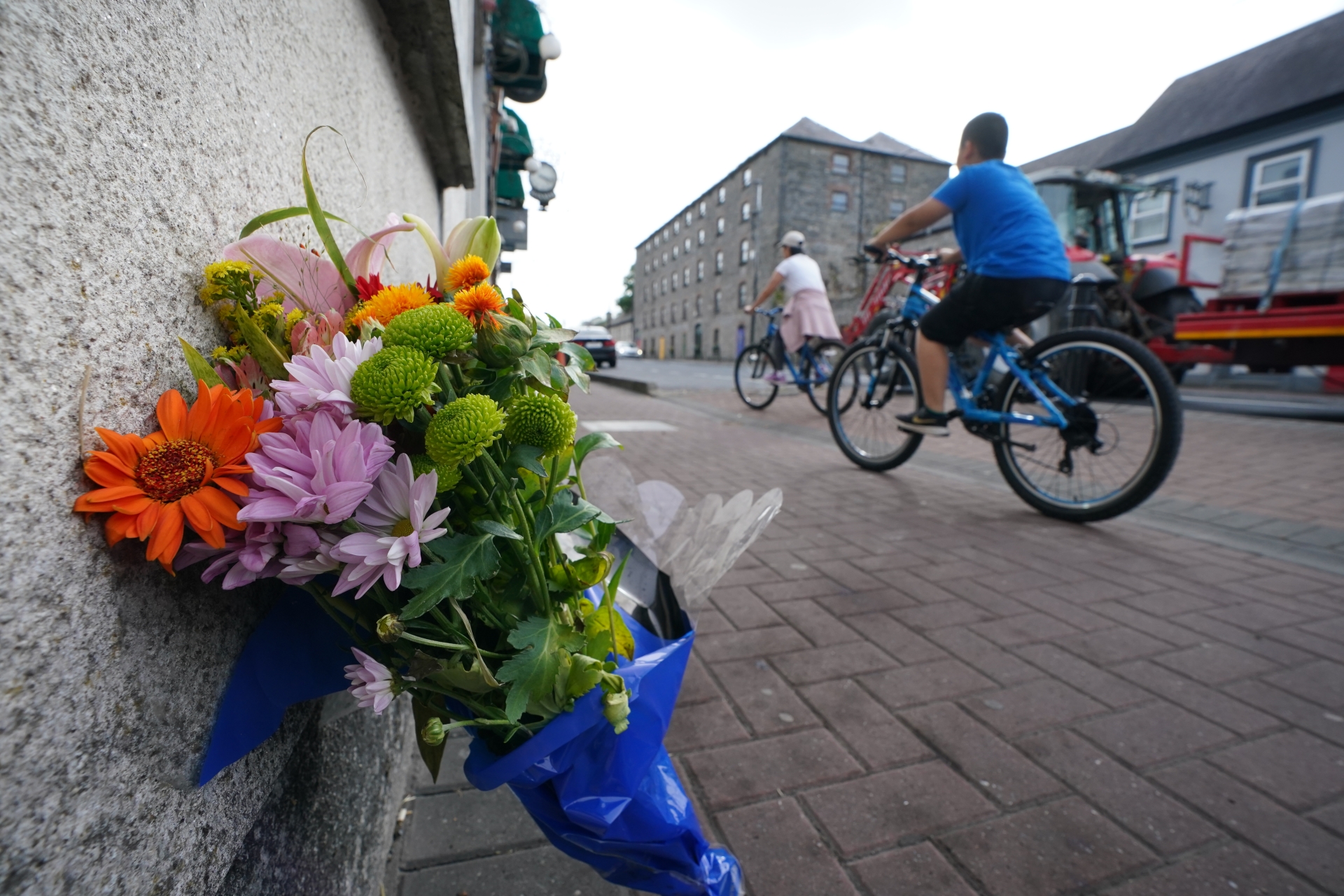
Two weeks into the trial, Sean Kavanagh pleaded guilty to a charge of assault causing harm on Eamon McCarthy.
Ms Justice Biggs adjourned the matter to May 12 to allow time for the preparation of probation reports in respect of both Dunne and Kavanagh, a Governor’s report for Dunne and Victim Impact Statements from the McCarthy family.
WHAT JURY DIDN'T HEAR
In the absence of the 12 jurors, counsel for Kavanagh, Michael Lynn SC, made an application for a direction from the judge that the jury find his client not guilty of the charge of murder.
He said his submission was purely based on the issue of causation. Mr Lynn argued the evidence of Dr Okkers - that it was possible the kick caused the fatal injury - was clear.
Counsel submitted that where the prosecution’s own evidence was that the kick could have been the cause of the fatal injury, “there could be no sound basis upon which a jury could find beyond reasonable doubt that a blow that preceded it could have caused the fatal injury”.
“Where the State pathologist is saying that it could have been the kick alone, how could a jury find that it was in fact another blow?” he submitted.
“Dr Okkers said that she was unable to identify which blow caused the injury. The important feature in Mr Kavanagh’s case is that any allegations against him precedes the kick and, if the kick itself was the cause, there can be no causation found in respect of Mr Kavanagh.”
Counsel went on to say that Dr Okker’s had confirmed in “rough terms” that 80% of cases of this particular type of injury result in immediate unconsciousness. He said in terms of any allegation of blows made by Kavanagh, there was no immediate unconsciousness.
“How could a jury come to a safe conclusion that the blow from Mr Kavanagh caused the death?” he said.
John Fitzgerald SC, for Mr Dunne, also argued that Dr Okkers had repeated throughout her evidence that she could not determine which blow contributed to the injury.
He said she had given evidence that the nature of the injury could impact the speed of collapse and had made reference to minutes being a possibility.
Counsel said the pathologist was directed only to the footage outside the pub, not inside.
“There has to be a reasonable possibility that punches inside the pub contributed to the tear,” he argued.
The application was made two weeks into the trial, after which the jury heard that the Director of Public Prosecutions had accepted the submission by the legal team acting for Kavanagh that the accused was to be found not guilty of the charge of murder.

Subscribe or register today to discover more from DonegalLive.ie
Buy the e-paper of the Donegal Democrat, Donegal People's Press, Donegal Post and Inish Times here for instant access to Donegal's premier news titles.
Keep up with the latest news from Donegal with our daily newsletter featuring the most important stories of the day delivered to your inbox every evening at 5pm.

This publication supports the work of the Press Council of Ireland and Office of the Press Ombudsman, and our staff operate within the Code of Practice of the Press Council. You can obtain a copy of the Code, or contact the Council, at www.presscouncil.ie, Lo-call 1800 208 080 or email: info@presscouncil.ie.