Search


13 Dec 2025
Search
13 Dec 2025

Please allow ads as they help fund our trusted local news content.
Kindly add us to your ad blocker whitelist.
If you want further access to Ireland's best local journalism, consider contributing and/or subscribing to our free daily Newsletter .
Support our mission and join our community now.
To continue reading this article, you can subscribe for as little as €0.50 per week which will also give you access to all of our premium content and archived articles!
Alternatively, you can pay €0.50 per article, capped at €1 per day.
Thank you for supporting Ireland's best local journalism!

Minister Mary Butler pictured with Ashwin Kher, Business Manager Edwards Lifesciences in Ireland, and speakers at the launch of Edwards Lifesciences Unifying Generations Ireland report in Dublin.

A new report based on a Republic of Ireland survey of 1,657 people has found that over-65s in Limerick play a pivotal role in society and the lives of younger people by volunteering, mentoring, providing care, and financial contributions. Across the six countries included in this pan-European survey*, Ireland appeared to be the most age-friendly country.
The ‘Unifying Generations: Building the Pathway to Intergenerational Solidarity’ report from Edwards Lifesciences was launched this month at an event in Dublin, attended by Mary Butler TD, Minister of State in the Department of Health, with responsibility for Mental Health and Older People. It recommends changing perceptions about the 3rd generation and recognising their value in building intergenerational cohesion.
Speaking at the launch, Minister Butler acknowledged the contribution of older people in Irish society saying, “By 2051, the number of people over the age of 65 in Ireland is expected to double.2 This demographic shift is often seen as a burden when in reality older people are an extremely valuable asset to our society. The Unifying Generations report is a great recognition of the role over-65s play in our country. Not only do they make a significant contribution volunteering, caring for others and mentoring, but they also play a pivotal role in supporting links between generations. The lived experience of older people enriches all our lives.”
In contrast to existing perceptions, the survey results highlighted the significant social contributions of the over-65s. Thirty per cent (30%) of over-65s in Limerick provide support to family members such as shopping and driving and almost four in 10 (38%) provide care to a family member. In addition, respondents from Limerick provide some level of financial support to younger family members, especially giving towards education (18%), sports and hobbies (13%) and holidays and leisure (9%).
Most importantly, the report revealed that of the European countries surveyed, Ireland’s over-65s are the most engaged in their local communities, especially when it comes to volunteering. Nearly one-third (31%) volunteer in their local communities versus 19% according to the European average with almost half (49%) of great-grandparents and 29% of grandparents volunteering in their local communities. This is particularly true for over-65s in Limerick with one in five (20%) volunteering in their local community.
In turn, younger people in Ireland highly value the role of the older generation. Eighty-five per cent (85%) of adults aged 18-40 in Limerick said the support they receive from over-65s in their daily life was very important or somewhat important. Furthermore, Ireland ranked second after Spain at 87% and above the European average of 83%.
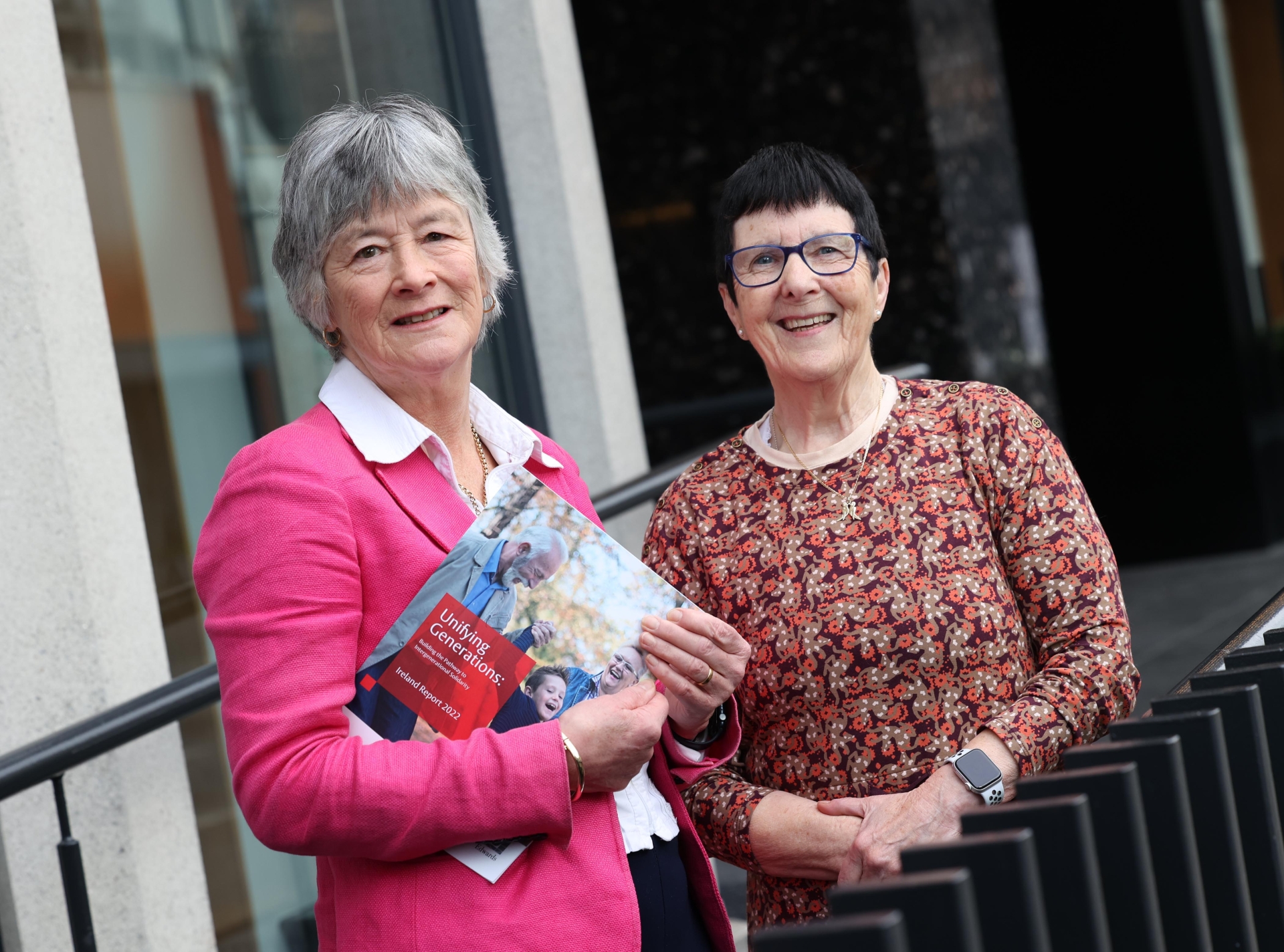
PHOTO: Community Volunteers Dr Joan Fitzgerald and Liz Downes pictured at the recent launch of Edwards Lifesciences Unifying Generations Ireland Report at the Alex Hotel.
“It is important to transform perceptions about the older generation. Having been raised by my grandmother, I can speak first-hand about the importance and benefits of younger people being guided and supported by the older generation. Not only did they provide care and support they also imparted wisdom and guidance throughout my childhood and into my adult life,” commented Ashwin Kher, Business Manager, Edwards Lifesciences in Ireland.
Many benefits of intergenerational interactions were also highlighted in the report. According to younger people (aged 18-40) in Limerick, listening and giving advice (64%), companionship or friendship (50%), and sharing historical or cultural knowledge (43%) were the most valuable skills that older people could offer.
It is promising also to see that intergenerational relationships are particularly cherished in Ireland compared to other European countries and there is a strong desire for greater links between generations. Across all countries surveyed, Ireland has the highest number of younger and older respondents believing that closer relations among different generations are a good thing (85%). Fifty-seven per cent (57%) of respondents from Limerick had a friend from a different generation and 37% were open to having one, three per cent (3%) more than the national average.
Younger people in Limerick also feel strongly about the need for mentoring with 29% of respondents saying that mentoring or educational schemes provided by national or local government would help them to do more with the older generation, which is higher than the European average (23%). The wish to learn is not one way. The older generation recognises the need to improve their digital skills with 87% (33% higher than the national average) saying they would most like to learn technology and digital media from younger people.
“New efforts now need to be made to empower and encourage intergenerational interaction outside the family domain across society; in the workplace, and in our communities. Research indicates that older and younger people seek knowledge exchanges, share a plethora of interests, and enjoy each other’s company – the will is there, we (individuals, organisations, society) simply need to work harder together to find the way,” commented Dr Catherine Elliott O'Dare, Assistant Professor in Social Policy at Trinity College Dublin.
Finally, the survey shows that COVID-19 has had a significant impact on intergenerational relations. In Ireland, the pandemic appears to be the main barrier to intergenerational interactions (49%), with nearly half of respondents agreeing that younger and older people are further apart since the outset of the pandemic (48%). This is also true for respondents from Limerick with 47% agreeing that the younger and older generation are further apart than before the outbreak.
Dr Adrienne McCann, Research Manager, Innovation Value Institute, Maynooth University and Age Friendly Ireland says, “All age groups, but especially older generations, need to be involved in helping to co-create solutions so that they are relevant and long-lasting. It’s important to identify common interests that both age groups are passionate about”.
The report makes three recommendations to ensure Ireland continues to move towards a more unified society: campaigns to transform perceptions of the value of senior people and their interactions with younger generations, greater opportunities for mentoring and knowledge sharing from older to younger generations; and schemes that help senior people interact more digitally.
To learn more and download the full report please visit: https://www.edwards.com/gb/aboutus/unifying-generations/
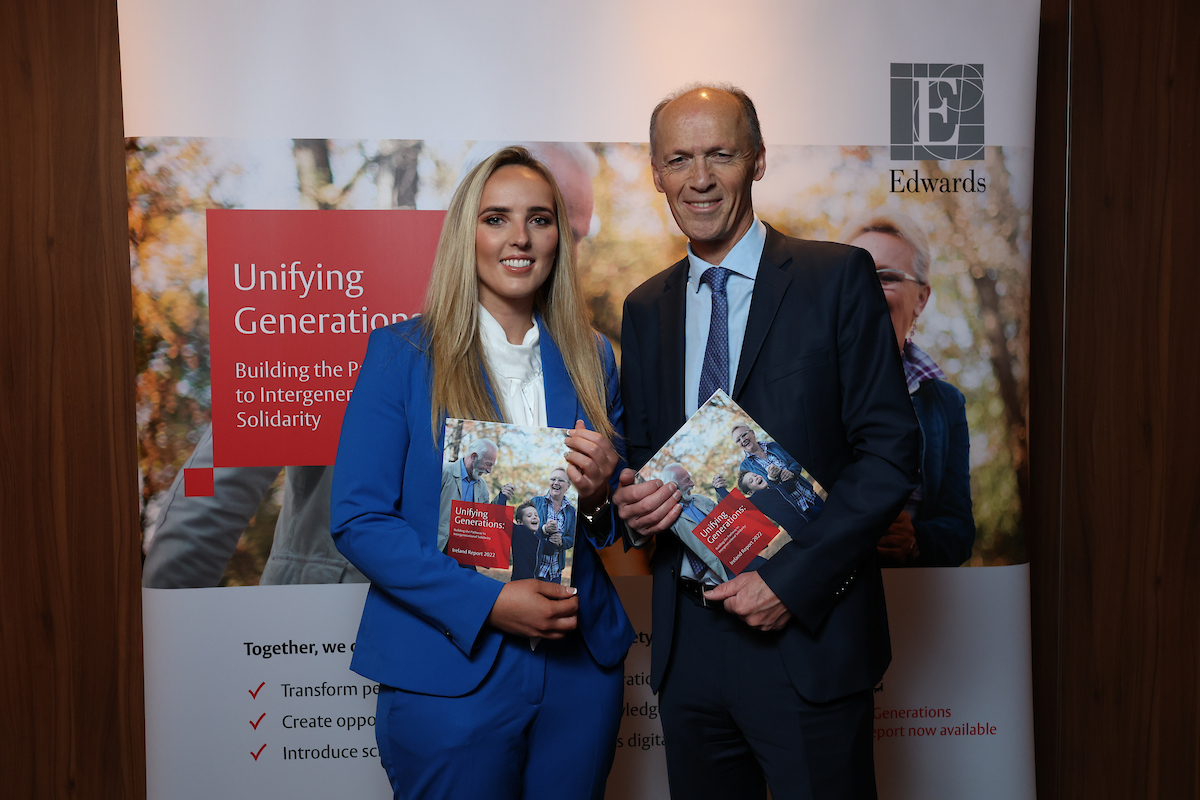
PHOTO: Dr Adrienne Mc Cann, Research Manager with Maynooth University and Age Friendly Ireland and Michael George, Edwards Lifesciences, pictured at the recent launch of Edwards Lifesciences Unifying Generations Ireland Report at the Alex Hotel.
*UK, France, Italy, Germany, Spain, Ireland
*Sponsored Content

Subscribe or register today to discover more from DonegalLive.ie
Buy the e-paper of the Donegal Democrat, Donegal People's Press, Donegal Post and Inish Times here for instant access to Donegal's premier news titles.
Keep up with the latest news from Donegal with our daily newsletter featuring the most important stories of the day delivered to your inbox every evening at 5pm.

This publication supports the work of the Press Council of Ireland and Office of the Press Ombudsman, and our staff operate within the Code of Practice of the Press Council. You can obtain a copy of the Code, or contact the Council, at www.presscouncil.ie, Lo-call 1800 208 080 or email: info@presscouncil.ie.