
Prayers are being said for the recovery of Scarlett Faulkner, aged in her 20s
Search


24 Mar 2026

Please allow ads as they help fund our trusted local news content.
Kindly add us to your ad blocker whitelist.
If you want further access to Ireland's best local journalism, consider contributing and/or subscribing to our free daily Newsletter .
Support our mission and join our community now.
To continue reading this article, you can subscribe for as little as €0.50 per week which will also give you access to all of our premium content and archived articles!
Alternatively, you can pay €0.50 per article, capped at €1 per day.
Thank you for supporting Ireland's best local journalism!


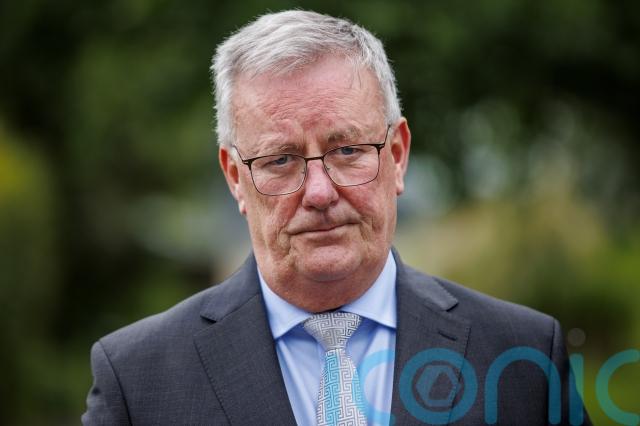
Minimum unit alcohol pricing will not be introduced in the current Assembly term due to a failure to secure Executive agreement, Health Minister Mike Nesbitt has said.
Mr Nesbitt told MLAs that the failure to introduce the policy was a missed opportunity which will have “an impact on many vulnerable and at-risk people in Northern Ireland”.
But DUP deputy First Minister Emma Little-Pengelly said her party had asked the Health Minister to “bring forward proposals that are based on evidence”.
Mr Nesbitt told the Northern Ireland Assembly that he “regretted” having to make the announcement.
He said: “Minimum unit pricing or MUP has been under discussion for a number of years and has been proposed by multiple health ministers.”
Mr Nesbitt said MUP was “not a panacea” but “would be an effective and targeted way” to address alcohol-related harm.
He added: “Primary legislation had been provisionally scheduled for introduction in 2026-27.
“Unfortunately, however, despite my efforts to provide information and address any concerns, it has not been possible to secure Executive agreement, and we have now reached the point sadly where legislation for MUP is no longer deliverable in this mandate.
“This will have an impact on many vulnerable and at-risk people in Northern Ireland.”
The minister said the British Heart Foundation recently published a report which estimated that 676 people each year in Northern Ireland die as a direct result of their alcohol consumption.
Mr Nesbitt said evidence showed that MUP would “reduce alcohol consumption, and lead to fewer people being admitted to hospital and dying as a result of their drinking”.
He added: “For example, in Scotland it is estimated that MUP has led to 120 fewer alcohol deaths each year.”
The minister told the Assembly that modelling had estimated that a 65p MUP would lead to a reduction of 82 alcohol-related deaths a year in Northern Ireland and an annual reduction of 3,482 alcohol-related hospital admissions.
He said: “I have always been clear that MUP is not a silver bullet, but is a proven, effective tool to reduce alcohol harm.”
Mr Nesbitt told MLAs: “I feel that not introducing MUP is a missed opportunity.
“An opportunity which would have allowed this Assembly to make a meaningful difference in reducing the alcohol-related harms and inequalities across the region.
“I therefore reiterate my regret that I am making this statement today, rather than bringing forward legislation on setting an MUP.
“While there is clearly insufficient time left to legislate for MUP in this mandate, even if there was Executive agreement to do so, it would be my fervent hope that an incoming Health Minister and Executive will be able to bring forward legislation early in the next mandate to address this important public health issue.”
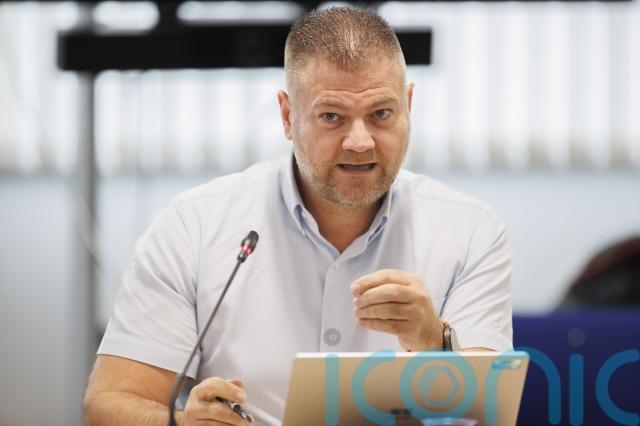
SDLP health spokesperson Colin McGrath accused the DUP of blocking the policy.
He said: “It’s unacceptable that when we have majority Executive and Assembly support for a vital public health intervention, one party is able to weaponise its veto and block it from being introduced.
“It was a DUP health minister who first floated this policy and they should outline what has caused such a sharp change in tack.
“We have a serious problem with alcohol in our society, with hundreds of people dying each year and many more affected by alcohol-related illness and harm, causing hospital admissions and increased pressure on our health service.
“This also has a really negative impact on the lives of those affected by this illness and the people around them.”
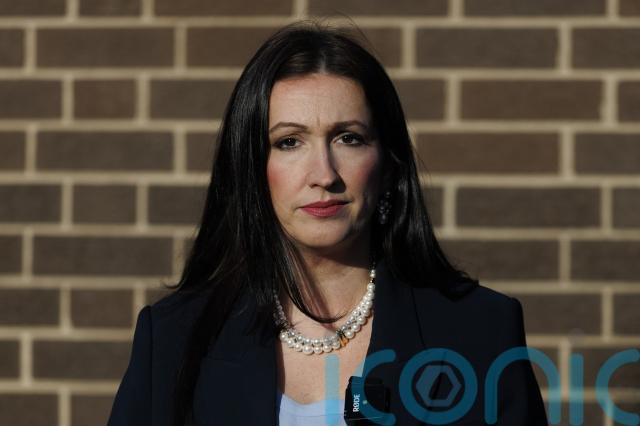
But Ms Little-Pengelly said her party had put questions to the health minister “to demonstrate that this intervention would actually work”.
She said: “Of course, we want to reduce alcohol related deaths, this hits at a particular type of issue, but the vast majority of alcohol for sale would not be impacted by this measure, and alcohol deaths hit on every part of our society.
“Alcohol misuse is something that is a huge burden for the health service.
“We have asked the health minister to bring forward proposals that are based on evidence, that are based in something that will work, and we will look at that when that happens.”
Professor Sir Ian Gilmore, Chair of the Alcohol Health Alliance, said the decision is a “deeply disappointing failure to act on a public health crisis”.
He added: “The evidence is clear, minimum Unit Pricing is one of the most effective and targeted measures available to reduce alcohol-related deaths, hospital admissions and health inequalities, with the greatest benefits felt among men and those living in the most disadvantaged communities.
“Northern Ireland is facing its highest levels of alcohol harm on record, placing unacceptable burden on individuals, families, and public services.
“Choosing not to implement this policy means those harms will persist, with grave consequences, and hitting the most vulnerable groups in society the hardest.”
He added: “We urge policymakers to reconsider this decision and to prioritise evidence-based measures that protect public health over political wins.
“Lives are being lost that could be saved with this proven, preventative policy.”

Subscribe or register today to discover more from DonegalLive.ie
Buy the e-paper of the Donegal Democrat, Donegal People's Press, Donegal Post and Inish Times here for instant access to Donegal's premier news titles.
Keep up with the latest news from Donegal with our daily newsletter featuring the most important stories of the day delivered to your inbox every evening at 5pm.

This publication supports the work of the Press Council of Ireland and Office of the Press Ombudsman, and our staff operate within the Code of Practice of the Press Council. You can obtain a copy of the Code, or contact the Council, at www.presscouncil.ie, Lo-call 1800 208 080 or email: info@presscouncil.ie.