Louay Kila was found guilty of rape and sexual assault
Search


06 Mar 2026

Please allow ads as they help fund our trusted local news content.
Kindly add us to your ad blocker whitelist.
If you want further access to Ireland's best local journalism, consider contributing and/or subscribing to our free daily Newsletter .
Support our mission and join our community now.
To continue reading this article, you can subscribe for as little as €0.50 per week which will also give you access to all of our premium content and archived articles!
Alternatively, you can pay €0.50 per article, capped at €1 per day.
Thank you for supporting Ireland's best local journalism!


Initiatives to calm interface tensions in Belfast through the use of shared phone networks were frustrated when participants turned off their mobiles during riots, declassified files from 2002 have shown.
That year there were sustained sectarian clashes close to the Short Strand area of east Belfast, leading to political engagement to bring an end to the violence during a period when the Stormont political institutions were suspended.
A file entitled “Community Relations Post Suspension” shows a note from an official to new Secretary of State Paul Murphy.
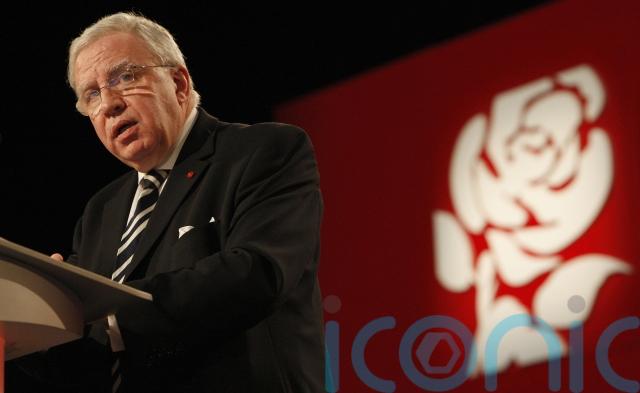
The note was in response to a request for advice from the minister on a suggestion in the News of the World for a mobile telephone network to assist with tackling violence at community interfaces in east Belfast.
It said: “There are a series of such networks already in place in various parts of Belfast, including east Belfast.
“A recent evaluation confirmed the value of the networks in preventing/de-escalating violence between communities.
“However, the effectiveness tends to be limited to spontaneous violence, and the networks can do little to prevent violence orchestrated by paramilitary groups.
“A further problem is that when tensions/the level of violence are particularly high, users tend to switch off telephones.”
The note said that then-junior NIO minister Des Browne was working with the Northern Ireland Committee of the Irish Congress of Trades Unions (NICICTU) on proposals for a new network to cover interfaces throughout Belfast.
It said: “The proposal will include an agreed operational protocol and monitoring arrangements in order to minimise the potential for ‘switch off’.”
The file also contains a minute from a “Tackling interface violence roundtable meeting” hosted in 2002 by Mr Browne, featuring representatives of the political parties in Northern Ireland.
The minute said: “The meeting was not quite what the Minister hoped.
“The parties were not yet ready to sign up to the NICICTU mobile phone network. Further information and a further meeting required before that can happen.”
Mr Browne noted that the NICICTU project was at an “advanced stage” and cautioned on the need for speed in getting the networks operational.
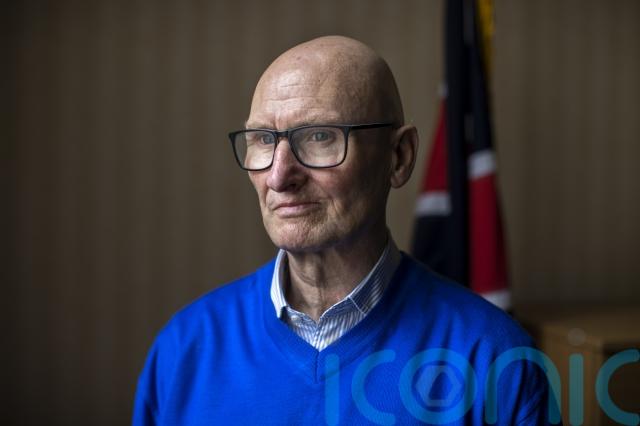
The PUP’s Billy Hutchinson said his party would not sign up to the project until some of their concerns on the operation of the network had been discussed.
The minute said: “Des Browne reminded the meeting that the parties had advised him that it would have been the kiss of death to have NIO fingerprints on the detail of the project.”
The minister then turned to his intention to set up a Community Action Group to coordinate activity across departments.
The minute said: “The intent with the policy would be to emphasise that government would reward and support good behaviour in communities, not simply weigh-in in response to violence – HMG wanted to build communities, not just turn up with cash when they were burning down.”

Subscribe or register today to discover more from DonegalLive.ie
Buy the e-paper of the Donegal Democrat, Donegal People's Press, Donegal Post and Inish Times here for instant access to Donegal's premier news titles.
Keep up with the latest news from Donegal with our daily newsletter featuring the most important stories of the day delivered to your inbox every evening at 5pm.

This publication supports the work of the Press Council of Ireland and Office of the Press Ombudsman, and our staff operate within the Code of Practice of the Press Council. You can obtain a copy of the Code, or contact the Council, at www.presscouncil.ie, Lo-call 1800 208 080 or email: info@presscouncil.ie.