Prayers are being said for Scarlett Faulkner, 29
Search


26 Mar 2026

Please allow ads as they help fund our trusted local news content.
Kindly add us to your ad blocker whitelist.
If you want further access to Ireland's best local journalism, consider contributing and/or subscribing to our free daily Newsletter .
Support our mission and join our community now.
To continue reading this article, you can subscribe for as little as €0.50 per week which will also give you access to all of our premium content and archived articles!
Alternatively, you can pay €0.50 per article, capped at €1 per day.
Thank you for supporting Ireland's best local journalism!


An Garda Siochana has the largest fleet of vehicles in its history as well as new technology systems following what has been described as the biggest shake-up to the force.
Following a transformation process which started in 2018, an information-led policing approach has seen the issue of 15,000 mobility devices which minimise the time it takes to retrieve information.
Some 700 body-worn cameras are being piloted by officers while vehicle numbers have risen to 3,672 including new specialist vehicles such as two water cannon along with public order and community engagement vans.
Transforming An Garda Siochana 2018-2024 was formally launched at the Innovation Centre, Garda Headquarters, Phoenix Park, on Monday.
It was compiled to provide an organisational account of the implementation of A Policing Service For Our Future (APSFF) programme.
It records the force’s strength as of November 2024 as 14,054 Garda members, 3,689 Garda staff along with 319 Garda reserves.
Among the changes recorded include a new operating model rolled out across 21 divisions which has established four functional areas within each division.
These are community engagement; performance assurance; crime; and business services functions, and is described as the biggest structural change in the history of the organisation.
Garda Commissioner Drew Harris said there has been dramatic changes in the force since the new model came into operation.
“One of the key recommendations from the Commission of Future Policing was also then the delivery of the Garda operating model,” Mr Harris said on Monday.
“That was recommended back in 2016 by the inspectorate, we followed through with our own modernisation and renewal program, but then was solidified again in the Commission of Future Policing.
“So, we have seen that roll out 21 garda divisions. This model replaces the former district model and is now a divisional model, and we’ve implemented … pillars within the division around, obviously, community engagement, crime, performance, assurance, and then business service.
“It’s been a big structural change for An Garda Siochana, because for the previous almost 100 years, our model has been very much based on a district model, but that had served its time and served us well.
“But things have moved on, particularly in respect of just the variation and variety and complexity of the crime that was being reported to us.
“In addition to this reform, we’ve seen many dramatic changes in the way we carry out our duties, and the investment in equipment that we’ve made to support members, and this has provided gardai with real time information.”
Deputy Commissioner Shawna Coxon said that there are currently 700 bodyworn cameras in use in five stations in Dublin, Limerick and Waterford.
She said that will then lead to a nationwide rollout.
“The cameras are provided to be a valuable tool, and we have seen it work in de-escalating situations and adding protections to front line policing,” she added.
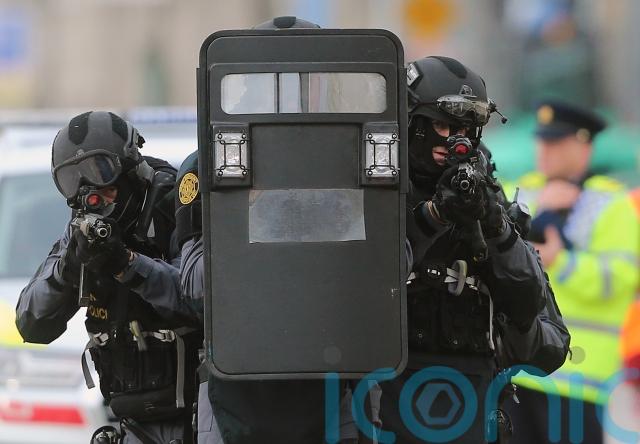
“In the area of public order, a new personnel issued public order body armour is being introduced, and this will become part of our public order unit standard kit.
“Moulded earpieces complement this and will provide all public order members with full communications while in difficult public order duties.
“These are ordered and delivery is awaited. We have also invested in the purchase of two water cannons, and we hope not to need to use these, but are an important part of our equipment.”
Gardai also said that new mobility devices will save officers thousands of hours through its digital fixed charge notice, and real-time checks on vehicles through the app.
Meanwhile, the organisation’s latest Public Attitudes Survey records public trust in An Garda Siochana at 89%.
In the area of human rights, approximately 4,000 Garda personnel have become human rights champions having completed a University of Limerick accredited course in Policing and Human Rights Law in Ireland.
In terms of health and well-being support, a 24/7 independent helpline and counselling service has been established, as well as 17 full-time employee assistance officers, 1,164 peer supporters, and 3,500 personnel have received mental health first aid training.
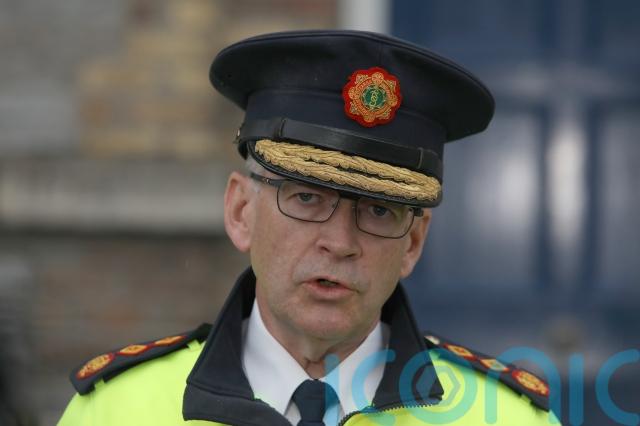
Mr Harris said the report documents the transformation journey.
“It provides an opportunity to reflect on the work that has been done over these past seven years to bring about really meaningful change in our organisation. While we have made progress, there is more to do,” he said.
“And so, Garda Siochana will continue to adapt to the needs of the public and we remain committed to delivering a modern, community-focused policing service to the people of Ireland.”

Subscribe or register today to discover more from DonegalLive.ie
Buy the e-paper of the Donegal Democrat, Donegal People's Press, Donegal Post and Inish Times here for instant access to Donegal's premier news titles.
Keep up with the latest news from Donegal with our daily newsletter featuring the most important stories of the day delivered to your inbox every evening at 5pm.

This publication supports the work of the Press Council of Ireland and Office of the Press Ombudsman, and our staff operate within the Code of Practice of the Press Council. You can obtain a copy of the Code, or contact the Council, at www.presscouncil.ie, Lo-call 1800 208 080 or email: info@presscouncil.ie.