
Throwback Thursday - In association with Glasshouse Opticians
Search


03 Apr 2026

Please allow ads as they help fund our trusted local news content.
Kindly add us to your ad blocker whitelist.
If you want further access to Ireland's best local journalism, consider contributing and/or subscribing to our free daily Newsletter .
Support our mission and join our community now.
To continue reading this article, you can subscribe for as little as €0.50 per week which will also give you access to all of our premium content and archived articles!
Alternatively, you can pay €0.50 per article, capped at €1 per day.
Thank you for supporting Ireland's best local journalism!

A major overhaul of migration rules could see Ireland deporting a significant number of people back to other EU countries where they had first sought asylum protection.
The Irish Government has agreed to adopt proposals that will see the state committing to enhanced security checks, a fast-track return of undocumented migrants and a faster, legally binding time frame for application decisions.
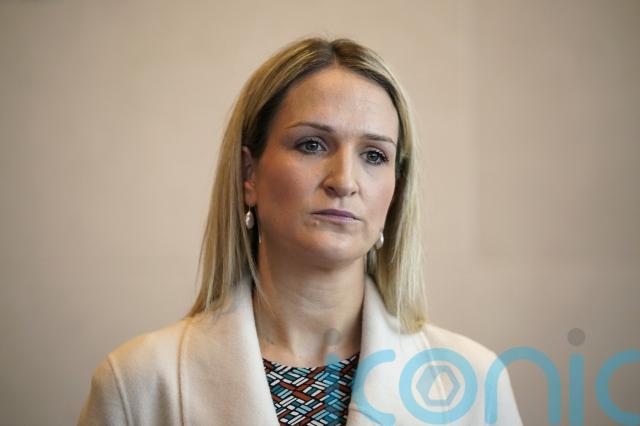
Minister for Justice Helen McEntee sought agreement from the Cabinet for Ireland to join the new EU Pact on Migration and Asylum to co-operate with other member states on managing migration.
🔔 Minister @HMcEntee secures approval from Government to opt-in to measures of the EU Pact on Migration and Asylum.
Read more here: 🔗 https://t.co/9pGaLZRXTP pic.twitter.com/mNq7nAZWP9
— Department of Justice 🇮🇪 (@DeptJusticeIRL) March 27, 2024
Under the revised rules, migrants arriving in Ireland who have sought or been granted asylum in another member state will face a more rigorous process of being returned.
The measure is expected to act as a deterrent for those travelling to Ireland from another EU country.
Between 50% and 70% of migrants arriving in Ireland have travelled through another EU country.
The updating of the Eurodac regulation (the EU fingerprint database) will give more information on how many secondary applicants are arriving in Ireland.
The strengthened rules will place an obligation on EU member states to process asylum applications quicker, to take back secondary applicants faster and provide for a more streamlined process by which the requests are made.
Ms McEntee said: “The aim of the pact is to align asylum procedures right across the EU.
“We will have quicker processing times, which will be mandatory. We will have a more comprehensive return policy which will be of particular benefit to Ireland, as so much of migration here involves secondary movement.
“In other words, people who have already sought or been granted asylum in other member states.
“It will also provide for more enhanced security checks, so that we can identify at earlier stages someone who might be a risk.
“The legislation will provide for a complete replacement of the International Protection Act 2015, and give legally binding time frames for making decisions on international protection applications and appeals.
“We know that the quicker an application is turned around, the quicker and easier it is to remove a person with a negative decision or to support a person to integrate into the community.
“There will be a greater focus on efficient returns in unsuccessful applicants. There will be accelerated processing, including for those from safe countries, those who have false or no documents and those who have crossed borders illegally.
“There will be a new border procedure to quickly process people who are particularly unlikely to be granted international protection.”
She said that a new solidarity mechanism will require countries to either make financial contributions or to agree to relocate some asylum seekers, particularly from countries facing migrant pressures.
“This is a mechanism which Ireland could indeed benefit from in the future,” she said.
“There will also be expansion into the categories of migrants who will be fingerprinted and will be checked against the Eurodac database.”
Ms McEntee said she has also ordered a review of countries to be designated as “safe”.
She added: “In terms of secondary movements (migrants), the figures are between 50% and 70% and as we update Eurodac, we will have a much clearer picture of what that actual figure is.”
Ms McEntee said that under the updated system, countries will be legally bound to take a person back.
“So a country like ours that is an island, there’s a significant proportion of people here who have already come through another country or applied for asylum in another member state,” she added.
There were a total of seven measures considered by the Government on Wednesday as part of the new rules.
The updated system, expected to come into effect in 2026, will give better data on trends on the movement of people.
Other biometric data will include facial imaging, while an enhanced security screening will flag any issues on the new system.
Ireland will also be under an obligation to publish a report every year setting out the movement of migrants, showing particular trends as well as updating its capacity.
While it is difficult to predict the movement of people, it is understood that the measures will have an impact on the number of migrants arriving in Ireland.
Earlier on Wednesday, outgoing Taoiseach Leo Varadkar said: “It’s much better to work together to manage irregular migration as a European Union, strengthening our outer borders of the European Union, co-operating with transit countries.”
Tanaiste Micheal Martin said: “The adoption of the European pact on asylum agreement will facilitate faster processing of those seeking asylum and provide stronger checks in addition to what we already have.
“It’s a political issue in Ireland, it’s a political issue across Europe.”
He said that migration is a “significant issue” globally.
“Anywhere you go in the world now there is significant migration,” Mr Martin said.
“The EU has reached agreements with Egypt and Turkey in terms of the management of those fleeing Syria or in the Middle East or Sudan.
“You go to South America and Central America and there is massive migration there, much heading to North America.”

Subscribe or register today to discover more from DonegalLive.ie
Buy the e-paper of the Donegal Democrat, Donegal People's Press, Donegal Post and Inish Times here for instant access to Donegal's premier news titles.
Keep up with the latest news from Donegal with our daily newsletter featuring the most important stories of the day delivered to your inbox every evening at 5pm.

This publication supports the work of the Press Council of Ireland and Office of the Press Ombudsman, and our staff operate within the Code of Practice of the Press Council. You can obtain a copy of the Code, or contact the Council, at www.presscouncil.ie, Lo-call 1800 208 080 or email: info@presscouncil.ie.