Search


08 Apr 2026
Search
08 Apr 2026

Please allow ads as they help fund our trusted local news content.
Kindly add us to your ad blocker whitelist.
If you want further access to Ireland's best local journalism, consider contributing and/or subscribing to our free daily Newsletter .
Support our mission and join our community now.
To continue reading this article, you can subscribe for as little as €0.50 per week which will also give you access to all of our premium content and archived articles!
Alternatively, you can pay €0.50 per article, capped at €1 per day.
Thank you for supporting Ireland's best local journalism!

Donal Ryan has won numerous awards for his fiction, among them the European Union Prize for Literature, the Guardian First Book Award and four Irish Book Awards

ON UL’s campus, I catch up with Donal Ryan. In his office: piles of books, an eclectic collection of literary prizes, a framed edition of The Thing About December, van Gogh’s Starry Night, and a handful of fruits.
After being fairly isolated for the past year, Donal Ryan seems happy to be back on a frenzied campus as a new semester is about to start. “I was trying to get this book finished, and I was working from home, there’s no real view from the attic except of houses and mountains in the distance,” he smiles.
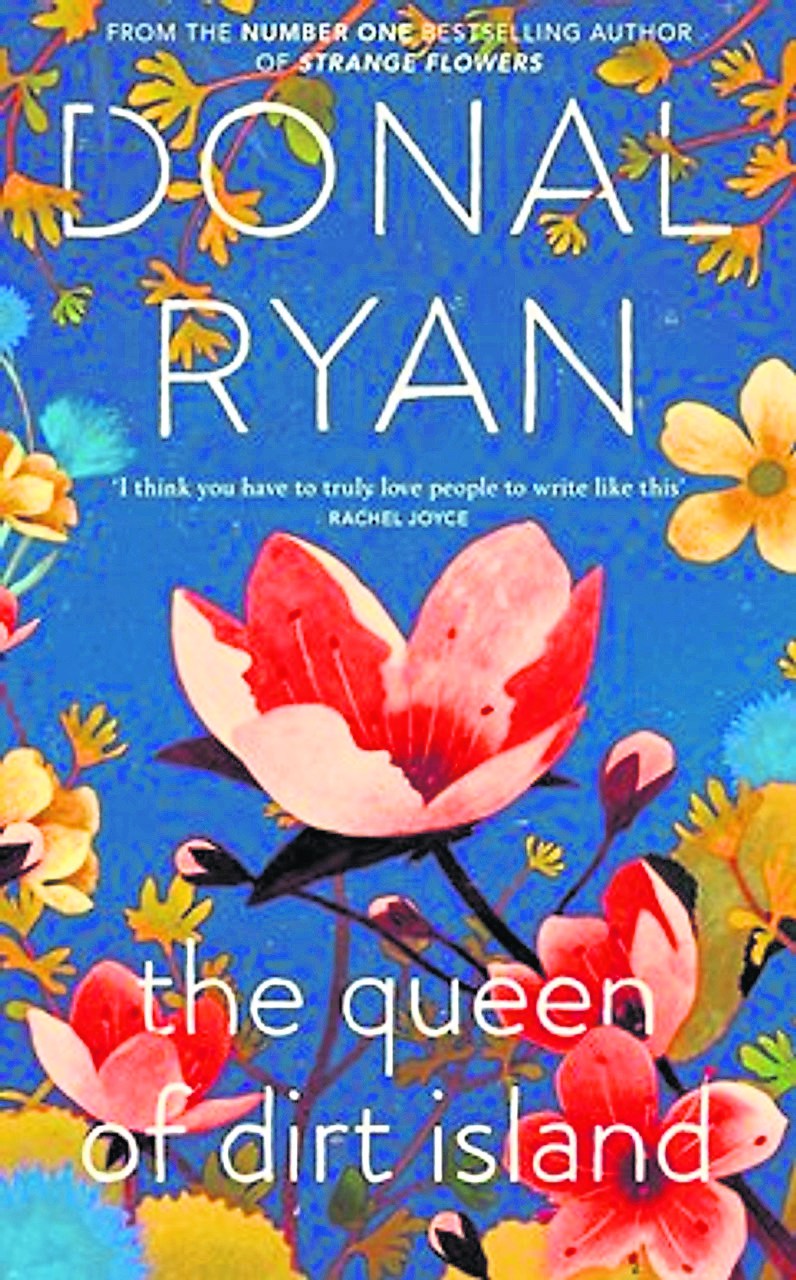
In August, the acclaimed author released his latest novel, The Queen of Dirt Island. His seventh book has received a lot of praise. As I ask how he deals with compliments, he talks about the art of deflecting.
“I suppose there’s a kind of natural habit that people have from rural Ireland, to deflect compliments and to say something like ‘oh go on, yeah’. It’s really strange because one of the worst insults that could be fired at you when I was growing up was ‘you think you’re great, don’t you’. We should all have a robust and buoyant self-image,” explains the author.
Despite the compliments, Donal cannot help but focus on the negative at times. “Like a typical writer, I suppose I tend to focus on the negative sometimes, and to obsess about it.” He continues, “In general, it’s just lovely when people say nice things. It’s lovely when somebody actually explains to you how something you’ve written moved them, or how it resonated with them. It’s really gratifying because that means you’ve done something right for somebody.”
Although at times, details that were not in Donal’s conscious mind seem to reveal themselves to others. “You can’t send fiction into the world with caveats, it’s an open-ended contract, and you have no control over how somebody receives your work,” says the novelist.
Occasionally, Donal receives quite the surprising mail. “I get the odd letter here and there from people who’ve been upset by something I wrote. I really feel bad for upsetting them, but, on the other hand, I feel that because they’ve written to me, I now have the opportunity to explain myself, and maybe make them feel better about it.
“The last thing I ever want to do is hurt anybody or make anybody feel bad. Looking back over my career so far, I’ve written some very dark stuff and it would be silly of me to think that people won’t be negatively affected sometimes, that’s inevitable,” he says.
Perhaps not all roads lead to Rome after all. When he started writing The Queen of Dirt Island, Donal didn’t expect to have to write it all over again.
“I was going around talking about it as if this novel was a fait accompli. I just presumed it was going to be published, but my publisher and my editor were very circumspect and politic about it. They explained to me how it needed a huge amount of work in order for it to be a publishable work of fiction.”
Shocked not to have noticed the “shortcomings” of his first draft, the writer “couldn’t face the idea of turning that book upside down.” As he wondered if he could write another novel before the deadline, he received a gift from the ether.
“It felt as though I was almost gifted that novel by the universe. It sounds silly, and I know it didn’t come from outside, but it felt as if there was a whispered voice somewhere saying, “here’s a story for you.”
Recalling the strange whispers, Donal narrates: “It was these women, right? You live in a house, it’s very like your old house where you lived as a child. It felt as though the story already existed, I just had to put it into words. The first draft took about 12 weeks, which is pretty quick.”
Written in short chapters, The Queen of Dirt Island encapsulates the lives of three generations of strong Irish women. On an estate in Nenagh, the Aylwards’ household goes through conflict, love, and loss. But despite what the neighbours might think of their drama, the Aylwards are one loving family. Set in the early 80s, the novel follows Saoirse as she navigates life as a woman in a judgmental and misogynist society. Through Ryan’s lyrical prose, The Queen of Dirt Island tells a tale of prejudice, devotion and love, one that is shadowed by the Catholic Church and the IRA.
As Donal mentioned the book felt like it was whispered for him, I wonder whose voice was guiding him.
“I suppose my mother and grandmother, their voices were very clear in my head. They were never as profane as the characters in the book, but they had a particular way of communicating that to the uninitiated would almost seem quite aggressive at times.”
He remembers: “It was this fabulous way of speaking they had, they were always joking. It was always done with love, with a tongue in cheek. They just had a way of communicating in quasi-insults. It was just a beautiful thing to witness as a child.”
Until now, it seems the author stored up these voices. “I’m sure that whispered advice was partly my late grandmother, gifting me this from the next world because she could see I was in big trouble,” he smiles.
In The Queen of Dirt Island, the chapters almost read like capsules of life; all because of a pragmatic choice - and to what quickly became an obsession for the author.
“I had to get a readable, workable draft written very quickly. I knew the best way to build a story quickly was in a modular fashion where I had clearly defined, delineated and sized units of narrative,” Donal explains.
To keep things neat, the writer slowly became obsessed with the idea that each chapter had to be 500 words.
“It’s not unnatural for me to do this for each unit and fiction narrative to be the same length. I know it adds to the sense of artifice, to the pretence about fiction, but that’s fine,” he concedes.
I mention his process reminds me of Gadsby, the 1939 novel written without the letter ‘e’ by Ernest Vincent Wright. As Donal tries to recall a similar book title, he can’t help but frantically look it up.
Like many of us, Donal can’t help but look up things he cannot remember. “I think you and I had this conversation the last time you were here, about using our phones as proxies for our memory, which is dangerous.”
He was thinking of Alice Lyons’s novel, Oona, which was written without featuring the letter ‘o’ - quite the challenging endeavour.
Speaking of challenging endeavour, Donal touches on quite a few topics in his fiction. But what is the most challenging one to write about?
“Suicide has touched my family. Well, I shouldn’t really say too much about it, but it’s something that I’ve had experience of,” confides Donal.
“There’s kind of a catharsis in rendering something fictional that you know the mechanics of, it’s strange. It just seems that language has this kind of calming effect, and strangely a limiting effect.” He continues: “There’s no perfect way of saying anything, language is inherently limited and there is a finite number of words. We can never present an emotion exactly in language, but we can try our best to get somewhere in the vicinity of the truth of it.”
The author believes events that cause devastation need to be portrayed in fiction, in a bid to make them real. “Things are reported perfectly in the form of statistics, and they’re cold and stark. It’s important to really explore the actual human emotion around these things,” he says.
Writers often weigh in on whether you should only write about what you know – and what directly affects you. Recently, some have expressed that only women should write about women. As The Queen of Dirt Island revolves around women, does he believe you can only write about what you know?
“It’s ridiculous, really. Now in fairness, there’s a burgeoning auto fiction movement at the moment, and I think it’s great. Loads of the main proponents of it, for example, Sally Rooney, are just the most wonderful writers. I’ve heard Sally say she couldn’t have written the books she wrote, if she hadn’t had the experiences she had, and I think that’s probably true to some extent for all writers,” he answers.
Donal points out his life has remained quite traditional. Married with two kids, he lives in a housing estate in Nenagh, and works as a Creative Writing lecturer at the University of Limerick.
“There isn’t that much grist for any literary mil in my life, so if I stayed stuck to my own experience, it’d be very boring,” he admits.
“But having said that, every character I write is somehow informed by my own experience of life. In a way, we’re all drawing in on our own experience all the time. If you can’t sympathetically, forensically and carefully put yourself in the position of another human as a fiction writer, I think you’re going to run into a brick wall very quickly and limit yourself very much.”
He believes there’s no point in sequestering yourself, and that it’s vital to look outwards. “If I confine myself to my own experience of life, first of all there’d be a set of things I’d be forbidden to write about, like my mother, and you can’t go against your mother’s wishes,” he laughs.
Donal’s mother is whom he dedicated his latest book to.
“My mom is quite ill at the moment, she’s dying, so I’m really glad that she got to read this book because it’s dedicated to her. And I guess the spirit of women in it is drawn very much from her spirit because she’s such a strong person. The fact that she read it and likes it means a lot to me”, he says, fondly.
Not only was The Queen of Dirt Island inspired by the strong women in Donal’s life, but it was also influenced by his childhood home. What is the most vivid memory he has of his old house?
“The most vivid feeling I have about my childhood home is safety,” he says. A feeling he describes as cocooned, yet brittle and fragile.
“It felt like this huge armour of love around me. I was very lucky because I couldn’t see the world clearly as a child, and I think no child should see the world clearly. I was a late developer when it came to actual clarity about the world. I was well into my teens thinking I knew a lot of things and knowing nothing at all and being shocked into awareness about things over and over again.
“I think it’s almost necessary for writers of fiction to be shocked into awareness, so that the thing you went to write about has had this profound effect on you. It makes it easier and more vivid,” he adds.
Originally, Donal wanted his latest book to be a sequel to Strange Flowers. As our conversation is about to end, I can’t help but ask about his next book.
“I’m writing the sequel to this book at the moment. I won’t be as silly as I was the last time and say that it will be the next book,” he smiles. “But it does very much feel like a natural progression, there’s kind of a natural setup at the end of this book for a sequel. Again, it feels as though I’m being gifted it, it’s coming pretty easily. Now I won’t say it’s writing itself, but it feels as though the story is almost obvious, and I just have to kind of unveil it somehow,” he concludes.

Subscribe or register today to discover more from DonegalLive.ie
Buy the e-paper of the Donegal Democrat, Donegal People's Press, Donegal Post and Inish Times here for instant access to Donegal's premier news titles.
Keep up with the latest news from Donegal with our daily newsletter featuring the most important stories of the day delivered to your inbox every evening at 5pm.

This publication supports the work of the Press Council of Ireland and Office of the Press Ombudsman, and our staff operate within the Code of Practice of the Press Council. You can obtain a copy of the Code, or contact the Council, at www.presscouncil.ie, Lo-call 1800 208 080 or email: info@presscouncil.ie.