Traffic Management Plan for the Easter Sunday Allianz Hurling League finals in Limerick
Search


05 Apr 2026

Please allow ads as they help fund our trusted local news content.
Kindly add us to your ad blocker whitelist.
If you want further access to Ireland's best local journalism, consider contributing and/or subscribing to our free daily Newsletter .
Support our mission and join our community now.
To continue reading this article, you can subscribe for as little as €0.50 per week which will also give you access to all of our premium content and archived articles!
Alternatively, you can pay €0.50 per article, capped at €1 per day.
Thank you for supporting Ireland's best local journalism!

Welcome to paradise: JP McManus in the victorious Limerick dressing-room at Croke Park on Sunday, after the unforgettable win against Galway

JP McManus is waiting at a table in a room off the kitchen at home in Martinstown. His beloved boxer dogs – Henry and George – are snoozing by his side.
It’s not exactly your average family residence and he’s not quite your average Limerick hurling supporter. He insists, though – more than once – that Sunday’s All-Ireland final triumph brought him no more or no less pleasure than it did any of his fellow county men or women at Croke Park, or anywhere else on the planet.
There weren’t too many, however, who found themselves in the inner sanctuary of the dressing room when the Liam McCarthy Cup – in Limerick hands for the first time in 45 years – was being passed around.
But then, it’s not the first time he has been in that special place.
AE: Maybe the best time and place to begin would Croke Park on September 2, 1973. You were hauled through the dressing-room window by some of the Limerick team, minutes after they’d won the All-Ireland. What led to you being there that day?
JPM: Well, I was chairman of South Liberties at that time.
AE: A remarkably young chairman.
JPM: I was born in 1951, so I was 22 then. I was chairman of the club at 21. I did it for three years – then they had enough of me.
AE: Was there a love of hurling in your family? I’m trying to figure out where the passion for Limerick hurling that we’ve seen so much of over the last couple of decades came from.
JPM: My dad was from Roscommon, my mother was from Louth – neither a hurling stronghold. My dad took us to some of the club matches – that’s what you generally did on a Sunday afternoon back then. You’d go to the junior hurling matches in Caherconlish, when you’d be playing Fedamore or Doon, Pallas or Caherline or Boher.
AE: So how does a 21-year-old become chairman of his local GAA club?
JPM: I suppose a bunch of young fellas outvoted the old fellas. We got some younger blood into the club. That’s not always a good idea – a little of it is good, but not too much. In 1974, Liberties were thrown out the club championship – they refused to play. Listen, it’s a long story - but there was wrong on all sides. The bottom line is that we were out, which for me was a sad thing. But it’s a long time ago now.
I remember the build-up to that All-Ireland in ’73. They used to train in the Gaelic Grounds, then they all went up to the Shannon Arms in Henry Street afterwards for their steak and a couple of pints.
AE: There’s been talk recently that you were the guy who laid on the steaks.
JPM: No, there’s no truth in that at all. Nor did I sponsor them, either. But it was nice to be there with the lads when they were having a couple of pints. I was a non-drinker myself, but it was good just to be in the thick of it.
AE: Did you hurl yourself?
JPM: I was neither good enough nor brave enough. I was very poor. If I was anywhere, I was either a sub going in at corner forward, or I was going from corner forward to the subs. But very enthusiastic.
Seventy-three, then. South Liberties were county champions in ’72, led by Eamonn Grimes, who lived next door to me – the very next house. Eamo was a couple of years older, but we went to school together.
At that time I was a bookmaker and he used to work for me at the races on Saturdays. Eamonn was my runner and Declan Moylan was my clerk. We used to have good old banter going to the races. Back then it was probably a bigger thing to be the county champions, because the club played a bigger role in the county team. It was automatic for the captain to be Limerick captain as well – although when Kilmallock won it the following year they nominated Eamonn as captain again in ’74.
When they won that All-Ireland in ’73, it was an 80-minute final – which is something you don’t see much written about now. After it, a few fellas gave me a lift up – the dressing rooms were in the Cusack Stand. The lads inside pulled me in through the window.
AE: You were desperate to get in amongst them?
JPM: I don’t know if it was that. It was the kind of thing that, if you had time to think about it, you’d never have done it. But anyway, there was a great reception inside. What do I remember? I just remember the excitement. The celebrations went on for a good while after it.
AE: Famously, for too long. Or so it’s said.
JPM: Well, I don’t know. They got to the final the following year. But yes, it was celebrated in style. I don’t think they had any regrets.
AE: It was the first All-Ireland since 1940, won by a really good team. There was every reason to think that there would be more titles coming down the tracks.
JPM: Well, you would have hoped. We had a man sent off against Galway in the 1980 final, which was pivotal – Sean Foley.
AE: Yeah, a great player.
JPM: He was a big loss. And I always felt Eamonn [Grimes] was a bit underused at that time, because he was very fit and on top of his game.
AE: You’ve had a great friendship with Declan Moylan, your former clerk at the races. He was treasurer of the Limerick county board in 1973. You mentioned on Up for the Match [the RTE TV All-Ireland special] that he was in hospital and you said people were thinking of him. How is he?
JPM: Well I met him this morning. We brought the cup in to him, just to try and give him a lift. He was so excited to see it, he really loved it now. He has lived his life through the GAA. The look on his face ... ah, listen.
AE: So ’94 and ’96 [when Limerick were beaten in All-Ireland finals]?
JPM: Offaly finished very, very strongly in ’94. It was hard to take it away from them. When they got on top, they were sending them over from every angle. So I’ve always felt that, on the balance of play, Offaly deserved to win. We were in control for so long but it’s a 70-minute game and they saw it out so much better.
AE: I was there that day and it was devastating. I don’t think I’ve heard you talk about how it affected you?
JPM: It was disappointing, but you couldn’t take it away from Offaly. Whereas in ’96, I felt that was a final that should have been won. I thought we were the better side on the day and we found a way of losing it. They had a man sent off and I don’t think it helped us. But I was very, very disappointed in ’96, much more so than two years previously. Because they should have won.
AE: After that came 22 years of ups and downs, but still no All-Ireland.
JPM: We were beaten in the 2007 final – Kilkenny knew how to win and they put their stamp on the game very early. The lads battled bravely to finish as close as they did – they never gave up. But I think the turning point for Limerick was when Joe McKenna got involved. My brother Gerry was a big part of it too and they put a good team together, building the academy we have now. They got the respect of the parents. They got underage success first — and I don’t think we’d have the senior All-Ireland without their input over the years.
If you’re going forward nowadays, you need an academy. It does so much for everybody. It does so much for society. These young lads have somewhere to go and the parents know that they’re happy with it, you know?
AE: You’re well known for naming horses after some of the ’73 players – these are gestures based on very strong friendships you have with people like Joe.
JPM: Joe, Eamonn Grimes and Pat Hartigan (pictured below with JP) were very friendly with me back then and we remain close. The girls remain close – Noreen, Kate [Hartigan], Helen [Grimes] and Miriam [McKenna]. We socialise a bit together and they’re my closest friends. All three were so excited on Sunday. I met them afterwards and they were elated.
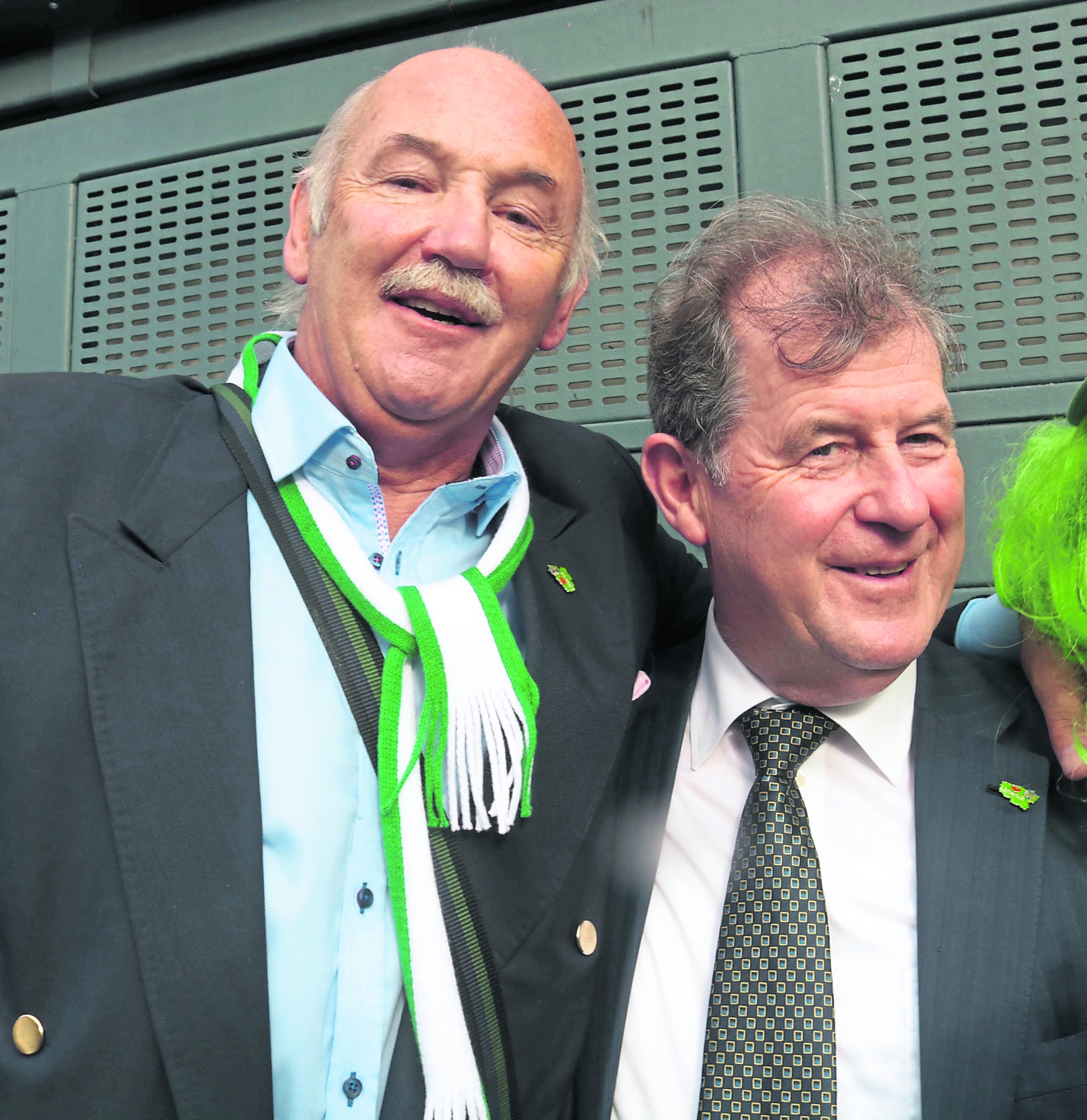
Eamonn is not as involved as Joe, but his heart would be with it. I saw him at the function on Sunday night and we gave one another a hug. I met Pat outside the ground and he gave me a hug – a squeeze that would nearly kill you. I spoke to Joe shortly afterwards and he was thrilled. Joe is a great man for detail. Things have to be exactly right.
AE: OK, can you explain what you mean?
JPM: He’s just a detailed person, Joe. Which is necessary, I think. He’s a perfectionist. Everything has to be right. And nothing short of being right is good enough.
AE: But that goes for you as well.
JPM: Probably. Maybe I recognise it in him. And I loved John Kiely’s line, before the match. He was asked about the players and he said he just wanted them to be the best they could be. He wouldn’t ask for any more. It was a good line.
AE: You went into the dressing room afterwards – 45 years after your first appearance in a Limerick dressing room at Croke Park. What was that like?
JPM: I went in the door this time. It made me think a bit. I was looking around in there and I didn’t see anybody who was there in ’73. So that had me thinking.
AE: I saw a video clip of the players bursting into a chant. It must have been an emotional experience for you.
The moment JP McManus lofted the Liam MacCarthy Cup high in a rapturous Limerick hurling dressing room in Croke Park #GAA #LLSport #hurling #Limerick pic.twitter.com/BeQaod8BqP
— Jerome O'Connell (@JeromeSport) August 20, 2018
JPM: Well, you’d be so proud of these lads, you know?
JPM: Would you say it was the happiest day of your life?
JPM: I’d say yes, sporting wise. That and ’73. Back then, I thought I’d see many of them. And now, in 2018, what’s rare is wonderful, as they say.
AE: That 22-year-old who was hauled in through the window ...
JPM: I don’t think his bones would allow him to get up there now.
AE: It seemed to me, from the very beginning of the championship, that there was something different about this group. Would you agree?
JPM: They have the results to prove it. But yes, I agree with you. I think there’s a lovely culture there. There’s no point in saying that I know them well, but I feel as if I know them. I think a lot of that goes back to the academy, which is still a work in progress.
AE: They’re All-Ireland champions with an average age of 23.
JPM: It’s fantastic, fantastic. And they have leaders like John Kiely and Paul Kinnerk. They’ve a great conditioning coach in Joe O’Connor and so many other good people in the backroom team.
AE: I was very taken with John Kiely. I’ve only met him once, but there’s something about him that inspires confidence.
JPM: At the end of the day, you have to get the backbone right. You can have a very good team with poor management and you’ll win nothing. But if you’ve good management and a team maybe isn’t quite as naturally talented, you can make something out of them. Good management is crucial.
AE: Look, it was an emotional day for all of us from Limerick. We all had different reasons to be thankful and grateful for what was achieved. You’re not known for shows of public emotion, or even talking about your emotions. But for a man so passionate about Limerick hurling, it must have been ...
JPM: It was about seeing the joy – and taking in the joy on the faces of so many people around you. I genuinely don’t believe I got any more enjoyment out of it than thousands of Limerick people who were there. Even though I got enormous pleasure from it, I believe everybody got the same amount. To see how much it meant to them was so exciting for me. The world we live in now, we need leaders. And these lads will be leaders. It’s the example they’ll show that will lead the generations to come, into what’s right and what’s wrong. They can have a great influence, these men.
Young people today don’t listen to old people – but they’ll listen to these guys and aspire to be like them.
AE: OK, I understand all of that. But I just want to press you on the emotion of it all. When the whistle blew I was overcome – I was hugging people all around me. You’ve ducked the question a little bit there by deflecting it on to other people. I’ll ask you again. Was it an emotional experience for you?
JPM: It had to be emotional. It couldn’t but be. We tried to let the match creep up on us. It was like, ‘Please!’ And there was a quieter build-up this time, which I thought was good. Everybody was in the right place.
AE: Yeah – John Kiely set the tone for that. You felt it was helpful?
JPM: It always is. The manager will always want them coming in under the radar.
AE: I remember talking to Noreen [his wife] about the Limerick team a few years back and I felt like asking her to become a Limerick Leader columnist. She was so opinionated and massively passionate.
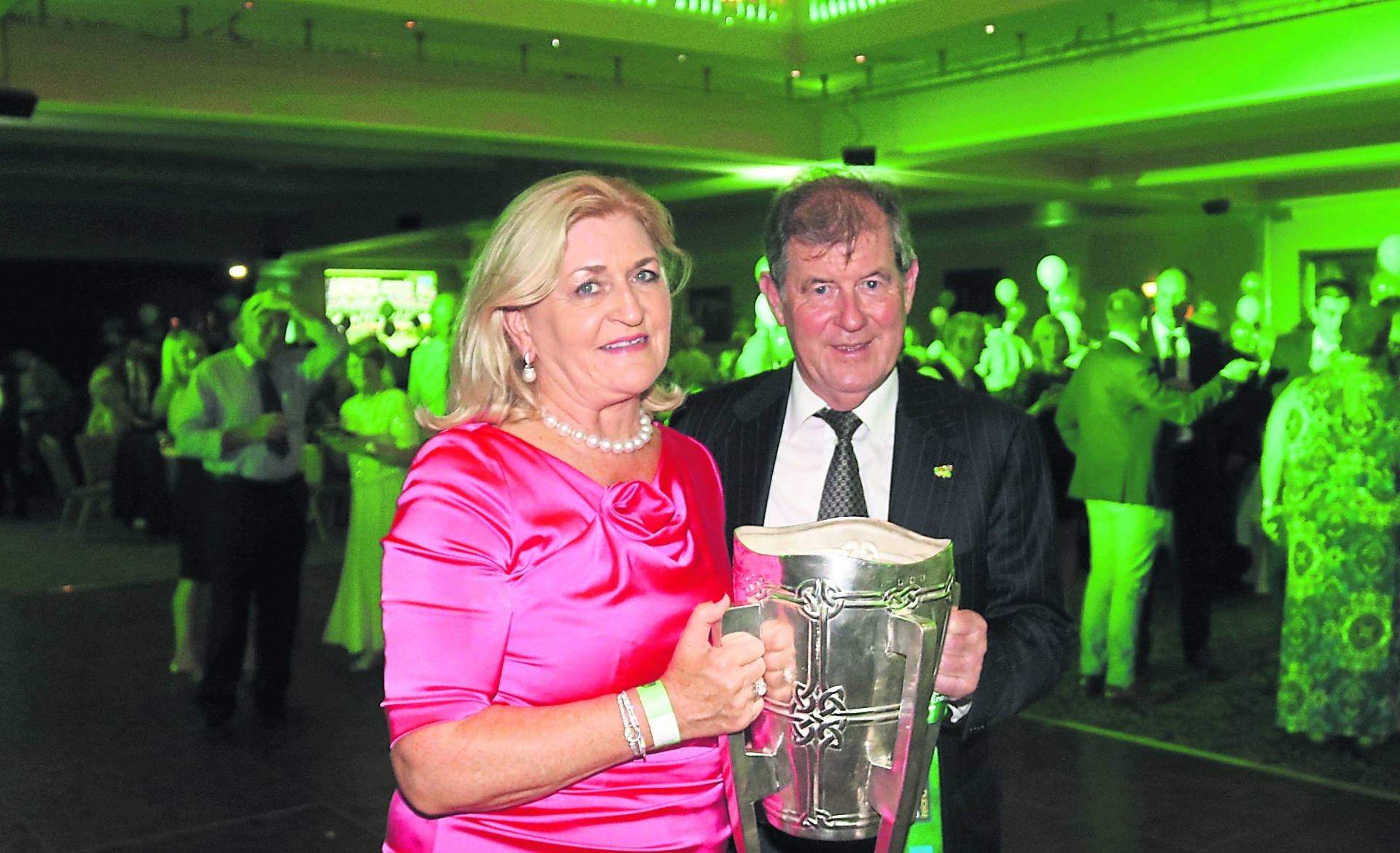
JPM: Tell me about it! Massively. When we won, I could see the relief. And the happiness. She said, ‘This is the best thing that ever happened.’ And for her, I believe it is – in a sporting world anyway. As a kid, she was at all the matches. I mean, the tears were flowing. They were rolling down the cheeks.
AE: Her cheeks?
JPM: Yeah.
AE: What about yours?
JPM: I’m sure there was one there somewhere.
AE: Your financial support for Limerick hurling – and Gerry’s – is something you’ve played down.
JPM: Listen, we do a little. It’s not all about money. You need the commitment from everybody and that’s there at the minute. There are so many people doing the right thing.
AE: Was Tony McCoy there with you?
JPM: No, he wasn’t at the match. But he was in a difficult spot, with his wife [Chanelle] being from Galway.
AE: Would it be fair to say that he knows you well?
JPM: I’d say better than most, anyway.
AE: I interviewed him once and he told a story about the 2013 team, who won the Munster championship and reached the All-Ireland semi-final. He talked about them being out here, in the house.
JPM: Oh, right. That’s right.
AE: He took some of them aside and said, ‘Look lads, it’s great that you are here. It’s great that you won a Munster final and got to an All-Ireland semi-final. But what you need to appreciate is that this man here – your host – wants to win the big one.’
JPM: [Laughs].
AE: He finished up by telling them – ‘You won’t be back next year if you don’t win an All-Ireland.’ And he told me that, when it comes to a desire to win, he would put you ahead of himself – and ahead of Paul O’Connell as well. Would you plead guilty to that?
JPM: [Sighs]. I don’t know. Winning becomes a habit. Everybody likes to win.
AE: But AP McCoy needed to win.
JPM: He was a driven man. You talk to AP and he’ll tell you there’s only one place to be – and that’s winning.
For a while, the talk turns to Adare Manor and his hopes of attracting the Ryder Cup to the resort he has lavished tens of millions on. He believes the event would give sporting Limerick a worldwide profile. “Where there’s a will there’s a way,” he says. “I think we have the facilities –and there are a lot of hotel rooms within an hour of Limerick.”
It’s clear, from the way he talks about the place, that he is invested in Adare Manor in more ways than one.
JPM: You know, we have a mantra down there, which I brought in. It’s that we’ll write a reference for nobody, when they’re leaving.
AE: Why?
JPM: We said ... well, I spoke to them. I said, ‘We won’t write a reference for you – you’ll write it for yourself – by virtue of the length of time that you’ve been here.’ Because the word will get out that if you were in Adare for a couple of years, you had to be good. If you weren’t, you won’t be there. And it has created great camaraderie there between the people. It’s the same as the hurling team, if you like. If every fella was trying to do it on his own, you’d never win a match.
AE: OK. That’s a culture you are instilling in Adare?
JPM: I think we have some great people working for us. Their attitude is so good, the young people. So good. They want to get on.
AE: The people who don’t have that attitude won’t survive long, I take it?
JPM: In anything, there’s no place for having a poor attitude. If the enthusiasm is there and the attitude is right, you can work with that.
AE: AP [McCoy] also told me that no matter all the success which horse racing has brought you – the big races he won on your horses – nothing that he or anyone else has done in your racing colours would compare to Limerick winning an All-Ireland again. Is that a true summation?
JPM: One hundred per cent, one hundred per cent. When you win a race, you share it with a few. There’s another race half an hour later – you know what I mean? When you’re in an All-Ireland final, if you don’t win it, you have to wait another 12 months for the next throw of the dice. So for me, it’s about the fact that you get to share it with so many other people. It means something different, even if they only know a first cousin of one of the players they’re clinging on to something that matters so much.
The Galway people, after the game, were so lovely. I know they were disappointed, because it’s tough when you get beaten. And it’s not like the All-Ireland final is only another match. But they seemed to be happy that it was Limerick that beat them.
AE: Some of us were waiting 45 years. A lot of people have been saying over the last few days that they might never see one. Did that ever cross your mind?
JPM: You hoped you were going to see one anyway. But we don’t have to think about that now. The supporters will be drained after this, let alone the players. I’m planning to go to Adare this evening with Noreen and John and Sue Ann [son and daughter]. They’re going to go down for a while and I’ll go too.
Drinking doesn’t interest me, but the adrenalin is still there. When we went to see Declan this morning, you could sense the excitement within the hospital – posters on the walls, girls still wearing ribbons. I met somebody in the lift and she had no ribbon on her. I said, ‘You must be from Clare.’ She said, ‘I am.’ [Laughs].
AE: You look fresh, two days after the game. There are people all around Limerick who are in a terrible state. So you’ll go down to Adare this evening and take it in?
JPM: I’ll get there at some stage, to see the excitement for an hour.
AE: Take me through your movements on the Sunday night, when the cup was Limerick’s.
JPM: After the game I went to a pub on a corner, in towards the city centre – I can’t remember the name of it. A few of the lads were there – my sons, my daughter, their friends. Nicky English was there, I remember. Gordon Elliot was there. Then we changed at the hotel and went to Citywest, for the team dinner. It was lovely to see so many happy people – no one disgruntled, everybody happy.
I came home after it – we got back to Martinstown around 3am. It was as easy to go home and wake up in your own bed, instead of fighting the traffic the next morning.
AE: Somebody asked me yesterday — what did it feel like to wake up on Monday morning with Limerick as All-Ireland champions? I’ll ask you the same question.
JPM: Waking up? I don’t know if I went to sleep.
AE: You were just buzzing?
JPM: Yeah. I wanted to make sure I wasn’t dreaming.

Subscribe or register today to discover more from DonegalLive.ie
Buy the e-paper of the Donegal Democrat, Donegal People's Press, Donegal Post and Inish Times here for instant access to Donegal's premier news titles.
Keep up with the latest news from Donegal with our daily newsletter featuring the most important stories of the day delivered to your inbox every evening at 5pm.

This publication supports the work of the Press Council of Ireland and Office of the Press Ombudsman, and our staff operate within the Code of Practice of the Press Council. You can obtain a copy of the Code, or contact the Council, at www.presscouncil.ie, Lo-call 1800 208 080 or email: info@presscouncil.ie.