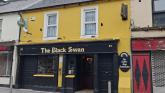
Permission is being sought to convert The Black Swan pub at Davis Street in the city centre into a residential unit
Search


05 Apr 2026

Please allow ads as they help fund our trusted local news content.
Kindly add us to your ad blocker whitelist.
If you want further access to Ireland's best local journalism, consider contributing and/or subscribing to our free daily Newsletter .
Support our mission and join our community now.
To continue reading this article, you can subscribe for as little as €0.50 per week which will also give you access to all of our premium content and archived articles!
Alternatively, you can pay €0.50 per article, capped at €1 per day.
Thank you for supporting Ireland's best local journalism!

The Great Rhino Robbery can be watched on Sky Documentaries

A LIMERICK-based criminal gang features prominently in a new documentary series highlighting the worldwide illicit rhino horn trade.
The Great Rhino Robbery on Sky Documentaries is a three-part documentary from director Jesse Vile, that highlights raids carried out across Europe on museums that were orchestrated to acquire ancient rhino horns.
According to the documentary, the price of the horns, driven by an illicit black market trade, can fetch upwards of €170,000.
The documentary covers all aspects of the trade, from the thefts in museums in Europe to illegal poaching in South Africa.
The makers of the documentary, through interviews with experts and officials from Europol, tied many museum raids to the Limerick-based gang, the Rathkeale Rovers.
This criminal organisation is understood to be responsible for a number of illicit operations across Europe, including tarmacadam scams, fake Covid-19 test results, and of course, rhino horn smuggling.
In 2016, 14 men with links to the Rathkeale-based gang were found guilty of masterminding a plot to steal rhino horns and rare Chinese artefacts worth €76m from several museums across Britain.
This included raids on museums in Cambridge, Norwich, Glasgow and Durham as well as an auction house in Sussex.
One of those who features in the documentary series is Paolo Viscardi, who is now the Keeper of Natural History at the National Museum of Ireland, and has written extensively about the illegal trade of rhino horns.
In a paper sent to the Limerick Leader by Mr Viscardi, he suggests that an Irish gang, not directly identified as the Rathkeale Rovers, may be acquiring horns by offering cash to petty criminals who commit the thefts.
The publication, titled “The Horns of Dilemma: The Impact of Illicit Trade in Rhino Horn,” also mapped out several thefts or attempted thefts of rhino horn in Europe, during 2010 and 2011, which saw several European countries affected - including England, France, Italy and Sweden.
According to Mr Viscardi, traditionally, the rhino horn has been used to “treat fever and a variety of conditions including gout and rheumatism” in a number of Asian countries - while the increasing belief that it can be used as a cancer cure rumours in China, Vietnam and Taiwan have created “a booming illegal trade.”
In his publication, he states the first signs that the black market in rhino horn was starting to have an impact on “historic material” came in 2008 when an unknown number of horns were stolen from Grahamstown Observatory Museum and Oudtshoorn Museum in South Africa.

Subscribe or register today to discover more from DonegalLive.ie
Buy the e-paper of the Donegal Democrat, Donegal People's Press, Donegal Post and Inish Times here for instant access to Donegal's premier news titles.
Keep up with the latest news from Donegal with our daily newsletter featuring the most important stories of the day delivered to your inbox every evening at 5pm.

This publication supports the work of the Press Council of Ireland and Office of the Press Ombudsman, and our staff operate within the Code of Practice of the Press Council. You can obtain a copy of the Code, or contact the Council, at www.presscouncil.ie, Lo-call 1800 208 080 or email: info@presscouncil.ie.