'A true gentleman': The late James Johnston, of Shannon
Search


06 Apr 2026

Please allow ads as they help fund our trusted local news content.
Kindly add us to your ad blocker whitelist.
If you want further access to Ireland's best local journalism, consider contributing and/or subscribing to our free daily Newsletter .
Support our mission and join our community now.
To continue reading this article, you can subscribe for as little as €0.50 per week which will also give you access to all of our premium content and archived articles!
Alternatively, you can pay €0.50 per article, capped at €1 per day.
Thank you for supporting Ireland's best local journalism!


Gordon McQueen’s family said football must do more to protect players after an inquest found heading the ball was “likely” to have contributed to a brain injury which was a factor in his death.
McQueen – who was capped 30 times by Scotland between 1974 and 1981, and played as a defender for Manchester United and Leeds during a 16-year career – died at his home in North Yorkshire in June 2023, aged 70.
The cause of death was pneumonia – he had become frail and was confined to bed for several months, the inquest in Northallerton, North Yorkshire, heard earlier this month.
The pneumonia was a consequence of mixed vascular dementia and chronic traumatic encephalopathy (CTE), coroner Jon Heath said.
In a narrative conclusion, the coroner said: “It is likely that repetitive head impacts sustained by heading the ball while playing football contributed to the CTE.”
After the hearing, McQueen’s TV presenter daughter Hayley McQueen and her sister Anna Forbes spoke about the dangers of heading.
Ms McQueen said: “It should have been a turning point many, many years ago when we learned the same thing with Jeff Astle and not much has happened between that time and now.
“They need the help from the footballing authorities, but there also needs to be changes too – potential legislation and education.”
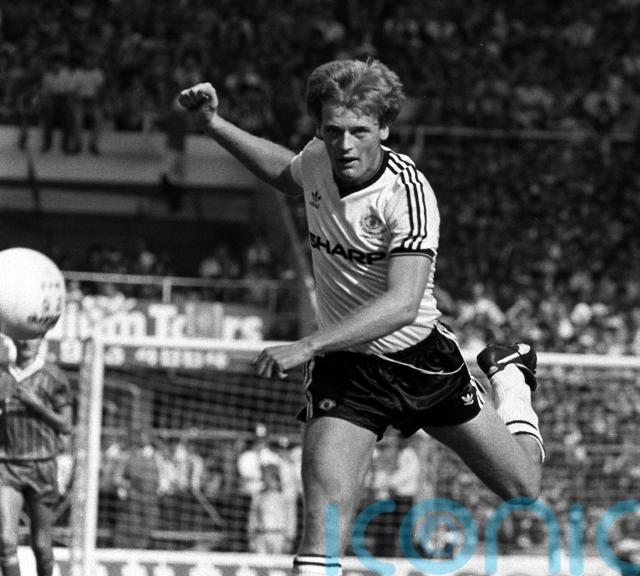
Former West Brom and England striker Astle’s death in 2002 was recorded by the coroner as being by industrial disease, owing to his repeated heading of a ball.
Ms Forbes said the family had been let down by the Professional Footballers’ Association (PFA) when her father was still alive, calling the players’ union a “disgrace” after, she said, it did not respond to pleas for help.
She said: “It depleted my parents’ lifetime savings looking for private care for my dad and we relied on charities such as Head for Change to support his respite care because the PFA gave us nothing, no support whatsoever.”
A spokesperson for the PFA said: “There is an ongoing need for a collective response, from football and beyond, to ensure former players affected by neurodegenerative disease, and their families, are properly recognised and supported.
“That includes the need for clarity on the status of conditions linked to repetitive head impacts, which is something we are continuing to pursue urgently with government, football’s authorities and player representatives from other sports.”
The PFA is lobbying the Industrial Injuries Advisory Council (IIAC) over the classification of neurodegenerative conditions among footballers as industrial disease in an effort to entitle players and their families to Government support.
The PFA also continues to push for the game’s lawmaking body, the International Football Association Board (IFAB), to trial the use of temporary concussion substitutes.
The PFA and the Football Association co-funded one of the key pieces of research in this area, with the 2019 FIELD Study concluding footballers were three and a half times more likely to die of neurodegenerative disease than age-matched members of the population.
The PFA and the Premier League set up the Football Brain Health Fund in September 2023 to support former players and their families affected by neurodegenerative disease. The fund was worth an initial £1million, but that has been heavily criticised by Football Families for Justice (FFJ), with one of its leading figures, John Stiles, describing that start-up cash as a “pittance”.
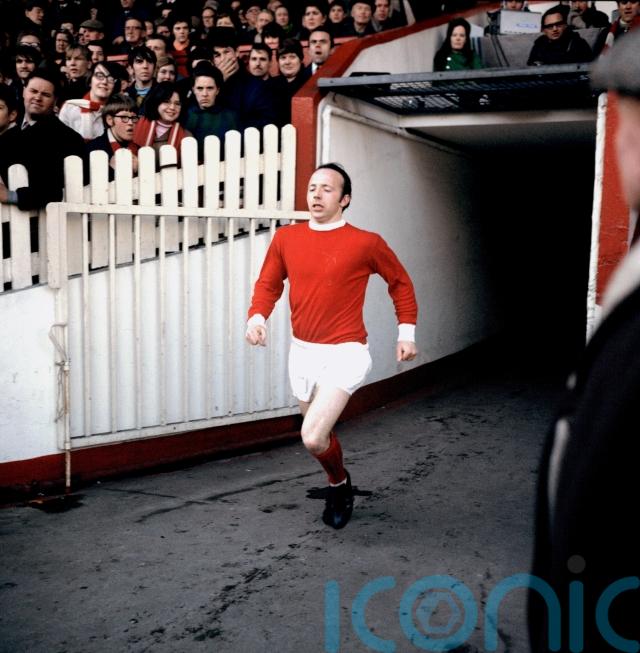
Stiles is the son of former England World Cup winner Nobby Stiles, who died in 2020 with a subsequent post-mortem determining he had CTE.
The FFJ group said in a statement: “Sadly, the McQueen family have not been alone in the traumatic experiences they have had to face.
“The PFA – a body which is there to protect its members – did not even attend the inquest. Make of that what you will. We believe that they have questions to answer and will one day be forced to face up to their responsibilities.”
Stiles’ family is part of an ongoing legal action against the FA, the Football Association of Wales, the EFL, and the IFAB alleging negligence regarding head injuries.
An FA spokesperson expressed the governing body’s “sincerest sympathy” to McQueen’s family and friends, and added: “Whilst any association between heading a football and later life brain health outcomes remains an area of ongoing scientific and medical research and debate, we continue to take a leading role in reviewing and improving the safety of our game together with all stakeholders and international governing bodies.”

Subscribe or register today to discover more from DonegalLive.ie
Buy the e-paper of the Donegal Democrat, Donegal People's Press, Donegal Post and Inish Times here for instant access to Donegal's premier news titles.
Keep up with the latest news from Donegal with our daily newsletter featuring the most important stories of the day delivered to your inbox every evening at 5pm.

This publication supports the work of the Press Council of Ireland and Office of the Press Ombudsman, and our staff operate within the Code of Practice of the Press Council. You can obtain a copy of the Code, or contact the Council, at www.presscouncil.ie, Lo-call 1800 208 080 or email: info@presscouncil.ie.