

SPOTLIGHT: The Limerick factory that still speaks
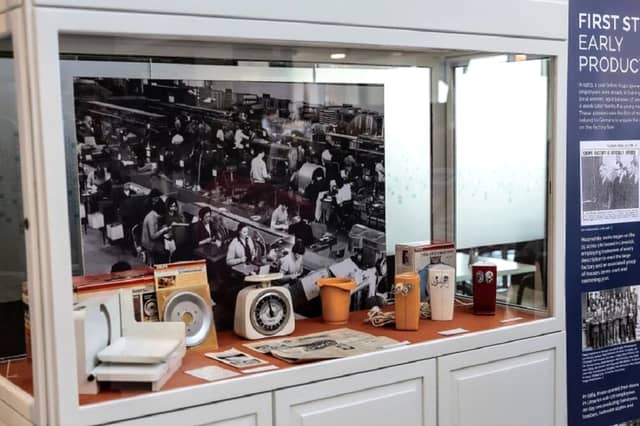

Krups began production in Limerick in 1964
A factory name can remain in a city’s vocabulary long after its last machine has stopped. Krups belongs to that category in Limerick. Say it and people begin placing relatives, neighbours and old friends who worked there, who met there, whose first wages came from the place. The name opens conversations that a company balance sheet could never accommodate.
On Thursday, November 19, those memories will have a public occasion. Voices of Krups, an audio-visual collection from the University of Limerick’s Centre for Irish-German Studies, is scheduled for launch at Limerick Museum at 5.30pm. Former employees and others connected with the company tell their own stories. For a city that owes so much to the work of its hands, that is an invitation worth accepting.
Roxboro looks outward
Krups began production in Limerick in 1964, bringing German manufacturing to the city’s southside. The Solingen company chose a site in Roxboro at a time when Ireland was seeking a different economic future. Foreign investment promised employment at home in a country accustomed to watching its young people depart.
Behind that national ambition were ordinary calculations: a wage, a household budget, the possibility of making plans. Employment figures describe the size of a workforce. They cannot convey what regular earnings mean to someone who has previously had little certainty.
The factory made electrical household appliances, objects intended for kitchens far beyond Limerick. There is something satisfying about that connection. A product bought elsewhere carried work done here, though its eventual owner might never have heard of Roxboro.
By April 1966, a visiting Shannon Development chairman recorded a workforce approaching 800. Later accounts put employment above 1,200 at its height. Whatever measure one takes, Krups became a substantial presence in the city.
Learning another country
The relationship with Germany extended beyond ownership. UL’s historical material includes photographs of Limerick employees in Solingen, including ten workers staying at the old Post Hotel in Ohligs in November 1968.
Such images deserve careful looking. Corporate history tends to favour directors shaking hands. Photographs of workers abroad suggest other stories: learning unfamiliar methods, finding accommodation and negotiating daily life in another language.
The 2024 exhibition assembled by Limerick Museum and Limerick Enterprise Development Partnership recorded an earlier journey. In August 1963, eighteen young Limerick women travelled to Solingen for training, followed a week later by twenty-five young men.
Consider the distance involved. Germany was another country in every practical sense, reached without the casual assurances of mobile phones and instant messages. These young people were acquiring industrial skills while discovering how much of everyday life they had previously taken for granted. Their experience also complicates the familiar account of Irish migration. They travelled to prepare for jobs that would bring them home.
After the shift
The factory’s cultural life is particularly interesting. Krups employees participated in John Player Tops, the inter-company variety competition that drew singing, dancing and acting talent out of workplaces across Ireland. The museum’s exhibition records rehearsals in the canteen and an RTÉ appearance in 1984. The production also travelled to Tralee and Castleconnell.
That canteen deserves a place in Limerick’s theatrical history. People who spent their working hours making appliances returned to practise a song, learn a routine or help put on a show. Colleagues became performers before audiences that knew them in entirely different roles.
We often discuss access to the arts as though culture arrives through the front door of a designated venue. Here it grew among workmates. The factory provided a ready company of people with abilities that their job descriptions could not reveal. Remembering Krups therefore belongs in an arts column. The city’s creative life has always exceeded the places officially appointed to contain it.
What people kept
An exhibition about Krups opened at LEDP in October 2024, drawing on material contributed by former employees and their families. Photographs, tools, diaries and appliances helped reconstruct the factory’s working life. The willingness to keep such things is revealing. An object retained for decades can acquire a meaning entirely different from the purpose for which it was made. A tool becomes evidence of somebody’s skill. A photograph keeps a colleague young. An appliance recalls the hands that assembled it.
For readers who never crossed the factory threshold, the recordings offer an introduction to a working Limerick that is easily overlooked. Children knew a parent went to Krups; neighbours knew the wages mattered. Now there is an opportunity to hear how the people inside understood the place, its demands and its rewards. The new collection gives those material traces an audible companion. Recorded voices preserve accents, hesitations and emphasis. They allow the person remembering to determine what deserves telling. There are also difficult recollections. Every large workplace contains differences of experience, grievances and inequalities alongside friendship and pride. A convincing history can accommodate them.
The closure announcement
In January 1991, the French group Moulinex took over Krups. Employment subsequently contracted. By the closure announcement in October 1998, about 500 permanent workers remained. The shock reached the Dáil within days. During a debate on November 3, the workforce’s expectations were described: people had feared a reduced working week rather than the loss of their jobs. That distinction catches the cruelty of the moment. There is a considerable distance between worrying about fewer hours and discovering that the place around which you have organised your life is being withdrawn.
Contemporary reporting described workers gathering after the announcement, trying to understand what had happened. The consequences travelled beyond the factory to families and businesses dependent on its wages. For those who had spent much of their adult lives there, redundancy also meant losing daily contact with people who knew their history. Experience remained, but its familiar setting was disappearing.
A different future
LEDP emerged in response to the closure, pursuing education, training and enterprise on the former factory site. That acknowledges the damage while refusing to treat the Southside as a place whose usefulness ended with one employer. Yet recovery should never become an excuse to hurry past the people who experienced the loss. A later success cannot retrospectively make an anxious household less anxious.
Voices of Krups offers time to attend to what lasted: acquired skills, friendships and memories carried into retirement or other employment. Younger listeners may discover a parent’s working life beyond the brief version told at home.
Limerick has monuments to prominent individuals. This project makes space for people whose contribution was repeated across thousands of working days. Their names may never appear on a street sign, but their labour helped sustain the streets around them.
At Limerick Museum on November 19, the former workforce will have something more to contribute. The appliances were made to perform their allotted tasks. The people who made them still have considerably more to say.