Throwback Thursday - In association with Glasshouse Opticians
Search


17 Apr 2026

Please allow ads as they help fund our trusted local news content.
Kindly add us to your ad blocker whitelist.
If you want further access to Ireland's best local journalism, consider contributing and/or subscribing to our free daily Newsletter .
Support our mission and join our community now.
To continue reading this article, you can subscribe for as little as €0.50 per week which will also give you access to all of our premium content and archived articles!
Alternatively, you can pay €0.50 per article, capped at €1 per day.
Thank you for supporting Ireland's best local journalism!


Strikes are inevitable if the Government does not listen to organised labour during the current fuel crisis, a trade union leader has said.
The Taoiseach, Tanaiste and ministers met with trade union and employer representatives at the Labour Employer Economic Forum (Leef) at Government Buildings on Friday.
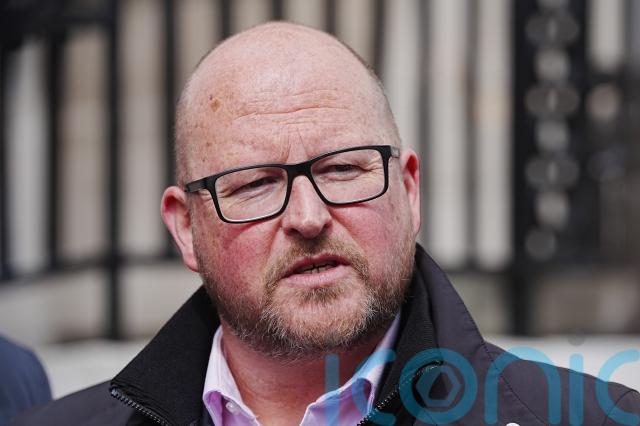
Following the meeting, Owen Reidy, the general secretary of the Irish Congress of Trade Union (Ictu), told reporters there would more meetings to secure measures to support workers in the next four to six weeks.
He said: “What we want to see is a process where Government engages with us over the coming weeks on fundamental issues that will protect workers in this cost-of-living crisis, some permanent, some temporary, and they need to be reviewed, because we think it’s going to get worse before it gets better.”
However, he warned: “If Government don’t listen to organised labor at this time, with this crisis, particularly after what happened last week, our point has been strike action is probably inevitable as a result of that.”
Protests last week, largely led by hauliers and farmers, disrupted fuel supplies in Ireland and brought parts of the motorway network to a standstill.
On Sunday, the Government announced a 505 million euro package of supports which included cuts to fuel duties, a delay to a carbon tax increase and a scheme to assist farmers, agricultural contractors and fishers.
Mr Reidy said: ”Workers are saying, ‘What about us? We’ve seen what others have got. What about us’”
And that “the Government have been reminded that they should not take industrial peace for granted.”
Asked about his comments Minister for Public Expenditure Jack Chambers said “We value the workers the length and breath of the country”.
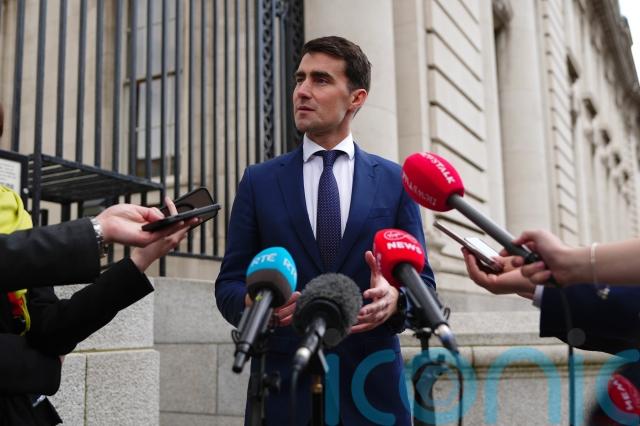
He said the Government wants to “work with the trade union movement in the weeks and months ahead” and said part of their response was “to provide universal measures for workers”.
He said reductions in excise “benefited every worker in the economy” and said the extension of the fuel allowance “benefits low income households in particular, and many workers as well”.
Mr Chambers said a Labour and Economic Resilience forum would be set up to manage future economic uncertainty, to hear wider concerns from workers and to strengthen resilience within the state.
He said: “A lot of that was compromised last week in the context of the blockades of critical infrastructure.
“I think having a strengthened collective effort would be really important in how we manage the turbulence within the economy.
Asked about the mood of Friday’s meeting Mr Reidy said the Government were in a “reflective, listening mode” adding: “I think they quite clearly heard that last week was a rupture, it was a significant issue, and that things have changed.”
Mr Reidy said trade unions will be having discussions with Government officials “pretty much immediately” to work on issues faced by workers due to price rises caused by the war in Iran.
“I think we can only judge the outcome of today in about four to six weeks time” following those discussions, he said.
Mr Reidy added “It’s important that we take our time and do it properly, and make sure that it’s durable” and that what is agreed upon “delivers for workers”.

Subscribe or register today to discover more from DonegalLive.ie
Buy the e-paper of the Donegal Democrat, Donegal People's Press, Donegal Post and Inish Times here for instant access to Donegal's premier news titles.
Keep up with the latest news from Donegal with our daily newsletter featuring the most important stories of the day delivered to your inbox every evening at 5pm.

This publication supports the work of the Press Council of Ireland and Office of the Press Ombudsman, and our staff operate within the Code of Practice of the Press Council. You can obtain a copy of the Code, or contact the Council, at www.presscouncil.ie, Lo-call 1800 208 080 or email: info@presscouncil.ie.