the Banner Plaza at Junction 12 on the M18 near Ennis
Search


02 Apr 2026

Please allow ads as they help fund our trusted local news content.
Kindly add us to your ad blocker whitelist.
If you want further access to Ireland's best local journalism, consider contributing and/or subscribing to our free daily Newsletter .
Support our mission and join our community now.
To continue reading this article, you can subscribe for as little as €0.50 per week which will also give you access to all of our premium content and archived articles!
Alternatively, you can pay €0.50 per article, capped at €1 per day.
Thank you for supporting Ireland's best local journalism!

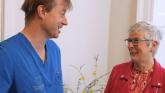
Senior lecturer Dr Helen McKeague, centre, with students at UL’s School of Medicine (Picture was taken pre-pandemic)

THE UNIVERSITY of Limerick’s School of Medicine may be considered young in comparison to its third level counterparts in Ireland and around the world, but its youth has proven to be key in bringing out its innovative edge throughout the pandemic.
When campuses nationwide shut their doors due to Covid-19 restrictions, many programmes up and down the country essentially scrambled to fast-track exams, roll out e-lectures, and restructure modules. Many students missed out on precious, hands-on education.
But that was not the case for the Graduate Entry Medical School, which changed its name to the School of Medicine at the height of the pandemic’s first wave in May, following an expansion of its programmes.
And thanks to the school’s modern solution to a modern problem, it has only lost one whole day of teaching since the pandemic.
That is according to Dr Helena McKeague, senior lecturer in medical education and course director of the Bachelor of Medicine and Bachelor of Surgery. Dr McKeague has part of the school since before the first tranche of 32 students enrolled in 2007.
The school was able to showcase a virtual open day for prospective students last Saturday. Previous days, those interested in the field of medicine would have been able to interact with various classrooms and their equipment, but due to Covid-19 that has been rendered unfeasible, Dr McKeague said.
She said that medicine has been quite traditional in Ireland, though that has changed in recent years, with UL being part of that integral change. She admits that people were “skeptical about a new medical school in a new university”.
But she said that once the students got out to clinical placements, they proved to be “great ambassadors”. She said then people started to realise the positive effect the school was having on the region and in Ireland.
Problem-based learning is at the heart of the curriculum in the first two years, where students work together in small groups, facilitated by a medically-qualified tutor. “The purpose of it is for them to develop an understanding of the basic biomedical sciences that can explain what a patient complains of, what kind of patient they have, and so on.”
In third and fourth year, their training is practical and hands-on with a stronger emphasis on clinical placements. She said that the students, graduates and the “finished product” reflect the quality of the programme. Among the top graduates include Dr Kevin Doody and Dr Pat Kennelly, who returned to become consultants at University Hospital Limerick.
Despite the Covid-19 pandemic, the school saw no lull in activity. In fact, it has probably been a bastion of how practical education can be taught remotely, after missing just one day of teaching, which Dr McKeague described as “quite phenomenal”.
A lot of her online classes comprised a form of teleconferencing in which students had access to an interactive whiteboard and could upload content for demonstrations. Students could even work in groups, even if they were thousands of miles apart. Some students were in Canada, getting up at 4am.
But one of their big success stories—results of which have piqued the attention of other medical faculties—has been their web-based proctored, or invigilated, exams.
The exams were delivered through a secure platform on the students’ tablets, where they could answer multiple choice or short-answered questions. The invigilators could see the students through their webcams, and even have access to their screens.
And for a large part, it’s business as usual in the semester, as essential face-to-face teaching is still going ahead, and students are attending clinical sites under a new structure and schedule.
“I have been there from the beginning. It has been a privilege, I must say I have really enjoyed it,” she said, adding “our students are an absolute joy”.

Subscribe or register today to discover more from DonegalLive.ie
Buy the e-paper of the Donegal Democrat, Donegal People's Press, Donegal Post and Inish Times here for instant access to Donegal's premier news titles.
Keep up with the latest news from Donegal with our daily newsletter featuring the most important stories of the day delivered to your inbox every evening at 5pm.

This publication supports the work of the Press Council of Ireland and Office of the Press Ombudsman, and our staff operate within the Code of Practice of the Press Council. You can obtain a copy of the Code, or contact the Council, at www.presscouncil.ie, Lo-call 1800 208 080 or email: info@presscouncil.ie.