A photo of Scarlett Faulkner surrounded by candles in a church I PICTURE: Facebook
Search


01 Apr 2026

Please allow ads as they help fund our trusted local news content.
Kindly add us to your ad blocker whitelist.
If you want further access to Ireland's best local journalism, consider contributing and/or subscribing to our free daily Newsletter .
Support our mission and join our community now.
To continue reading this article, you can subscribe for as little as €0.50 per week which will also give you access to all of our premium content and archived articles!
Alternatively, you can pay €0.50 per article, capped at €1 per day.
Thank you for supporting Ireland's best local journalism!

James Keane with Bohermore National School 1860-2025 I PICTURE: Brendan Gleeson

A NEW book chronicling the history of Bohermore National School has been launched.
The Limerick school is 165 years old next year and ahead of that anniversary James Keane has publised a history of the school.
The new publication is titled: Bohermore National School 1860-2025.
Bohemore School opened its door to pupils on Wednesday, February 1, 1860. There was only one teacher, Mr Philip Madden. He remained the school principal for the next 37 years. We have the old school of Bohermore compliments of Bohermore parishioners alone who built it.
William R Molloy, inspector of national schools, visited Bohermore School on Tuesday, April 24, 1860, interviewed the teacher, Mr Philip Madden and the school manager, Rev John Fogarty, PP who were seeking a grant towards the payment of a teacher’s salary, and the supply of books for the pupils. It had 51 pupils.
Queen Victoria’s educational services sanctioned Bohermore School as Bohermore National School. On Friday, May 11, 1860, the Board of Education in Dublin authorised the payment of an annual salary of £18 to Philip Madden, backdated from April 1, 1860 and the provision of books for 75 pupils. It became a national school under the 1831 National School System, and it was duly obliged to place a sign on the school saying so.
This school was built within a decade of the great Famine in which every parish townland became more depopulated. In 1852, Fr John Fogarty, PP of Bohermore, wrote that there was no confraternity owing to the great depopulation due to the Famine of the 1840s.
Within half a mile of the school is the townland of Inch St Lawrence. The holocaust of the Famine was felt most acutely there. In 1841, the demographics show that there were 211 people living in 33 dwellings. In 1851, there were 24 people living in four dwellings.
These people lived in fourth class houses, mud huts. The inhabitants of these mud huts in Inch St Lawrence could not afford the ship to depart this country. Those 187 people who disappeared from Inch St Lawrence regrettably suffered the horror of death from disease or hunger. Their mud huts, their homes, were their living tombs. They awaited death. Being citizens of Ireland or subjects of the realm granted them nothing. By 1851, there was no trace or record of these people or their mud huts.
I’ll borrow the words of the bible to describe their fate: they ‘have left no memorial, and disappeared as though they had not existed. They are now as though they never had been, and so too their children after them’ (Si 44:9).
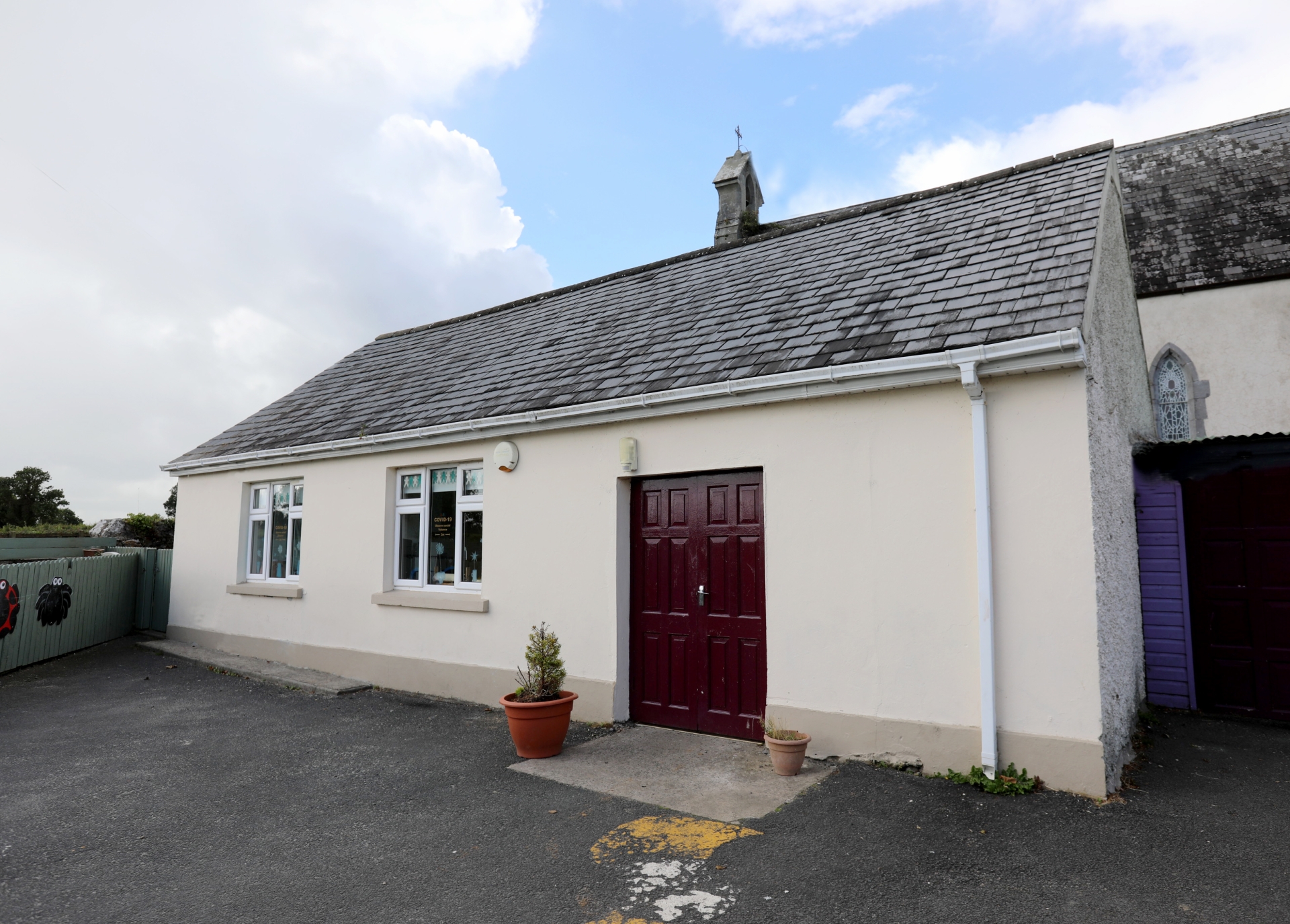
The old school in Bohermore
From the late 1700s, Irish families believed that education was the key to social and economic advancement. Prior to the building of the school in 1860, parents sent their children to the few private schools scattered around the parish where they paid for the tuition. The mud church that was thatched doubled as a school during the week for two decades prior to 1860.
While education was banned to Catholics during the Penal Times, the British government changed their policy for both economic and security reasons. Unemployment, alcohol consumption and lawlessness were huge social problems in the early 1800s. By having an educated workforce, productivity would grow in Ireland and an educated workforce would be available to the Empire to work throughout the world. The government wanted to promote a curriculum that would instil the great moral principles of all Christian denominations in Ireland; this would curb the elements of lawlessness that had crept into Ireland. There were very few churches or schools to educate people on being good citizens.
The school books endorsed the prevailing British political and value systems. The books avoided references to Irish contexts so as to promote greater assimilation within the British Empire. The 1800s saw the decline of the Irish language.
Bohermore School was 27½ feet long, 16 feet broad, 9½ feet high. The school was best positioned for its two large windows, on the long southeasterly wall, to transmit as much sunlight and heat into the one classroom. A space of 10 feet was partitioned off at the end of the school house for the teacher’s residence.
The teacher, Mr Madden was fined £1 on 14/2/1868 for continued inefficiency. There were other fines for breaches of the Board of Education regulations. They seemed to refer to administrative failings, accounts not in order, roll book inaccuracies, but also for failing to deliver the required standard of education to the pupils.
From 1892, primary education became compulsory, truancy became an offence, and the police force was vigilant for breaches of this law. What a U-turn in less than 150 years, a transition from Catholics being pilloried and punished for Receiving an education in the eighteenth century, to Catholics being pilloried and punished for not receiving an education in the nineteenth century.
After independence in 1922, the educational narrative changed, with the emphasis on the Irish culture, portraying all that is unique and distinctive, all that differentiates the people of this nation from the rest of the world, particularly our British neighbours.
In the years 1937-38, the senior pupils of Bohermore NS used their literary skills and 6,500 words to give expression to the world they inhabited. This became part of the largest folklore collections in the world which is now stored in UCD. This is a time capsule whose value and worth increases with the passage of decades and centuries.
The debate on corporal punishment continued throughout the 1970s without any resolution. It ended when the Education Minister, John Boland took the decisive decision to ban it from Monday, February 1, 1982.
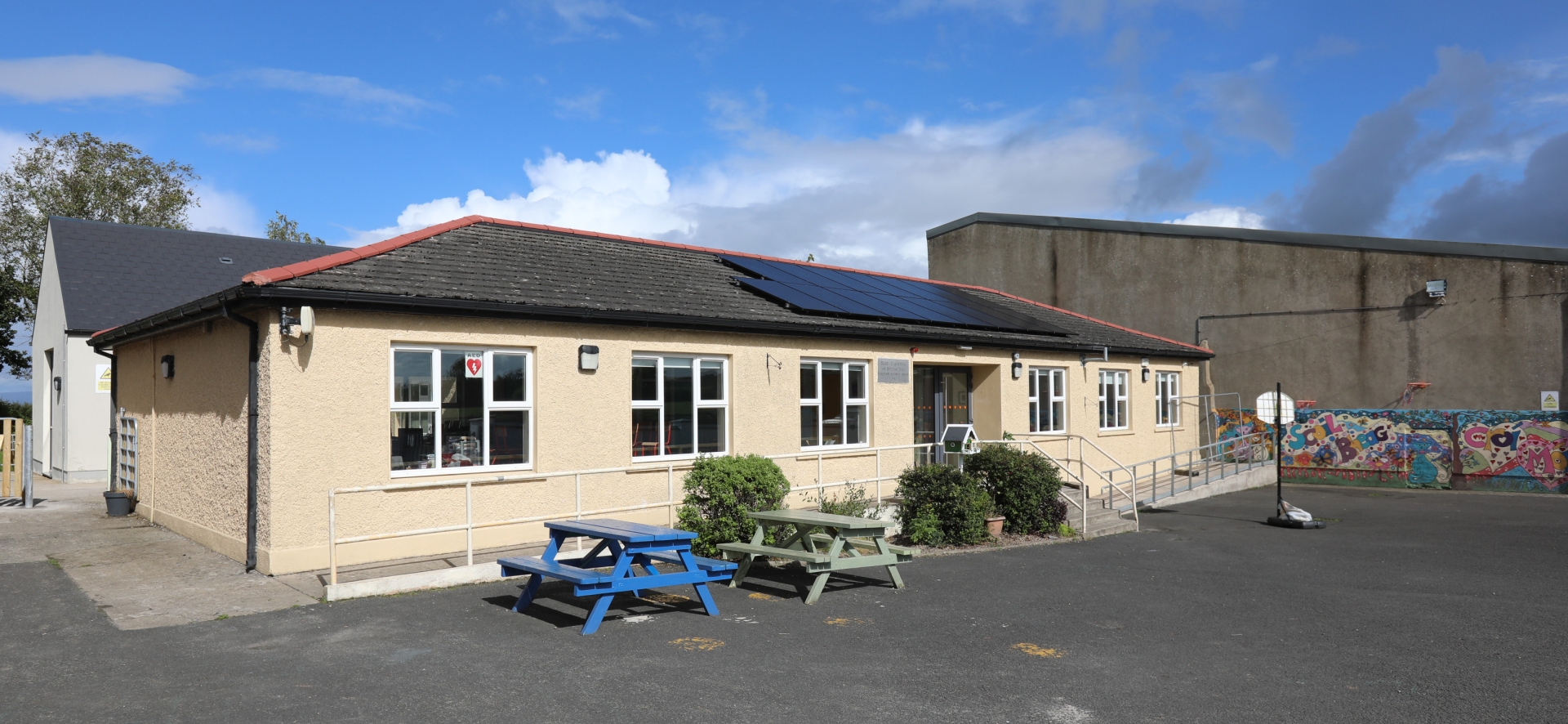
The new school in Bohermore
1991 saw the opening of a new school for Bohermore by Minister Mary O’Rourke and blessed by Archbishop Clifford. With the new school, an air of confidence grew in staff and pupils. It was outward looking, engaging in activities and events right up to national level. Cups, trophies, awards and prizes were coming the way of Bohermore. It added a subtitle to its name: Scoil Bheag, Croí Mór.
Educators are at the forefront of untapping this unfathomable depth of potency as onlookers with bated breath await the exposure and disclosure of its richness. The school offers a rich soil in which to cultivate their rich and diverse array of gifts.
The current pedagogy supports a diversity of teaching methods that are employed to best facilitate the learning needs of diverse pupils. Education was very much confined to memory and rote learning, devoid of the more advantageous holistic approaches to the total development of each child nowadays. Bohermore NS is adept at adopting a pupil-centred approach to teaching.
24 priests have acted as chairpersons of the Board of Management of Bohermore NS from 1860 to 2019. Now it has fallen to Michael Sheahan to fill that office. The current and thirteenth principal, Mrs Ciara Sheehy has been expanding the school, growing the number of staff to cater for the increased number of 97 pupils.
All this work has and is being done under the patronage and ethos of the Catholic Church. Education has been the most transformative element in enriching this community, this county and this country over the past 200 years. Education is an investment in people that will reap fruits for the rest of their lives.
Past pupils of Bohermore NS were to be found working between Adelaide in the southern hemisphere and Montana in the west coast of USA having a transformative effect on the emerging communities in the New World. That Bohermore education is still sought across the globe.

Subscribe or register today to discover more from DonegalLive.ie
Buy the e-paper of the Donegal Democrat, Donegal People's Press, Donegal Post and Inish Times here for instant access to Donegal's premier news titles.
Keep up with the latest news from Donegal with our daily newsletter featuring the most important stories of the day delivered to your inbox every evening at 5pm.

This publication supports the work of the Press Council of Ireland and Office of the Press Ombudsman, and our staff operate within the Code of Practice of the Press Council. You can obtain a copy of the Code, or contact the Council, at www.presscouncil.ie, Lo-call 1800 208 080 or email: info@presscouncil.ie.