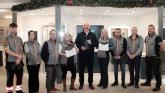

CLOCKWISE FROM TOP LEFT: Retire Superintendent Eamon O’Neill; Sergeant Anne Marie Hassett; Garda Colm Geary; Garda Tom McGlinchey and Sergeant Michelle Leahy
Search


27 Jan 2026

Please allow ads as they help fund our trusted local news content.
Kindly add us to your ad blocker whitelist.
If you want further access to Ireland's best local journalism, consider contributing and/or subscribing to our free daily Newsletter .
Support our mission and join our community now.
To continue reading this article, you can subscribe for as little as €0.50 per week which will also give you access to all of our premium content and archived articles!
Alternatively, you can pay €0.50 per article, capped at €1 per day.
Thank you for supporting Ireland's best local journalism!

To find out how to volunteer or take part in the Cycling Without Age programme see www.cyclingwithoutage.ie | Picture: Pexels

CYCLING WITHOUT age is an initiative that now has more than 250 chapters in 29 countries, including Ireland since 2017. I heard about it over a year ago and I thought it was a great idea. I visited their web site to find out more about how it works and its benefits.
It is cycling mainly for the elderly and infirm people without the physical exertion as a pilot does the peddling.
The benefit is the person is outdoors in the fresh air with new things to look at and being able to meet more people socially. It could apply to people in home care, rest and nursing homes who are fit enough to participate.
The two passengers are carried on an adult carrying Danish made Trio Bike. It's a three-wheeled cargo bicycle, with two comfortable seats at the front.
The handlebars and saddle are fitted behind where the pilot sits and does the steering and pedalling. The trio are in close proximity and can engage in conversation as they proceed on their journey.
For many older people, the bike brings up wonderful memories of their first means of transport. Cycling without age allows people to make choices and not become too much of a risk to themselves and others as the pilot is in control. By enabling older members of our community to engage with society more actively and positively has benefits for all involved.
Volunteers are needed to act as pilots, and it can be of benefit to them as well.
Their generosity and kindness commence with taking one or two elderly people whose mobility is impaired out on a safe and quiet route.
This slow cycling takes in the world at a different pace. It encourages being in the moment, supports curiosity, reminiscing and storytelling, because the people on the bike have time to stop and listen to stories that could be forgotten. Stories become our life histories and creates new relationships between generations. Life unfolds at all ages, young and old and can be thrilling, fun, sad, beautiful and meaningful.
This idea offers more than just breaking down barriers to mobility and activity that so many senior citizens face. In addition, the passengers returning from the cycle riders are happy, talkative and sociable. For some, then a reduction in aggressive behaviours associated with memory impairment. Indeed, there is a growing body of research showing benefits, for example, one elderly gentleman who attended a cycle went from spending 90% of his time in bed to "getting out of bed every day, motivated simply by the cycle rides offered on a daily basis at the nursing home".
Research has found really significant positive effects on both the elderly residents the pilots and the nursing home staff. Cycling Without Age founder, Ole Kassow said: "We organise reunions two or three months afterwards, and the people who have dementia will remember the trip and talk about it. They light up, they smile, and they sing along to songs we played on the cycle". I encourage you to age with attitude. You too can live a life that has exciting elements of freedom and there is nothing like cycling to give you that feeling when the wind is in your hair. It's a symbol of your freedom, independence and of being outdoors and out of our comfort zone, no matter what age."
The drawbacks of the scheme are the cost of providing the bikes, sourcing volunteers, and safe routes to use. Sponsorship for the bikes could be sourced from companies in the region, or from generous benefactors. Active retirement groups and Men Sheds groups amongst others could provide the people to pilot the bikes. Ireland is renowned for its volunteers who play a major part in the success of so many groups and organisations. In West Limerick the Greenway and Newcastle West Demesne, would be an ideal place to use the bikes away from the traffic. Town and village parks and walkways are other routes that could be used.
Limerick Council, West Limerick Resources, Ballyhoura Development, may be interested in introducing the scheme to Limerick. I think it has great potential for our ageing population to stay involved with a little help from a younger section of people heading in the same direction.
When your goose is cooked
IN 17th and 18th century Ireland a roasted goose took pride of place on the table at Christmas and Michaelmas. Old Irish country folk often remarked "If you eat a goose on Michaelmas Day, you'll never want for money". A close relation of the duck and swan, like them, geese have a flattened bill. However, geese are larger than ducks, but smaller than swans.
Their distinctive webbed feet make them good swimmers. The four clawed toes on each foot are protected by flaps of skin.
Geese are graceful in flight, often flying over 1,000 miles without stopping to rest. Even though they've eyes on the side of their heads, geese always have to turn their heads sideways to see objects in front of them. They were first domesticated in Asia thousands of years ago.
These remarkable birds make their nests from twigs, grass, weeds and moss then line it with down from their bodies. Their eggs hatch after about 28 days and the young geese, known as goslings, are covered with a lovely fine fluffy down. Although young geese remain with their parents for at least a year, they begin to fly after two months. Foxes and wolves are their worst enemies. Seagulls may steal eggs and attack goslings. Geese defend themselves by hissing and biting, then striking with their strong wings.
In Ireland, no part of the goose was wasted. Pens and fishing flats were fashioned from the quills, the Irish country housewife used its large wings to dust the flour from her griddle, while the fine down and feathers made comfortable mattresses, cosy eiderdowns and pillows. Goose fat brought up an excellent shine on the black kitchen range and made delicious roast potatoes. And in winter it was rubbed on chests to prevent nasty coughs and colds.
Our family always kept a number of geese around the farmyard, and it was one of my jobs to look after them when I was growing up. They had their own stonewalled and galvanised house to protect them from the foxes in nearby O'Connell's glen. They were let out early before I went to school and closed in before dark each evening. Their house was cleaned out and fresh bedding added every few days and it was not a job I looked forward to. The gander was very protective of his flock and one eye was always kept on him in case he attacked. Having a short pants was a disadvantage as he would creep up on you and bite your bare back legs.
A goose for Christmas was the preferred choice and a few were also sold to fund the Christmas shopping list. A good deal of work was involved in preparing the goose, but it made a mouth-watering Christmas meal. No part of the goose was wasted and there was eating and drinking in the soup. A turkey is the preferred Christmas bird now and geese have disappeared from the farmyard.

Subscribe or register today to discover more from DonegalLive.ie
Buy the e-paper of the Donegal Democrat, Donegal People's Press, Donegal Post and Inish Times here for instant access to Donegal's premier news titles.
Keep up with the latest news from Donegal with our daily newsletter featuring the most important stories of the day delivered to your inbox every evening at 5pm.

This publication supports the work of the Press Council of Ireland and Office of the Press Ombudsman, and our staff operate within the Code of Practice of the Press Council. You can obtain a copy of the Code, or contact the Council, at www.presscouncil.ie, Lo-call 1800 208 080 or email: info@presscouncil.ie.