

‘Offensive waste of resources’ – hugging consent ad taken down after criticism
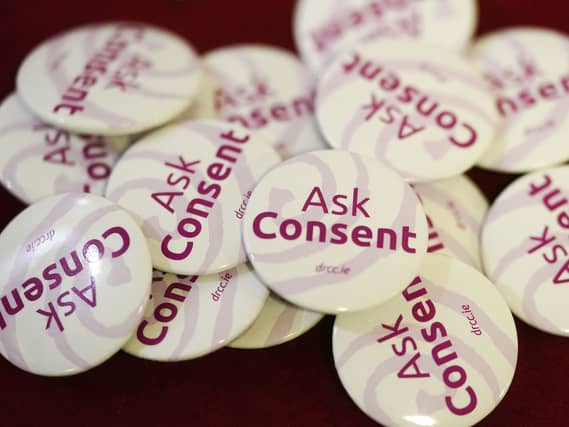

The video, released as part of the We-Consent campaign, featured a child who was uncomfortable receiving a hug from an older woman.
A social media video about children’s consent to receiving hugs from grandparents which was produced by the Dublin Rape Crisis Centre (DRCC) has been taken down after receiving criticism.
Justice Minister Jim O’Callaghan said his department, which funded the video, told DRCC to take the “inappropriate and demeaning” ad down.
“The video produced by the Dublin Rape Crisis Centre involving grandparents does not represent the views of the Government,” he said in a statement.
“It was both inappropriate and demeaning to grandparents and has been removed by DRCC following my official’s engagement with them. It goes without saying that having loving grandparents in a child’s life is an incredibly positive thing to be cherished and not something to be campaigned against.

“While it is vital to ensure that people understand the concept of consent when it comes to sexual relationships, this video did not advance that aim and in many ways was counterproductive.”
The move has been criticised by Social Democrats justice spokesman Gary Gannon, who accused the minister of setting a “dangerous precedent” and creating a “pile-on” of the DRCC.
Mr Gannon said: “It makes me deeply uncomfortable that the Minister for Justice has used his Twitter account to create an online pile-on of the Dublin Rape Crisis Centre.
“It also appears to me a dangerous precedent that this minister, and his department, have instructed the Rape Crisis Centre to remove content that he disapproved of.
“It should never be controversial to teach children about consent. That should start at a young age, it should begin in the home.”
The video shows grandparents arriving at a home, where they are enthusiastically embraced by their grandson. Another child at the door looks uncomfortable when the older woman approaches for a hug and attempts to give her a kiss.
The video then cuts to text on screen reading: “Not everyone wants a hug. Even from the people who love them.”
It continues: “Awkward? Maybe. Important? Absolutely. We-Consent.ie is here to help.”
The video, and two others in the We-Consent campaign, were removed after the grandparent clip in particular was criticised online and by politicians.
It was funded through Cuan, Ireland’s statutory agency for domestic, sexual and gender-based violence set up by Fine Gael TD Helen McEntee when she was the justice minister.
Speaking on Thursday, she said Cuan was established to support the victims and survivors of domestic and sexual violence, which should have been the focus of the campaign.
“I think it is absolutely essential that we have a very open and a very honest conversation on consent, particularly when the epidemic of domestic and sexual violence, sexual assault, it is still here,” she said.
“It is still with us, and there is so much work that we need to do. But I think that should be our focus when we’re talking about consent campaigns.
“I’m not sure the direction that it has taken, encouraging grandparents to ask permission to hug their children, is really where I see it being a priority or a focus that is needed.”
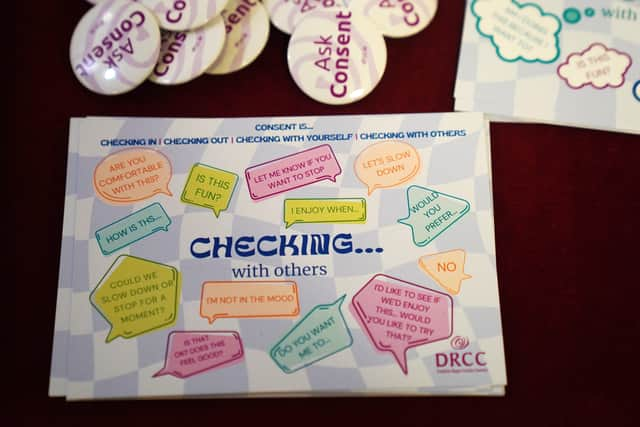
The DRCC said it carried out workshops looking at experiences that made participants feel uncomfortable.
In a statement, a spokesperson for DRCC said the video reflected this feedback.
“We-Consent is a long-term campaign as part of Dublin Rape Crisis Centre’s prevention work to increase the awareness and practice of consent in Ireland,” they said.
“We created a video series for our social media channels based on feedback from over 20 consent workshops with younger and older people. Part of the workshops involved sharing participants’ own experiences of instances when they felt uncomfortable. The scenarios depicted in the video series came up very frequently in all the workshops.
“The videos were created with volunteers and staff and reflected these conversations. We do not want that negativity to impinge on and distract from the vital work that we as a centre do in supporting victims and survivors and improving awareness of these important issues across society.”
At Leaders’ Questions in the Dáil on Thursday, Aontú TD Paul Lawless accused the Government of having “utter contempt” for older people. He said the video was a waste of taxpayers’ money.

“I was shocked to see a bizarre advert in recent days funded by the Department of Justice on the issue of consent,” he said.
“This is totally wrong. Firstly, in how it demonises elderly grandparents around the country, but also in terms of the shocking waste of taxpayers’ money.
“Consent is very important when it comes to sexual relations between people but equating these two types of relationships with a granny giving a hug to a grandchild is completely inaccurate.
“Why is the state asking grannies to second-guess themselves when it comes to hugging their grandchildren? Why is the state planting a seed in a child’s mind that it is somehow dangerous to receive a hug from its grandmother?”
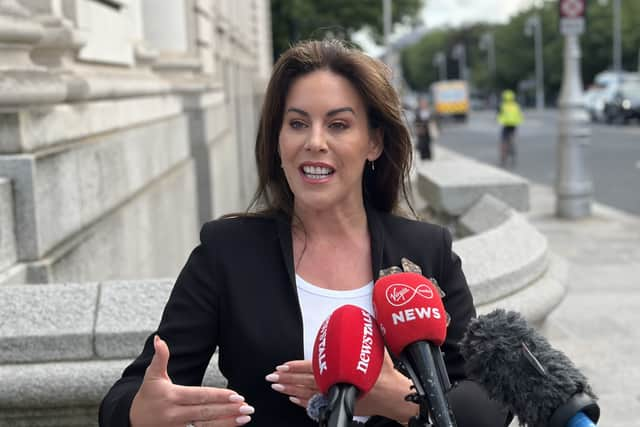
Health Minister Jennifer Carroll MacNeill agreed with Mr Lawless that the video was inappropriate, but said “no person in Government” had viewed or sanctioned the ad..
“I just want to be very clear that that is not a Government campaign, and that is not the view of the Government,” she replied.
“Grandparents are an incredibly important part of family life, an incredibly important part of every child’s life, and it is both inappropriate and demeaning to grandparents.”
In a statement for Cuan, a spokesperson said the videos were produced at low cost using volunteers and were not approved by Government.
“We-Consent is a programme created and developed by the Dublin Rape Crisis Centre, aimed at informing, educating, and engaging the public about all forms of consent,” they said.
“Social media videos shared recently as part of this programme were produced by DRCC at a low cost using volunteers and are not part of a Government advertising campaign.
“Cuan understands that DRCC intends to review these videos. They are being removed from their social media channels to enable this review.”