

If Walls Could Talk: How a Limerick builder became one of the wealthiest men in the world overnight

Most newspapers used the moniker ‘the Limerick Millionaire’
IN EARLY 1878, reports of a colossal fortune left by an Irishman with no direct heirs began to flood newspaper columns right across the world. It amounted to an astonishing £5,000,000 and included an additional annual income of £150,000 in landed property.
Charles Robert O’Keeffe was born in London (his parents were visiting the city). He emigrated to India aged 18 and enlisted as a private soldier. At some point, he resigned and took up private business after 1842. He made his vast fortune from trading opium and settled in Allahabad (the modern-day city of Prayagraj in India). Charles died intestate and unmarried in 1876 and his solicitors set about finding heirs.
They placed notices in the international press, including the Limerick Chronicle. The notice informed the public that ‘the mammoth fortune in search of claimants is that of Charles Robert O’Keeffe, Victoria Street. Allahabad, who died February 20th. It amounts to $24,000,000 dols.’
In all, over 175 applicants made claims on O’Keeffe’s estate and the newspapers are full of alleged family stories suggesting connections and validating rightful claims on the estate. Profiles of O’Keeffe were carried in newspapers all over the western world. For instance, the Irish Times of April 20, 1876 claimed that in his youth, O’Keeffe was apprenticed to a painter in Dungarvan in Waterford in the late 1830s.
There are four claimants all from Ireland. Most claims were described as ‘being of the flimsiest kind, and easily seen through’ as reported in the Hamilton Daily Times, a newspaper based in Ontario, Canada. That particular account stated that Charles Robert O’Keeffe was a native of Waterford and the paper printed an excerpt from a family pedigree “proving” that one Patrick O’Keeffe of Strathroy was the rightful heir. Another claim centred on four heirs, two of whom were said to reside in Georgetown, Kentucky, a third in Danville, Kentucky, and the fourth in England.
However, the fortune was destined for O’Keeffe’s cousin in Limerick, Denis Patrick McCarthy, a builder and architect. On November 14, 1869, he married Ellen McNamara from Thurles, and they had eight children. According to The Irish Builder of April 1878, ‘Denis P McCarthy was born in Cork and was apprenticed to the building firm of Dickson & Taylor in that city, after which he set up on his own business in Newcastle West. He was appointed architect to the Ecclesiastical Commissioners, a post which he held until the disestablishment of the Church of Ireland in 1869.’
McCarthy built Barrington Terrace in 1878. This row of five houses was demolished in more recent times and rebuilt. McCarthy’s business address was Cecil Street, while his home was known as ‘The Cottage’ in Barrington Street. Even though McCarthy enjoyed a prosperous career and led a comfortable middle-class lifestyle, nothing could have prepared him for the vast fortune that he inherited in 1878.
According to the Irish Times of April 27, 1878, McCarthy was ‘not yet forty’ when he inherited his fortune. McCarthy produced evidence that he had corresponded with O’Keeffe and several letters exchanged between them are mentioned in newspaper reports. One such letter noted that his cousin had ‘100 vessels trading on the seas to different nations and peoples, some of which he had never seen, I cannot estimate the exact amount of money I am worth.’ On several occasions, O’Keeffe invited McCarthy to visit him in India, however, he always declined owing to poor health.
In April 1878, McCarthy received a letter from GA Stanley, New Square, Lincoln Inn: ‘I am directed to inform you that the first instalment of the O’Keeffe legacy has come to hand in your favour for £500,000. The whole of the greater portion of the £5 million left by the deceased will come to you, except the portion allotted to your brothers, about which the Crown will decide.’
One of O’Keeffe’s brothers, Patrick, lived in Abbeyfeale where he had a licenced premises. In today’s values, the fortune inherited by McCarthy amounts to over £330,000,000 meaning that overnight, he became one of the wealthiest individuals in the world. In addition to that eye-watering sum, McCarthy also gained control of landed property worth over £150,000 per year (approximately £10 million today).
Denis P McCarthy’s good fortune almost immediately attracted ‘charities, schools and new churches’ to his door and about 500 begging letters a week were sent to his house. Many of these were bogus claims for assistance, including a countess in Milan who requested £50 to cover some mishap that had occurred. McCarthy was forced to employ a typist to reply to the voluminous correspondence.
In May 1878, the Globe newspaper noted that the ‘Limerick millionaire was having trouble’ and that perhaps he should ‘make a tour of the world and be absent for a couple of years.’ The intense press interest in McCarthy did not abate and a reporter from Bassett’s Chronicle interviewed him on April 16, 1878. His appearance was typical of a nineteenth-century gentleman, he had a ‘large noble face and mutton chop whiskers, full upon him.’ McCarthy stated that the fortune was about ‘£4,000,000 in cash and £1,000,000 in assets and about 100 steamers on the seas.’
He continued ‘I intend on settling down and making my family happy… my wife is anxious to go and live in Trafalgar Square, London.’ He also intended to purchase a house in Merrion Square. McCarthy stated, ‘I think I will place a fleet of Trans-Atlantic steamers on the Shannon.’ He added ‘I began in the world without a penny and now I earn £15,000 a year and have £700 a year from my landed estates in the county… ever before this fortune, and I still walk through the street as plain Denis P McCarthy.’
McCarthy hired Isaac Butt QC MP as his counsel for the case. Butt was paid £10,000 in fees in April 1878 by London bankers holding the assets of the ‘Indo-Irish millionaire in trust for a gentleman from Limerick’. From May 1878, McCarthy styled himself as ‘one of the wealthiest men in Europe’ while most newspapers used the moniker ‘the Limerick Millionaire.’
However, the adage ‘far away hills are green’ appears in this fantastical tale. An article questioning the validity of the story that first appeared in the New York Daily Herald was reprinted in the Cork Examiner of May 25, 1878. It stated that the ‘story of the fabulous O’Keeffe fortune is in doubt owing to a communication received from Mr Litchfield, the American Consul at Calcutta.’ Litchfield was unable to find any trace of the deceased O’Keeffe or his attorneys. In short, he reported that there was ‘no man by the name of O’Keeffe, no fortune, no lawyers, and no heirs.
Even Mr Butt’s £10,000 is destined to melt in his pockets like fairy money.’ Another article in the Bangalore Spectator of May 23, 1878 pondered ‘surely, this fortune of £5 million must be a myth?’ The story does not end there, and in October 1878, the Boston Pilot published an article that claimed the entire story was an elaborate and cruel deception.
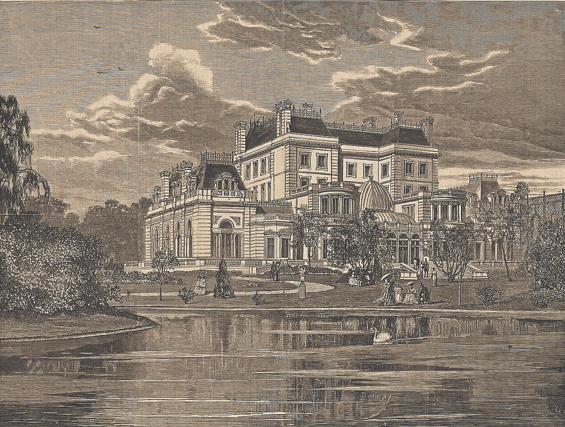
The articles claiming that the story was a hoax contradicts later reports about McCarthy’s whereabouts. One brief account in Bassett’s Chronicle of late 1878 stated that he had gone to live in London and that ‘The Cottage’ on Barrington Street was being cleared out. Another report in a London-based newspaper claimed that McCarthy was intent on purchasing the mansion Kensington House, a 90-roomed house that featured a marble staircase and a palazzo in the centre.
McCarthy disappears from the record after that – the question remains – was it to live out his life in splendour or to bury his head in the sand in embarrassment? So, was the entire story fabricated – a nineteenth-century version of “fake news”?
Surely, there are descendants who can shed light on the mysterious and outlandish story of the Limerick Millionaire?
Paul’s next walking tour takes place this Sunday, May 12. Meet at St Joseph’s Church at 2pm. Theme: Lost Pubs of Limerick. All are welcome and booking is not necessary.