

'That’s all you want': Limerick woman shares her experience of cocaine

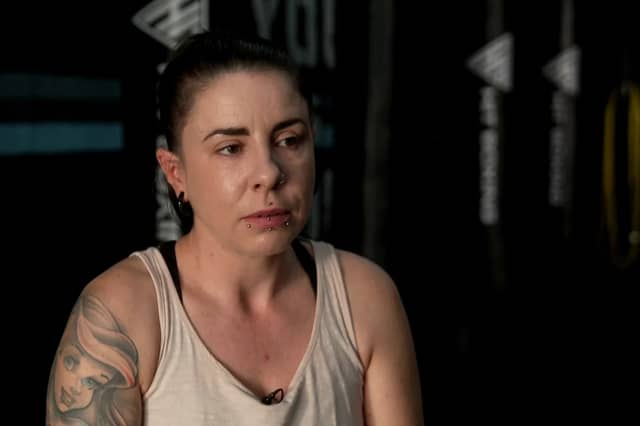

The programme covered the “sharp increase” in women entering treatment for cocaine use
LIMERICK city woman Áine O’Donnell has opened up about her experience with cocaine use.
Ms O’Donnell and three other women from across Ireland shared their lived experiences with the drug and the impact it had on their lives on RTÉ's Prime Time.
The programme, which aired on Thursday evening, October 22, covered the “sharp increase” in women entering treatment for cocaine use, with figures published by the Health Research Board (HRB) in May showing the numbers rising from 284 in 2017 to 1,912 in 2025.
The women also described how cocaine use has become widely accepted in their social circles, “including on nights out and in rural pubs”.
Ms O’Donnell shared that she used cocaine to lose weight as an appetite suppressant.
“It started recreationally,” she said, detailing how it soon “took over” until eventually her average spend on cocaine was €100 to €150 per day.
“I got myself into a lot of debt.”
Ms O’Donnell explained that before addiction took a hold on her, she was “living a pretty normal life,” going to the gym, loved to cook, and got a Master’s Degree in Occupational Therapy.
She said: “When I first started, I would’ve been quite high-functioning. I held down a job, I had the car, I’d somewhere to live, I had everything. But it moves to a point then where you isolate, you remove yourself from your family, your friends, so you can use alone, so you don’t have anybody giving out to you.
“It becomes a very lonely place.”
“I’d be around people I didn’t want to be around, I’d be in places I didn’t want to be in, I’d be lying and manipulating quite a lot to get what I wanted. Just doing and saying things that really are not me - it brought out the worst in me.”
“Days could pass, I mightn’t sleep. You lose track of time, you’re in your own bubble. It’s just you and your drug, and that’s all you want.”
Ms O’Donnell went into treatment for addiction in 2022, but “slipped back” into cocaine use.
She explained that she “lost count” of the amount of times she ended up in hospital between 2023 and 2025.
“December 2025, I nearly died, I was very close to it. I think that was my final wake-up call.”
Ms O’Donnell described how structure and routine are “massive” for helping her in her recovery, and shared that her relationships with her family, friends and partner are “the best it’s ever been” since becoming sober.
“Going forward, I just hope to keep up what I’m doing right now, because it’s working. I’m hoping to turn my educational experience down the addiction route.”
Speaking to Limerick Live this Friday, Ms O’Donnell said that she “got a lot of healing” from allowing herself to be vulnerable and share her story.
“I'm hoping me saying my piece will help somebody along their journey as well. On my journey, I would have liked to have heard other people's stories, but I didn't. It’s a shared experience,” she explained.
“I hope somebody might be able to identify it and use it as a way to see the light themselves.”
Ms O’Donnell is now 11 months into recovery and is actively involved with Recovery Connect, where she shares her experiences as a service user so that a strategy can be built to help develop services in the Mid-West.
Her advice to anyone who is currently going through addiction or who is trying to begin the recovery process is to “reach out and ask for help”.
“There's an amazing service in Limerick city called Saoirse Addiction Treatment Centre. It's a free service, and I would recommend that to anybody if they're struggling.”
Limerick-based addiction counsellor Michael Guerin also took part in the programme, sharing his insights from his 20 years’ experience working in the field.
Mr Guerin told Limerick Live that “the fact that Prime Time were prepared to devote 15 or 20 minutes to this problem on a Thursday night is indicative of the seriousness of it, and it's indicative of the widespread nature of cocaine dependence as well.”
He explained that he meets people who started using cocaine as young as 15 or 16 years old, adding that “people are now mentioning cocaine in the same breath as they mention alcohol and cannabis”.
“Cocaine, which is a Class A highly addictive drug, has been absorbed into that milieu of substances that young mid-range adolescents are engaging in risk-taking with, so that's one alarming facet of it. The other alarming facet of it is the extent to which cocaine has become normalised amongst young people in Ireland.”
He continued: “The big issue is our attitude as a society to cocaine, particularly amongst the younger generations.”
Mr Guerin discussed the use of cocaine as a means of controlling weight, particularly by women, on the programme.
“We're in an age where young people, particularly young ladies, are very conscious of their body image, and cocaine absolutely suppresses your appetite and speeds up your metabolism. We know that for a fact.”
He shared a comment made to him by a cocaine user a few years ago, where the woman described cocaine as “being like Ozempic, but you get a high thrown in for free”.
Mr Guerin also discussed the drug’s capacity to get users into “serious debt” explaining that many addicted cocaine users are spending “upwards of €1,000 per week” on cocaine.
“That's an impossible habit to sustain from a financial point of view, and these people end up in considerable debt. And because they end up in considerable debt, they are subject to drug-related intimidation in an attempt to collect that debt. We only have to look back to last weekend and the tragedy in Waterford to see the tragic consequences that that can have.”
He described cocaine as “the drug that has absolutely transcended every social, economic, demographic that we know of”.
“Every year, millions of euros worth of street value of cocaine are seized at the point of entry in Ireland by the Gardaí, the customs and revenue, and that's wonderful,” Mr Guerin said.
“But I have never heard of a cocaine user, nor I have never met a colleague who has told me of a cocaine user, who has found it difficult to get cocaine in spite of the fact that the(13:23) authorities are taking eight figures in street value out of the marketplace on an annual basis. So that gives you an indication of the amount of the bloody thing that's coming in.”
His advice to anyone thinking about using cocaine “needs to stop and consider the fact that this is a Class A illicit substance that has the capacity to ruin their lives”.