

Majority of single women 'highly satisfied', Limerick university study reveals
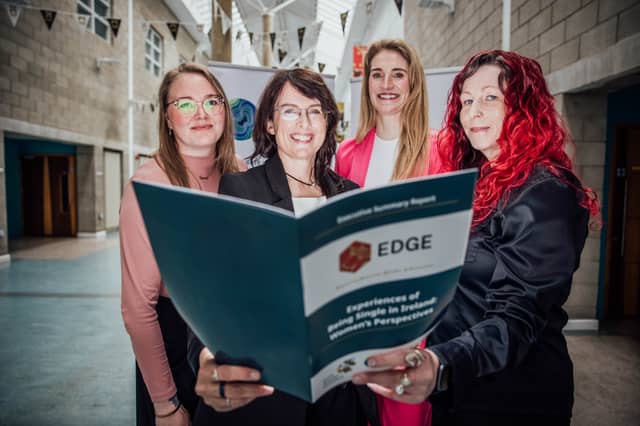

The report states that 84% of single mothers say they have no support with parenting
A NEW report has revealed that the majority of single women in Ireland are highly satisfied with their relationship status, while 84% of single mothers say they have no support with parenting.
‘Experiences of Being Single in Ireland: Women’s Perspectives,’ launched last week on the Moylish Campus, Limerick, at the Technological University of the Shannon (TUS).
The report published by EDGE (Exploring Diversity, Gender, & Exclusion) Research Group at TUS, in partnership with Women’s Collective Ireland-Limerick (WCI), surveyed single women across Ireland in 2026, to better understand their lived experiences.
With 43% of the Irish population now single, the report “highlights a need for government policy to reflect this shifting demographic and support single-person households”.
The study “dismantles the narrative that single women are unhappy, lonely, or unfulfilled”. A striking 63% of single women are satisfied with being single, according to the report, compared to just 10% who are dissatisfied.
91% of respondents reported experiencing direct benefits from being single, citing freedom, independence, peace of mind, and improved mental health.
The research also uncovers “a stark lack of support” for single parents. Of the 40% of single women surveyed who have children, an overwhelming 84% reported having absolutely no support with their parenting responsibilities.
65% of respondents identified the higher cost of living on a single income as a primary challenge, highlighting “single supplements” on bills and travel, as well as tax systems designed to benefit married couples.
48% struggle to access housing or get on the property ladder on a single income.
The data shows a “major cultural shift” in desired living arrangements. While 55% of women desire love or a romantic relationship, 60% state their ideal preference is to live alone.
The report also demonstrates that being a single woman in Ireland was frequently associated with positive psychological and emotional outcomes.
Women consistently reported experiencing greater freedom, autonomy, peace of mind, emotional stability and personal growth when single, particularly in comparison to past “unequal, stressful or unhealthy relationships”.
Independence, control over personal decisions and the ability to shape one’s own life emerged as key benefits of being single.
Speaking at the official launch, renowned academic, feminist and LGBTQ activist Ailbhe Smyth encouraged women to “continue challenging long-held societal stereotypes about what it means to be a woman and a single woman”.
Speaking about the legal restrictions on women in Ireland as recently as 30 years ago, Ailbhe said “We managed against the grain, we were known as troublemakers, and we need to be troublemakers now.”
She commended the report by EDGE Research Group and WCI by saying: “This piece of research is really important because it’s confirming what a lot of us experience and is saying, ‘this is real, this is every day, this is actually how it happens’, and these are the things we need to think about and provide for.”
Karen Sugrue, researcher with EDGE and lecturer in the Department of Applied Social Sciences said: “I would like to thank the tremendous work of our Principal Investigator Dr. Lindsey Liston, and our community partners Women’s Collective Ireland – Limerick.
“We hope these findings will help inform a campaign for policy changes that address the issues single women have identified.”
Yvie Murphy, co-ordinator at WCI – Limerick and research partner, said: “The Women's Collective in Limerick was delighted to partner on this important research with the EDGE Research Group.”
She continued: “We are grateful to all of the single women who shared their experiences and gave input into this report.
“We hope that readers will utilise the information and recommendations outlined in this report and engage in pushing towards positive societal and policy change for single women.”
The report concludes by highlighting the structural inequality and policy gaps around single individuals and a society built around couples.
The recommendations include developing affordable housing and co-housing models specifically tailored for single-income individuals and reviewing taxation policies and cost-of-living supports, such as expanding the living alone allowance.
The report also suggests that creating clear, dignified, and non-institutional care pathways for individuals aging without partners or children is vital, as well as outlining the importance of challenging harmful social narratives that portray single women as lonely or incomplete, and actively promoting the recognition that a meaningful life is not dependent on romantic partnerships.
The report states: “Supporting women... requires more than encouraging and rewarding couple formation. Instead, it requires addressing structural inequities, recognising diverse life choices, including the choice to be single, and developing social and economic policies that value and treat individuals equally regardless of relationship status.”