Search


05 Mar 2026
Search
05 Mar 2026

Please allow ads as they help fund our trusted local news content.
Kindly add us to your ad blocker whitelist.
If you want further access to Ireland's best local journalism, consider contributing and/or subscribing to our free daily Newsletter .
Support our mission and join our community now.
To continue reading this article, you can subscribe for as little as €0.50 per week which will also give you access to all of our premium content and archived articles!
Alternatively, you can pay €0.50 per article, capped at €1 per day.
Thank you for supporting Ireland's best local journalism!


There should have been “no PSNI examination” of a former BBC journalist and his family, Chief Constable Jon Boutcher has said.
The PSNI chief told the policing board former guidelines “did not provide sufficient protection for journalists”, but he maintained there has not been “widespread abuse” of reporters by the force.
MI5 previously admitted it had unlawfully obtained Vincent Kearney’s data amid proceedings at the Investigatory Powers Tribunal.
In a September 2025 letter to the BBC and Mr Kearney – now the northern editor at RTE – MI5 said it acted in good faith and under any code of practice at the time, but it breached the journalist’s rights when obtaining communications data in 2006 and 2009.
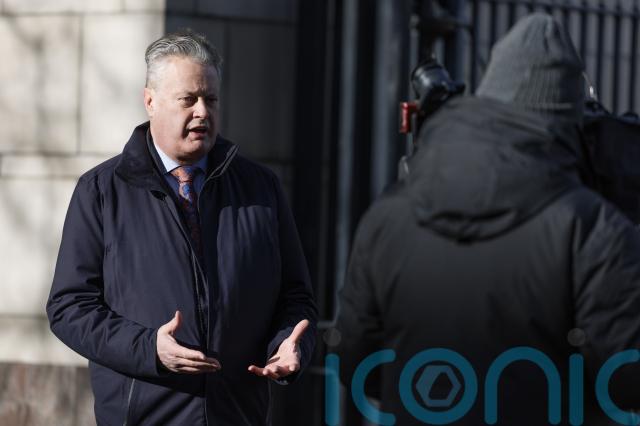
The PSNI and Metropolitan Police have also made concessions.
Angus McCullough KC published a report last year on the PSNI’s use of surveillance and despite the review identifying more than 20 attempts by the force to identify journalists’ sources, it determined the surveillance was not “widespread or systemic”.
At a public meeting of the policing board on Thursday, Sinn Fein MLA Linda Dillon asked why the PSNI created a profile of Mr Kearney and his family and asked if profiles had been made of any other journalists or professionals.
SDLP MLA Colin McGrath said the McCullough report “doesn’t cover all of the instances of the behaviours and it goes further than that”, and he asked if the police chief thought “an independent inquiry into that is needed”.
Mr Boutcher said it would be inappropriate for him to comment on the specifics of Mr Kearney’s case as proceedings are ongoing, but he sought to reassure the board that he views the RTE northern editor as “an outstanding journalist”.
He said: “Vincent Kearney has done absolutely nothing wrong.
“Vincent Kearney has not been a suspect in any investigations or inquiries of the PSNI and I have, personally, an extremely high regard, respect and strong relationship with him as a journalist.
“I think he does outstanding work and I don’t think that tramples over the integrity or the independence of commenting about the tribunal.”
The chief constable added: “We remain of the position that the entire process of bringing Angus (McCullough) in was to make sure that we were doing all of these authorities absolutely correctly.
“This is the most human rights police service I have ever seen.
“We haven’t done things as well as we should have done, but there wasn’t this widespread abuse that many people in the media presumed, and that’s what Angus found.”
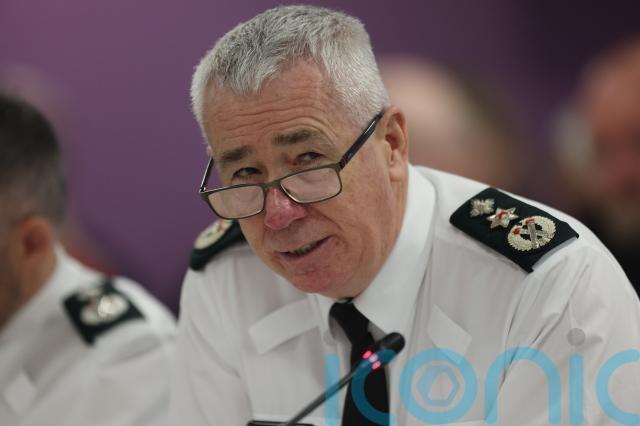
On the information that was held about Mr Kearney’s family, Mr Boutcher further stated: “I don’t think I should comment on that until the report has come out.
“But I think my view of Vincent Kearney has been made very clear to this board, and he is somewhat of the highest integrity, and there should be no PSNI examination of him or his family.”
On the “type of activity” identified by the McCullough review, he said codes of practice were not rigorous enough to prevent undue surveillance.
He said: “This is the concern with regards to a number of journalists, is that when call data applications were made and granted around their phone billing, the PSNI applied the codes of practice that were in place from 2007.
“Those codes of practice did not provide sufficient protection for journalists or lawyers or indeed anybody that I would describe from a special status with regards to employment, where, because of the nature of their profession, in making those applications great care should be applied around the legal correctness of seeking that data.”

Subscribe or register today to discover more from DonegalLive.ie
Buy the e-paper of the Donegal Democrat, Donegal People's Press, Donegal Post and Inish Times here for instant access to Donegal's premier news titles.
Keep up with the latest news from Donegal with our daily newsletter featuring the most important stories of the day delivered to your inbox every evening at 5pm.

This publication supports the work of the Press Council of Ireland and Office of the Press Ombudsman, and our staff operate within the Code of Practice of the Press Council. You can obtain a copy of the Code, or contact the Council, at www.presscouncil.ie, Lo-call 1800 208 080 or email: info@presscouncil.ie.