A brother to nine siblings and a beloved uncle: James Forde was killed at a pedestrian crossing, just off the Ennis Road by Danny Connors, who had taken cannabis, alcohol and xanax
Search


08 Feb 2026

Please allow ads as they help fund our trusted local news content.
Kindly add us to your ad blocker whitelist.
If you want further access to Ireland's best local journalism, consider contributing and/or subscribing to our free daily Newsletter .
Support our mission and join our community now.
To continue reading this article, you can subscribe for as little as €0.50 per week which will also give you access to all of our premium content and archived articles!
Alternatively, you can pay €0.50 per article, capped at €1 per day.
Thank you for supporting Ireland's best local journalism!


Ireland and other European nations risk jeopardising green energy sources if they fail to hit upcoming EU targets to recycle critical raw materials, according to an Irish waste recycling scheme.
Electric vehicle batteries, wind turbines and solar-power generators all require components such as lithium, magnesium, copper and nickel but Europe is currently importing the vast majority of the rare earth materials it uses, according to Waste Electrical and Electronic Equipment (WEEE) Ireland.
The not-for-profit organisation’s 2022 annual report shows consumers recycled a record number of e-waste items last year – 40,804 tonnes or just over 10kg per person.
A total of 19.5 million appliances were recovered – including 113,000 fridges, 225,000 TVs and monitors, 2.2 million lighting items and the equivalent of 60 million used AA portable batteries.
But the country’s largest e-waste recycling scheme warns that we also need to meet a forthcoming EU target to recycle at least 15% of our annual consumption of critical raw materials from this e-waste.
WEEE Ireland’s chief executive officer said recent global events and the energy crisis have “underscored the vulnerabilities of relying on other countries for critical raw materials”.
Leo Donovan said the EU currently imports 93% of its magnesium and 86% of its rare earth metals from China.
He added: “We need secure and sustainable sources of these materials within the EU or we risk jeopardising the supply of vital technologies required for our green and digital transitions.
“As the world embraces a more sustainable future and shifts away from fossil fuels, the demand for lithium alone, a vital component in batteries that power every day technology and devices, is projected to increase twelve-fold by 2030.”
The EU aims to ensure that by 2030, at least 15% of the critical raw materials consumed annually originate from European recycled sources under the forthcoming Critical Raw Materials Act.
Mr Donovan said: “Old and broken electronics and appliances are a rich source of essential critical raw materials, so it is vital that Irish households recycle the millions of broken and perfectly recyclable electrical items that are accumulating in our homes or being improperly disposed of.”
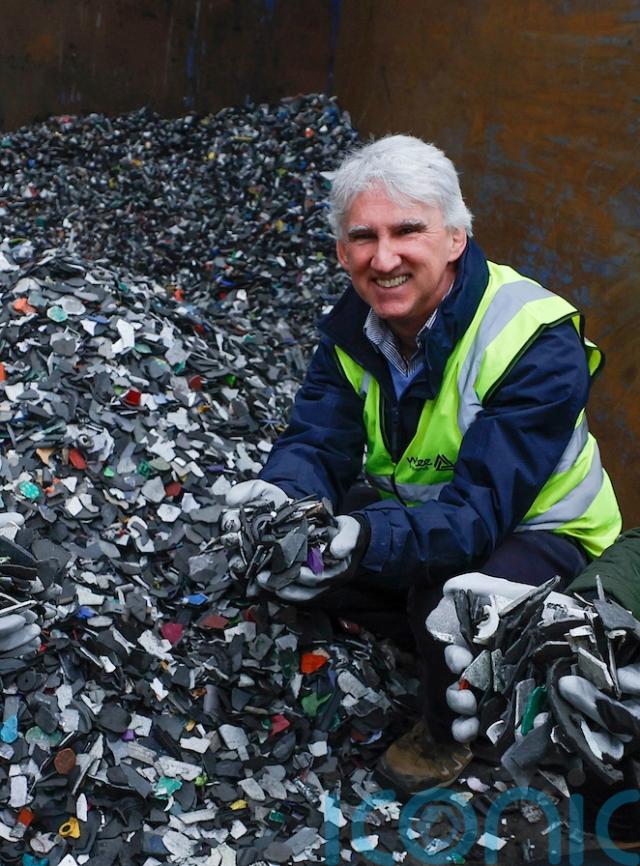
Mr Donovan pointed to a collaboration with KMK Metals Recycling in the midlands as an example of ensuring e-waste is recycled into secondary critical and strategic materials.
“Last year, we got more out of these recovered items than ever before,” he added.
The annual report shows 52% of electrical waste was collected from retailer sites in 2022, 24% from local public collection days, but only 24% from local authority sites – significantly lower than the 60% average in other European countries.
Ireland fell short of Europe’s 65% takeback target for overall e-waste, measured against new appliance sales, which surged by an average 25kg per person last year, up from 22kg in 2021.
On battery recycling, Ireland surpassed the EU’s 45% target for waste portable batteries.
Mr Donovan said recycling centres and retailers are easily accessible to everyone, adding WEEE Ireland holds public collection days each week.

Subscribe or register today to discover more from DonegalLive.ie
Buy the e-paper of the Donegal Democrat, Donegal People's Press, Donegal Post and Inish Times here for instant access to Donegal's premier news titles.
Keep up with the latest news from Donegal with our daily newsletter featuring the most important stories of the day delivered to your inbox every evening at 5pm.

This publication supports the work of the Press Council of Ireland and Office of the Press Ombudsman, and our staff operate within the Code of Practice of the Press Council. You can obtain a copy of the Code, or contact the Council, at www.presscouncil.ie, Lo-call 1800 208 080 or email: info@presscouncil.ie.