

Limerick-based artist who was victim of ‘racist attack’ shares insights at expert roundtable
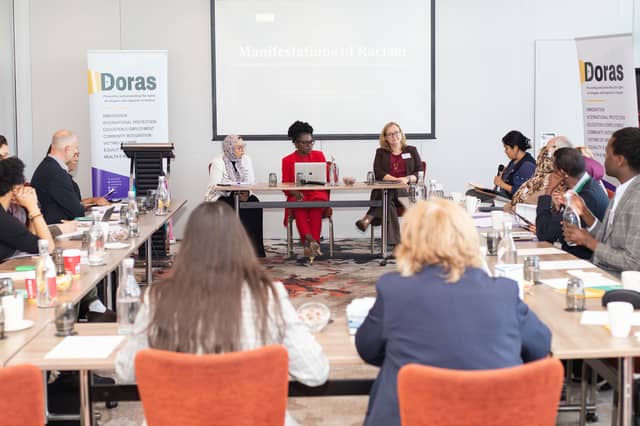

The event forms part of Doras’ wider work to develop the Racism Response Service Network, which aims to strengthen early response, referral, advocacy and victim-centred support for those experiencing racism
A ROUNDTABLE examining how Ireland can strengthen its response to racism and hate crime has taken place in Limerick city.
On Tuesday, October 20, Doras, a migrant and refugee support organisation, brought together experts and victim support practitioners to discuss such issues.
The roundtable, titled ‘Manifestations of Racism: A Victim-Centred Approach to Building a Coordinated Response to Hate Crime and Racist Harm,’ focused on the experiences of people affected by racism and also broached the gaps that can arise between experiencing harm, reporting an incident and accessing support.
Tobi Omoteso, a Limerick-based artist and survivor of an assault earlier this year, which left him blind in one eye, shared his insights at the roundtable: “When you experience a racist attack, the impact does not end when the incident is over. It changes how safe you feel, how you move through your community and how much trust you have that the system will protect you.
“What matters afterwards is whether someone listens, whether you are supported and whether there is a clear pathway through the different services you suddenly have to deal with. Victims should not be left to navigate that alone,” Mr Omoteso concluded.
Participants also included Dr Ebun Joseph, Special Rapporteur on Racial Equality and Racism in Ireland, Sergeant Geraldine Greene from The Garda National Diversity Unit and Bulelanin Mfaco, of the Movement of Asylum Seekers in Ireland (MASI).
Donnah Vuma, Migrant Victim Support Programme Coordinator at Doras, informed the group that racism “cannot be addressed only as a policy or equality issue.”
Expanding on this, she said: “What we see every day through our work is that the systems surrounding a victim of racism can be fragmented. They may have to navigate the Gardaí, legal services, accommodation and other supports without a clear pathway between them. A victim-centred response requires us to close those gaps.
“The purpose of this roundtable was to bring together people working across community, advocacy, victim support and services to identify where victims are falling through the gaps and consider what a more coordinated response should look like in practice.”
‘Manifestations of Racism: A Victim-Centred Approach to Building a Coordinated Response to Hate Crime and Racist Harm’ took place against the backdrop of Ireland’s developing legal and policy responses to racist and hate-motivated crimes.
The Criminal Justice (Hate Offences) Act 2024 created aggravated forms of certain existing offences where hatred based on protected characteristics is proven and provides for enhanced sentencing in relevant cases.
The event forms part of Doras’ wider work to develop the Racism Response Service Network, which aims to strengthen early response, referral, advocacy and victim-centred support for people experiencing racism and racist harm.