

Green Limerick: Exactly how does smoking harm the environment?
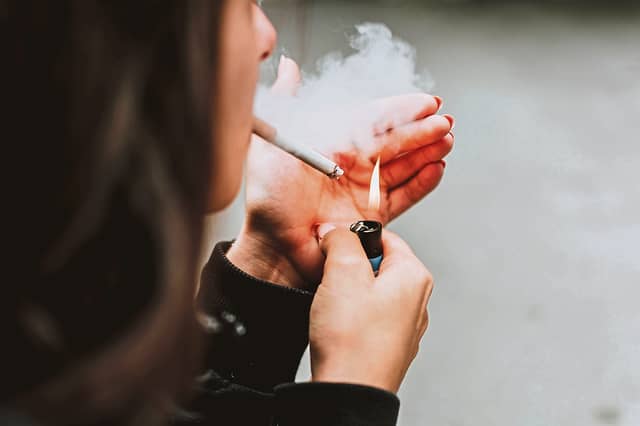


Cathal Doherty discusses the negative impacts of smoking and gives an insight into his own ‘quitting’ experience
FOR YEARS it was a crutch, a way of disconnecting from the world for five minutes - a kind of meditation. Wake up in the morning - stressed - open the box of Amber Leaf that never strayed too far from my bed, and make a cup of coffee.
I have just passed the four-week mark since I smoked my last cigarette meaning I am five times more likely to quit for good according to the HSE.
For the last number of years, I have been acutely environmentally conscious, the majority of the people on this planet are at this stage due to seeing strange weather patterns, forest fires in Australia, and Los Angeles, storms, and hurricanes, all growing more frequent and intense.
What rarely crossed my mind until the end was how cigarettes impact the environment. If they’re not good for me, then they sure as God are not good for the environment. It appears to be a conversation that slips people’s minds.
According to the World Health Organisation (WHO) the tobacco industry costs the world 600 million trees, 200,000 hectares of land, 22 billion tonnes of water and 84 million tonnes of CO2 while also claiming 8 million human lives every single year.
The statistics above mean the amount of water used by the tobacco industry is approximately over three times the amount of water that is discharged from the River Shannon each year assuming the River Shannon discharges on average over 200,000 litres per second.
Approximately 200,000 hectares of land is equal to 2,000 km squared, County Limerick has a total land area of 2,756 km squared.
The impact of tobacco on our environment happens at all stages of a cigarette's life from planting and cultivation of tobacco to even after the cigarette butt has been disposed of.
The negative impacts caused by each of these stages include the use of trees and water. It also causes the release of pollutants into the atmosphere by manufacturing and smoking cigarettes.
Cigarette butts, when incorrectly disposed of, such as on the street which is common, can pollute the local water supply, rivers and marine life.
It’s not just cigarettes, however. The growing use of vapes and more specifically, disposable vapes are also causing serious harm to the environment.
These devices contain metals, plastics and batteries, classified as toxic hazardous waste, whether they are disposed of correctly in a bin or not.
The production and consumption of cigarettes contribute massively to global warming due to the high amount of carbon dioxide dispelled into the atmosphere from the manufacturing and smoking of each cigarette.
There are also approximately 2 million tonnes of packaging waste disposed of from cigarettes each year, a weight of 9433 freight trains according to WHO.
Tobacco also requires up to eight times the amount of water that tomatoes or potatoes require. According to WHO for each kilogram of tobacco not produced, the potable water needs for one person can be met for an entire year.
The scarier statistic is that the amount of water used and or wasted on tobacco is likely an underestimate.
Cigarette butts are estimated to be able to pollute anywhere from 30 to 1,000 litres. If only 25% of cigarette butts (of 4 trillion) make it into water supplies and it is assumed that 200 litres of water is polluted by a single cigarette then you can add 200 billion tonnes of water wasted due to tobacco (200 trillion litres) per year.
Roughly one tree is needed to make 300 cigarettes. The tobacco industry accounts for approximately 5% of deforestation globally.
Cigarettes also contain three greenhouse gasses (carbon dioxide, methane and nitrous oxides). Tobacco smoke produces higher particulate matter pollution than diesel exhaust.
All of the information above shows just how hazardous cigarettes are not just for the person smoking them but to the people around them and the planet itself.
To help tackle the negative impact of tobacco on the environment, conversations need to take place. People need to be educated on how tobacco impacts the environment and encouraged to quit smoking. As a former smoker, the hardest part of quitting is deciding when to quit.
For more Green news, follow the EcoLive section of our website LimerickLive.ie