

SPOTLIGHT: Culture is not a luxury...
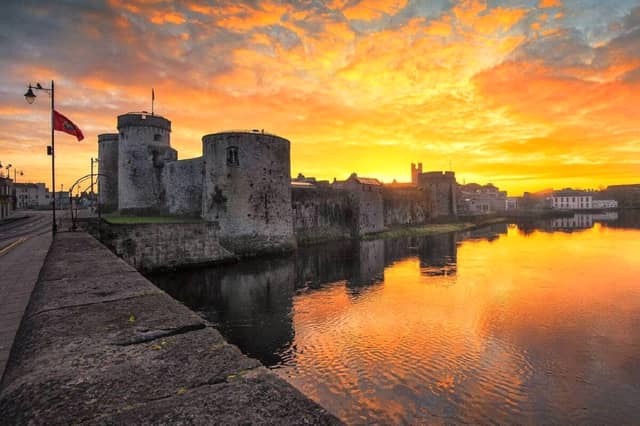

Significant investment to keep Limerick to the fore of cultural events
There is a danger in talking about culture that we reduce it to events. A festival happens, a concert fills a theatre, an exhibition opens, a poet reads, a band plays and then everybody goes home. The photographs appear on social media and, if enough people came through the doors, we congratulate ourselves on another successful cultural occasion.
But culture is much more than the sum of its events. It is part of the way a city understands itself. It lives in its writers, painters, musicians, actors, dancers, filmmakers and photographers. It is found in amateur dramatic societies and community choirs, in galleries and pubs, rehearsal rooms and studios, libraries and theatres. It belongs to the established artist and to the teenager picking up a guitar for the first time.
A city that creates
Limerick has an extraordinary artistic inheritance, but what is remarkable is that the inheritance has never become a museum piece. The city continues to create. Music, literature, theatre and visual art remain woven into its everyday life. Artists here do not simply provide entertainment. They record the life of the place. They challenge it, celebrate it and sometimes irritate it. They preserve memories that would otherwise disappear.
More than a decade has passed since Limerick became Ireland’s first National City of Culture in 2014. That designation mattered, but its real value was not a particular year of programming. It was the recognition of something that already existed: Limerick possessed a cultural confidence and creative energy worthy of national attention.
The question now is how that energy is sustained. Recent concerns raised by councillors Elisa O’Donovan and Shane Hickey-O’Mara deserve consideration in that context. They have questioned whether arts, culture, festivals and community events are being given sufficient prominence within the administrative structures of Limerick City and County Council, arguing for greater resources for the Arts Office and a more sustainable approach to cultural funding. Whatever view one takes of the particular administrative arrangements, the wider question is important. What value do we place on culture?
More than an economic calculation
Of course festivals and cultural events have an economic value. Visitors fill hotel rooms, eat in restaurants, drink in pubs and spend money in shops. The Council itself acknowledges that festivals contribute to Limerick’s economic, social and cultural development, and €283,625 was made available through its 2026/27 Festivals and Events Grant Scheme. But economics cannot be the only measure.
A poetry reading attended by 40 people may never produce a significant financial return. A small exhibition by an emerging artist may not attract tourists. A community theatre production may barely cover its costs. Yet each can possess enormous value. Culture creates encounters. It gives people a reason to gather. It provides a voice for communities and opportunities for people who might otherwise remain outside public life. At its best, it makes us see familiar streets and familiar lives differently.
Some of the most interesting artistic work begins precisely because somebody is willing to take a risk without knowing whether it will be commercially successful. If economic viability becomes the principal test of cultural value, inevitably the safe will triumph over the experimental and the large over the small.
The work of the Arts Office
It is important, therefore, that concern about structures should not be mistaken for criticism of the people doing the work. Limerick Arts Office deserves considerable credit. With finite resources, it administers an impressive range of programmes supporting artists and organisations across the city and county. In 2026 these included Grants under the Arts Act, individual arts bursaries, theatre bursaries and the Dolores O’Riordan Music Bursary. The Arts Office also manages strategic cultural funding and supports professional development, residencies and partnerships.
The figures reveal both activity and demand. Twenty-six Grants under the Arts Act were approved for 2026, alongside eight individual arts bursaries, five theatre bursaries and the Dolores O’Riordan award. The Creative Limerick small-grants programme attracted 46 applications for a €55,000 fund. These may look like administrative details on a Council document. Behind every application, however, there is somebody trying to make something happen. A bursary can buy an artist time. A grant can allow a theatre company to stage a production. Support can help a musician develop a project or enable a community organisation to bring people together. The Arts Office is the bridge between public policy and those creative lives.
Artists need more than applause
When artists are supported, the benefits spread far beyond individual careers. Their work enriches neighbourhoods, inspires younger generations and creates the sense of possibility that makes a city culturally alive. There is an unfortunate tendency to celebrate artists publicly while expecting them privately to survive on enthusiasm. We applaud the finished exhibition, book, concert or performance without seeing the months of unpaid work behind it. Artists still have rent, heating bills, equipment costs, insurance and travel expenses. Cultural organisations need staff, premises and continuity. Funding should not be regarded as charity bestowed upon artists. It is investment in the cultural infrastructure of a place.
Nor should organisations have to depend excessively on occasional discretionary allocations or spend much of their energy moving precariously from one small funding opportunity to another. Stability matters because creativity requires time.
Limerick already recognises this principle in practical ways. Council-supported artist studios and apartments, for example, are intended to provide affordable spaces that allow artists to continue living and working here. That is cultural policy at its most tangible.
What kind of Limerick do we want?
There is another reason this matters. Cities increasingly resemble one another. The same shops occupy the same streets. The same brands dominate commercial life. What distinguishes one place from another is increasingly its character, memory and culture. Limerick possesses those things in abundance.
Culture also creates continuity between generations. The musicians playing today inherit something from those who filled Limerick’s dancehalls and clubs decades ago; younger writers follow paths opened by earlier poets and storytellers. Artists constantly reinterpret the city they inherit. Supporting them is therefore not simply about financing present activity. It is about ensuring that Limerick’s creative conversation continues into the future.
Our artistic life did not begin in 2014 and it did not end there. It stretches from internationally recognised institutions to tiny voluntary organisations, from professional artists to people creating work around kitchen tables. That ecosystem cannot simply be admired. It must be maintained. Good administration matters. Adequate staffing matters. Sustainable funding matters. Most importantly, recognising cultural value in its own right matters.
The argument for culture does not need to be made solely in euros, visitor numbers or hotel beds. A city needs songs and stories. It needs paintings, poems, performances and places where unexpected things can happen. It needs people prepared to imagine something that does not yet exist. Limerick has those people in abundance. The task now is not merely to celebrate them. It is to give them the structures, resources and confidence to continue creating.