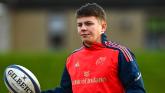
Former Munster Rugby scrum-half Jack Oliver has put pen to paper on his first professional contract with the Glasgow Warriors
Search


04 Mar 2026

Please allow ads as they help fund our trusted local news content.
Kindly add us to your ad blocker whitelist.
If you want further access to Ireland's best local journalism, consider contributing and/or subscribing to our free daily Newsletter .
Support our mission and join our community now.
To continue reading this article, you can subscribe for as little as €0.50 per week which will also give you access to all of our premium content and archived articles!
Alternatively, you can pay €0.50 per article, capped at €1 per day.
Thank you for supporting Ireland's best local journalism!

Limerick captain Declan Hannon lifts the Liam MacCarthy Cup as GAA President John Horan looks on following the 2020 All-Ireland SHC Final win in an empty Croke Park | PICTURE: Sportsfile


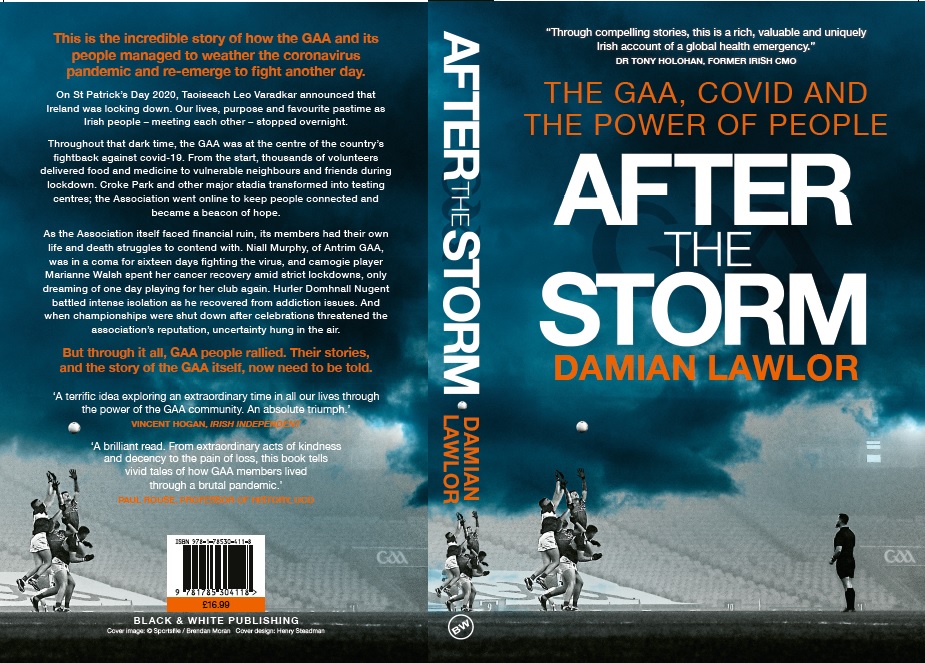
INCREDIBLE stories of resilience from Ireland’s GAA community during the pandemic are told in a new book 'After the Storm' by journalist Damian Lawlor
Book extract from 'After the Storm'
It was a television show that didn’t know when to end. Three very long seasons with unlikely plotlines curving in every direction.
The pandemic killed almost seven million people as it swept across the world, twisting and mutating all the time. Wuhan, a city of eleven million, was the epicentre of the plague’s start.
On New Year’s Eve 2019, a Chinese government website confirmed the discovery of a ‘pneumonia of unknown cause’ in a seafood and poultry market there.
The outbreak was rapid and deadly. Over the next three months the coronavirus grew through human transmission, savaged economies, halted international travel and confi ned people to their homes. It had many faces, which made it harder to limit.
We were taken off our tracks and thrust into a time of stillness. The world shut down.
On 29 February, the Limerick hurlers flew back to Dublin airport after a five-day training camp in Portugal. They entered the arrivals hall just as the country was hurtling head-first into the storm.
The moment they touched down, Tom Condon, one of their most experienced players, had a dawning realisation that things had changed.
‘The first case of covid-19 was found in Ireland on the same day we flew back. Our medics gave us masks and gloves for the airport, although we were the only ones wearing them inside.
A group of lads standing around in shorts and GAA gear with masks on – people were looking at us wondering, “What are these lads at?”
But in a very short space of time everyone was wearing them. Everything stopped.’
And no entity or business, sporting or otherwise, would remain untouched.
LIFTING THE TREATY: HOW LIMERICK’S HISTORY MAKING HURLERS TRANSFORMED THE GAME
WITH the Delta variant running riot, it was the end of November 2021 when Limerick eventually got to enjoy their own official celebration for the previous two championship wins.
On that night, Kyle Hayes was presented with eleven medals at the county’s back-to-back All-Ireland medal ceremony at the Strand Hotel.
Hayes was only twenty-three but went home with more honours than a decorated military sergeant. A month later he claimed a third All-Star award alongside a record eleven other teammates. They had swept the boards.
His haul was one that most players could only daydream of. Two Celtic Crosses from the 2020 and 2021 All-Ireland senior final wins over Cork and Waterford respectively. Three Munster medals, from 2019, 2020 and 2021, and Division 1 league silverware for 2019 and 2020.
The team also received trophies for their 2019 Munster hurling league win, the Super 11s Fenway Hurling Classic victory in Boston in November 2018, whilst Munster and All-Ireland minor runners-up medals from 2016 were handed out, too. That golden catch, enriched by further Munster and All-Ireland titles, their third in a row, in 2022, reflected the county’s current dominance of hurling’s shores, light years away from the empty trawls that returned to Shannonside after decades of fruitless excursions. Their success has transcended sport too.
‘Those lads have changed a lot of things for Limerick people,’ says former player Niall Moran, who made forty-six championship appearances in the green and white.
‘For years the county struggled with our identity away from playing fields. Limerick had a bad reputation and we had to play down a lot of what was made of us. The labels that stuck, like “Stab City” or “Crime Capital of Europe”. Those were very unfair, and we had to deal with them.
‘Back, then, onto the playing field and, prior to 2017, we had this reputation as being an almost dysfunctional county in GAA circles, riddled with stories of ill-discipline and a drinking culture. No different to the accusations about being a crime capital, those labels were totally unfounded.
‘But since 2018 we have been held up as a shining example of what the GAA should be and how the modern game should be played. And that has had a huge impact on the morale and sense of self of Limerick people.
‘Morale is high outside the field, too. The regeneration of the city and county has been strong. Industrial estates like Raheen have gone from strength to strength.
'Businesses are coming to Limerick and setting up here, and our sense of identity has really improved and strengthened. A decade ago, a Limerick hurler could walk unrecognised down the street, whereas a Munster rugby player would be chased.
'Now kids are going around wearing Limerick gear and the players are instantly recognisable. People are so proud of them for what they have done for us over the last few years.’
Moran makes no bones about the comfort the team gave Limerick folk during the public-health crisis.
‘In some rural places there are two social outlets – Mass and a match at the weekend. Masses were taken away from people for a long time during covid, and all people had to look forward to were matches on TV and dissecting them.
And look what the Limerick team has done for these people.’
Slowly, deep scars from times past are healing, wounds that were often self-inflicted or at times down to a lack of organisation and quality coming through the ranks.
From 1973 to 2018, the county won no All-Ireland senior title and, when they did manage to sketch out the rough skeleton of a road map, the transition to the top flight was gridlocked by a series of obstacles.
As the years passed, the pursuit of happiness lingered painfully, prompting local author and hurling devotee Henry Martin to write a book depicting the hurt – a book fittingly called Unlimited Heartbreak. They did have phases of joy here and there, but those were as fleeting as a shooting star.
Between 2000 and 2002 the county, with Dave Keane at the helm, won three All-Ireland under-21 titles in a row. Those kids were Limerick’s class of ’92. But unlike at Old Trafford, there was no domination at top-flight level. A number of those underage stars did feature at the highest grade but some only in spurts. Managers came and went like buses in a depot.
There were five between 2000 and 2006 – including Eamon Cregan, Dave Keane, Pad Joe Whelahan, Joe McKenna and Richie Bennis. It didn’t help. There was no continuity.
They scarcely featured again at under-21 level for another eight years. A low point was the record 17-point hammering to Clare in the 2006 All-Ireland qualifiers.
Another was the 2009 drubbing by Tipperary in the All-Ireland semi-final. That hammering was something of a eureka moment.
Afterwards, concerned citizens such as Shane Fitzgibbon, Eibhear O’Dea and Joe McKenna knew it was time for action. They staged something of an intervention in the underage ranks.
Damian Lawlor is a best-selling author and sports broadcaster with RTÉ. He comes from Kilruane in County Tipperary and lives with his family in Naas, County Kildare. This is his seventh book.

Subscribe or register today to discover more from DonegalLive.ie
Buy the e-paper of the Donegal Democrat, Donegal People's Press, Donegal Post and Inish Times here for instant access to Donegal's premier news titles.
Keep up with the latest news from Donegal with our daily newsletter featuring the most important stories of the day delivered to your inbox every evening at 5pm.

This publication supports the work of the Press Council of Ireland and Office of the Press Ombudsman, and our staff operate within the Code of Practice of the Press Council. You can obtain a copy of the Code, or contact the Council, at www.presscouncil.ie, Lo-call 1800 208 080 or email: info@presscouncil.ie.