

Limerick child sexual abuse survivors speak out in favour of new bill to protect children

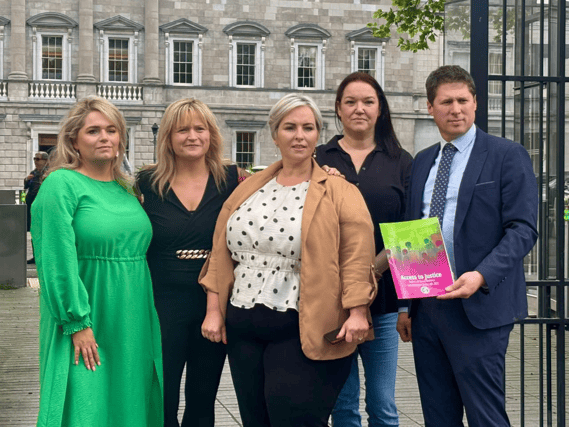

Limerick abuse survivors Sonya Stokes, Leona O'Callaghan and Shaneda Rooney spoke on the bill, which will give victims of sexual violence more protections under law
DETERMINED Limerick advocates, and survivors of child sexual abuse were among those who spoke at a Dáil committee on a new bill to protect children.
The joint committee on justice, home affairs and migration heard speakers from Rape Crisis Ireland, Women’s Aid, as well as the lived experiences of women, for the hearing on the Victims of Sexual Violence Civil Protection Orders Bill 2025.
The bill would provide victims of sexual violence with the right to seek civil protection orders.
This would mean that when someone is convicted of a sexual violence crime, the court can impose an order restraining the offender from approaching the victim in the case.
At the moment, that provision only exists within harassment legislation, but not for victims of sexual violence.
Speakers included abuse survivors Leona O’Callaghan, Sonya Stokes, Paula Doyle, and Shaneda Rooney, and executive director of Rape Crisis Ireland Clíona Saidléar, legal director of Rape Crisis Ireland Donna von Allemann and CEO of Women’s Aid Sarah Benson.
Sonya Stokes told the committee that she lived in constant fear of encountering her abuser.
“My offender has been deceased since December 5, 2025. I only found out on April 30, 2026. I feel very let down by the State.”
She added: “Victims will always be victims. The impact did not end when the abuse stopped.
“It did not end when the court case finished. It did not end when the system said it was over. For me - it never ended.
“I live daily with fear, trauma, and anxiety. The fear of bumping into my abuser was constant, it is something I carried everywhere I went.
“I am always aware. Always alert. Always carrying what was done to me.”
Ms Stokes emphasised that the impact of the abuse reaches into so many facets of life: “While perpetrators move on with their lives, survivors do not get that same chance. We carry it for life.
“There are moments where that fear takes over — where my heart races, where I feel panic, and where I am brought straight back to the trauma.”
She stressed: “This Bill is not just legislation to me - it is safety.
“It is the difference between living in constant fear and having some level of protection.
“It means not having to constantly look over my shoulder, not living in fear of unexpected encounters, and not feeling completely unprotected after court.
“For survivors like me, this Bill could bring real change.
“Because right now, the system may punish - but it does not protect.”
READ ALSO: Limerick man convicted for entering a business premises in a county Limerick town without permission
Ms Stokes emphasised: “This legislation is not just about policy - it is about real people and real lives.
“Our fight does not end. Our pain does not end. Our fear does not end. But this Bill has the potential to make a real difference. To provide protection. To provide safety. To show that survivors are finally being heard.”
Fellow survivor Leona O’Callaghan told the committee that her abuser was sentenced to 17 years in prison and had convictions for two very similar offences.
“We cannot talk about safety without talking about the brutality of fear.
“The memory of his eyes staring at me as he raped me in a dark graveyard freezes my nervous system in a way that I hope none of you ever experiences, and that no child is built to cope with.
“Only by understanding that level of fear can you understand my need to feel safe from him now.”
Ms O'Callaghan stressed that the way the criminal justice system works is that survivors like her have to relive the trauma and every second of the abuse in order to try to get justice and a sentence for the offender.
She added that the survivors and victims are not looking for thanks or recognition for coming forward and telling their stories, they did it to protect the children of the future.
“I want to look survivors in the eye and tell them that the (criminal justice) process is hard, but that it is safe and this bill brings me a step closer to that,” Ms O'Callaghan added.