

Tunnelling and station construction works for Dublin metro to begin in 2028
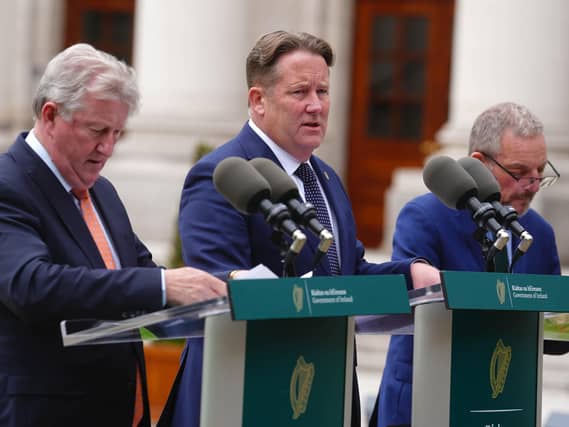

The cost of building the MetroLink has more than doubled in the last four years, with the estimated price now between 14.44 billion euro to 17.49bn.
Tunnelling and station construction works to build a metro in Dublin will begin in 2028, the transport minister has said, as he vowed to deliver the long-awaited project on time and on budget.
The cost of building the MetroLink has more than doubled in the last four years, with the estimated price now between 14.44 billion euro to 17.49 billion euro.
Minister for Transport Darragh O’Brien confirmed that the Government has approved the project to move to the tender stage, with a view for enabling works to begin next year.
Mr O’Brien said that tender packages for the major construction and operational contracts will begin in the coming months.
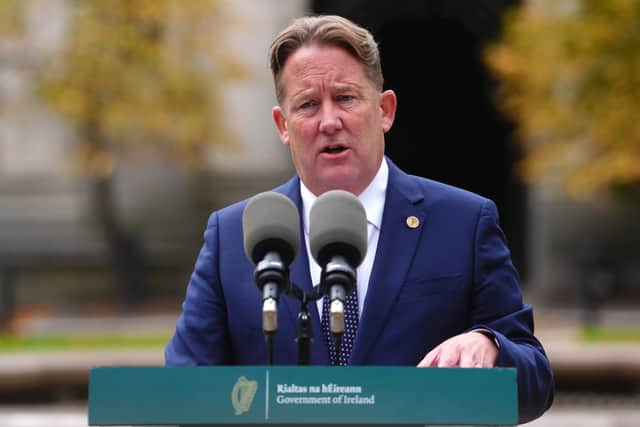
“We expect enabling works, including utility diversions and site preparation, to commence from next year, followed by major tunnelling and station construction works in 2028,” he added.
“I’ve outlined to Cabinet today the estimated costs in the revised business case, and they range from 14.44 billion to 17.49 billion, with the central estimate of 15.75 billion.
“Firm cost ranges, though, for MetroLink will only be known after the competitive market bids are received next year.
“Either way, this is a really significant investment that will give us a sustainable, modern transport infrastructure to support our growing population, to support our economy, to support our housing needs for decades to come.”
A metro line for Dublin has been proposed over recent decades, but none have yet proceeded to build stage – despite hundreds of millions of euros being spent on different planned routes.
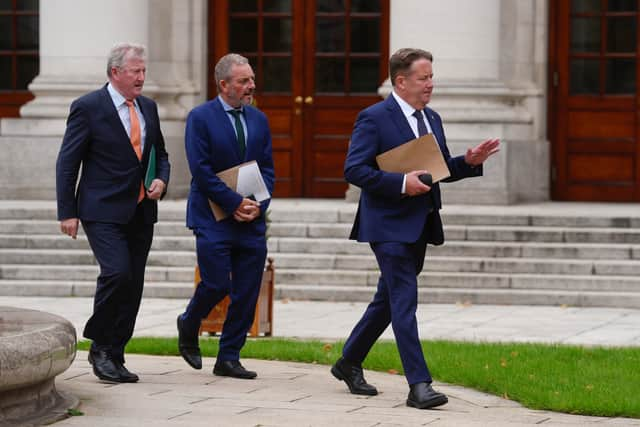
But Mr O’Brien said on Wednesday that the project “will happen”.
He said there needs a “razor-like” focus to ensure the metro is delivered on time and on budget.
“MetroLink will help reduce traffic congestion. It will improve access to Dublin Airport in Dublin city, and unlocks much-needed new housing development at scale,” he added.
“For approximately 330,000 people who live along the Metrolink corridor, this is going to be a game changer.
“Their access to employment, to education, healthcare, and leisure will be greatly enhanced. However, and very importantly, it will also be a major enabler for new housing development, with capacity to support approximately 77,000 new homes directly along this route.”
Mr O’Brien said that to ensure the project does not run over-budget, there will be specific governance focussed directly on MetroLink.
“I think when the competitive tendering process is underway, obviously, those tenders will be selected, and the competitiveness in that process will drive the price range too.
“But we’ve been very realistic in the range that we’ve given here. This has been checked through the NTA (National Transport Authority), TII (Transport Infrastructure Ireland), my own team in the department as well, with with independent assessments and advice also being given.
“This needs a razor-like focus on this project to make sure that it’s delivered, delivered on time, delivered on budget, and we intend to start this project and start the enabling works of this project next year.
“It’s a really significant day.
“This is a project that’s very close to my heart as well.
“I’ve said before that I remember the initial iteration of what was then Metro North, going back to 2005, and it probably shows how successive governments haven’t delivered this project for various reasons.
“But this is happening now.”
He said that timelines and the criteria of the contracts will be “set out clearly” when the documents are published.
He said these would include strict conditions around cost management and delivery timelines.
“We’ll be commencing the enabling works early next year, and then get to awarding contracts next year with the commencement of the major works and tunnelling that in 2028,” he continued.
At its peak, MetroLink will require about 8,000 workers, with plans under way to provide new accommodation for workers.
The MetroLink will be 19km in length, and will run mostly underground and connect Estuary to Charlemont and include stations at Dublin Airport, Ballymun, the Mater and Rotunda Hospitals and Dublin centre.
The 64-metre trains will operate every three minutes at peak in each direction, with 16 stations along its route.
It is designed to move up to 20,000 passengers per hour.
It is expected that operations will begin in about 10 to 12 years time.