

‘People are going to get hurt’ amid legal aid dispute, judge predicts
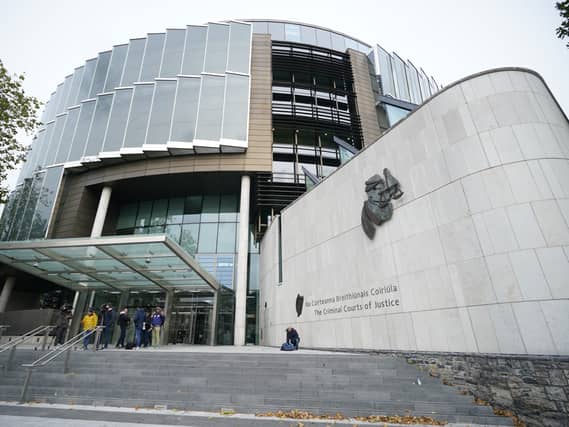

A judge has predicted it is ‘now inevitable that people are going to get hurt’ due to delays in court amid the dispute over criminal legal aid.
A judge has predicted it is “now inevitable that people are going to get hurt” due to delays in court amid the dispute over criminal legal aid.
The comments came as the Law Society met on Wednesday to discuss its position over an ongoing dispute with the Department of Justice over criminal legal aid fees in the District Court.
Justice Minister Jim O’Callaghan replaced a per-appearance fee with a flat rate in July, prompting hundreds of solicitors to withdraw their services.
It has impacted several cases involving vulnerable court users entitled to criminal legal aid, with many matters being adjourned for months.

At Dublin District Court on Wednesday, Judge John Hughes was dealing with sentencing matters for people who have been found guilty or have entered a plea of guilty.
While these people no longer have a presumption of innocence and are awaiting a sentence, fine or other penalty from the court, Mr Justice Hughes told their victims that he was not in a position to finalise many of the matters involving victim impact statements as the guilty party’s solicitor was not present.
He said that due to the volume of sentences being delayed, it would be “naive” not to think that some member of the cohort who would otherwise have been put in jail would not reoffend.
Before taking his list, he told the victims that he recognised they were in a “stressful position” but added: “Unfortunately, the court won’t be in a position to deal with victim impact statements today.”
He said this was because the defendants would be entitled to take issue with the statements but would not be able to do that without a solicitor, and there would inevitably be appeals to the High Court if the judge proceeded otherwise.
Mr Justice Hughes said the court was not a party to the dispute and he was not going to comment on fault or merits of either side but added: ”Suffice to say, it is causing significant difficulties to the running of this court.”
He said there were was a backlog of 100 cases in his court, adding it had not imposed a penalty on an unrepresented defendant since the middle of June, adding that there were potentially thousands of defendants across the country awaiting a penalty.
The judge said that, statistically, many in the group awaiting finalisation will inevitably go to jail when the matters are dealt with after the dispute: “This is the reality.
“It is now inevitable that people are going to get hurt during this period.”
He predicted there would be an “understandable blame game” when this arises about people that should have been locked up “earlier”.
The judge said he was not talking about “double yellow lines” or people “stealing a Twix”, but said his court dealt with robberies, assault, sexual assault and violent disorder.
Mr Justice Hughes said he was conscious that the victims may be sitting in court possibly very close to the perpetrator and that this may be “very stressful”.
He said he wanted to ensure they were not “revictimised” and encouraged them to contact gardaí if any inappropriate behaviour arises during the delays.
He said the cases would be adjourned for weekly reviews for the purpose of monitoring bail.
Mr Justice Hughes said there were 40 defendants before the court and said “many if not all” will be adjourned.
He told the court sergeant that the State would need to be a in a position of “readiness” in anticipation of the strike ending to deal with these cases as a “matter of priority”.
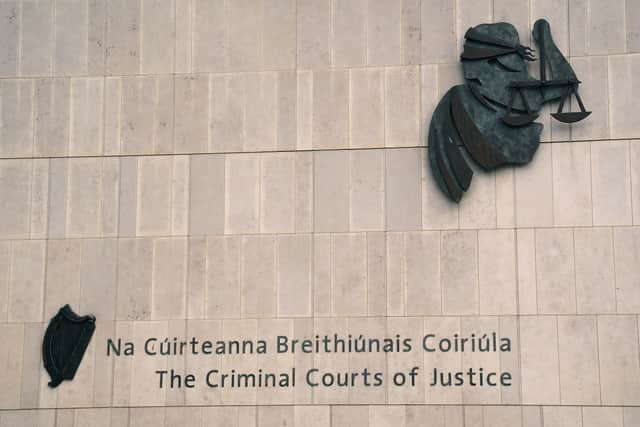
Figures from the Court Service show there was a 93% reduction in the issuing of legal aid certificates nationwide in July.
Mr O’Callaghan has maintained the criminal courts are running “effectively” and said the reforms were necessary as the previous per-appearance scheme encouraged delays through adjournments.
Striking solicitors argue that many adjournments in cases originate on the prosecution side – including delays in probation reports, medical assessments and evidence, as well as gardaí awaiting directions from the Director of Public Prosecutions.
They have sought renegotiation and questioned whether the minister had been to the district courts to see the impact of the strike – with fears over backlogs as judges adjourn some cases for months.
Solicitors have asked the department to consider that legal aid certificates be issued for separate and distinct cases committed on separate dates – with a cap of five in any one day, and for a solicitor to be allowed apply for an additional certificate at the court’s discretion if there are more than 10 appearances.
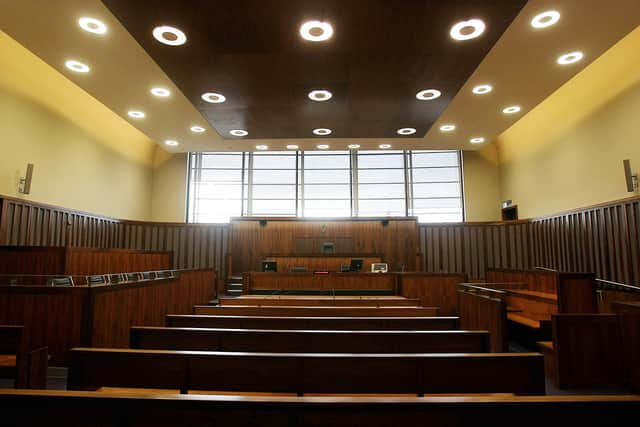
Law Society president Rosemarie Loftus has also suggested the appointment of a mediator but this has been rejected by Government.
Meanwhile, the Council of The Bar of Ireland said it was “extremely concerned” that the dispute has not been resolved ahead of the new legal year on October 5 and urged the minister to engage on “genuine issues which have been raised”.
The Bar of Ireland said that the new fee structure risks reducing the willingness of practitioners to take on criminal legal aid work.
Mr O’Callaghan told Ms Loftus on Thursday the reforms are part of his commitment to supporting the operation of the criminal justice system.
He said more than 1,400 certificates have been granted since the commencement of the revised scheme, with at least 700 certificates issued in the last fortnight alone as the District Court resumed after the summer break.
He said more than a quarter of these cases where certificates were granted have already been disposed – with more than 75% of that group concluding in a single court appearance, attracting the full new fee of 520 euro for that one appearance.
He said 99% concluded within five appearances, adding early indications suggest the system is achieving one of its objectives.
The Law Society said it was “deeply disappointed” that Mr O’Callaghan “failed to offer any mechanism to resolve the dispute” and rejected the minister’s view that it would be inappropriate to address issues in advance of a related judicial review judgment due next month.
Dr Shane McCarthy, chairman of the Law Society’s Criminal Law Committee, said: “Every day that passes sees people denied meaningful access to justice.”