

Housing Minister says ‘nature of homelessness is changing’

The latest data shows the number of people in emergency accommodation in Ireland has topped 18,000.
The “nature of homelessness is changing”, the Housing Minister has said, saying the problem is becoming more concentrated in Dublin and those affected are increasingly non-citizens.
The latest data shows the number of people in emergency accommodation in Ireland has topped 18,000.
A total of 12,168 adults and 5,897 children under the age of 18 accessed such services during the last full week in September.
The record figures published by the Department of Housing do not account for people sleeping rough or those staying in domestic violence shelters.
Some 50% (6,088) had Irish citizenship, 31% (3,820) had non-European Economic Area (EEA) citizenship and 18% (2,260) had EEA/UK citizenship.
The release of the data was initially delayed from October because of a public sector work to rule which was suspended last week.
The figures were published at 7pm on Friday, days after a 20 million euro cross-Government child and family homelessness action plan was published.
Asked if the lack of a press conference around the launch of the plan last week was an admission that it would not address rising child homelessness, Mr Browne said: “No, absolutely not.
“This is a really important plan, it’s a funded plan to tackle the problem and the challenge we see with child homelessness right across the country.
“One child in homelessness is one too many, and there is a there is a real challenge there.
“And this is only one part of our total actions to ensure that we can tackle homelessness right across the country.”
Mr Browne said “the nature of homelessness is changing”.
He told reporters: “We’re seeing it become more and more of a Dublin-centric challenge as we see the nature of those who are becoming homeless are increasingly non-citizens.
“Now they’re entitled to housing, and that’s part of my challenge as to how we address that housing challenge for those people as many of them leave direct provision centres and come in to emergency accommodation in Dublin.”
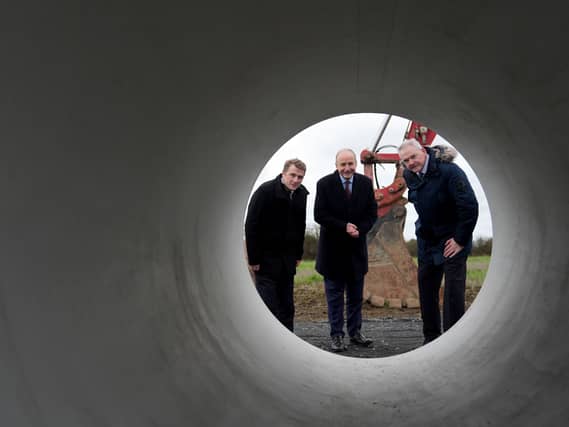
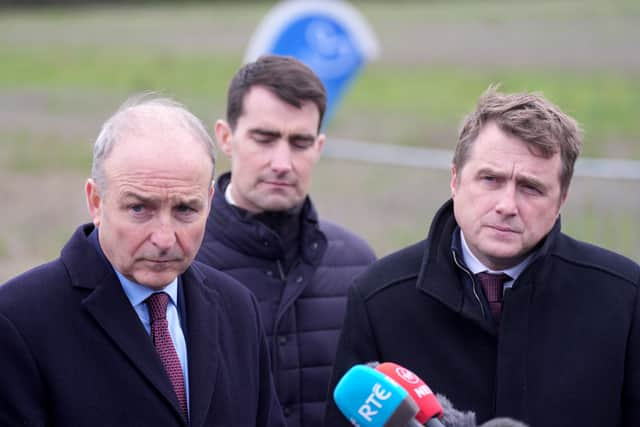
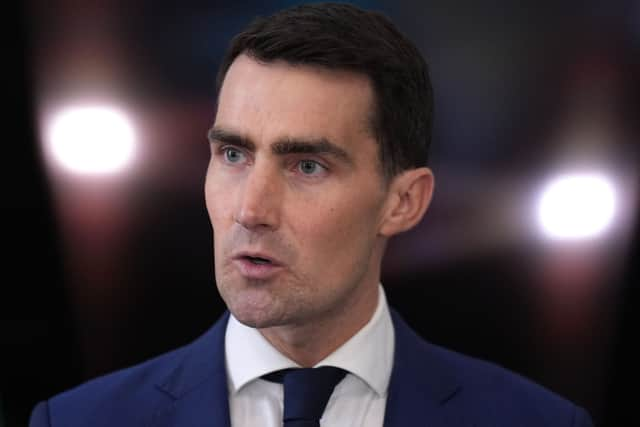
Mr Browne was speaking at a media event alongside Taoiseach Micheál Martin and Public Expenditure Minister Jack Chambers around a major wastewater project to support 185,000 new homes.
Irish Water said the Greater Dublin Drainage project will deliver a new state-of-the-art wastewater treatment plant, with capacity for the equivalent of 500,000 people across north Dublin and surrounding parts of Meath and Kildare.
Preliminary works are under way with construction of the main works expected to begin in 2028.
Irish Water said the project remains on track for “accelerated completion” in 2031, at a cost of 1.9 billion to 2.3 billion euro.
Asked about the cost quadrupling from estimates of 500 million euro 15 years ago, Mr Chambers said: “The cost of delay is very significant across all capital projects, and that’s why we need to promote and accelerate delivery in all elements of how we plan and deliver projects.”