

Specimens of Change Exhibition officially open in Limerick Museum

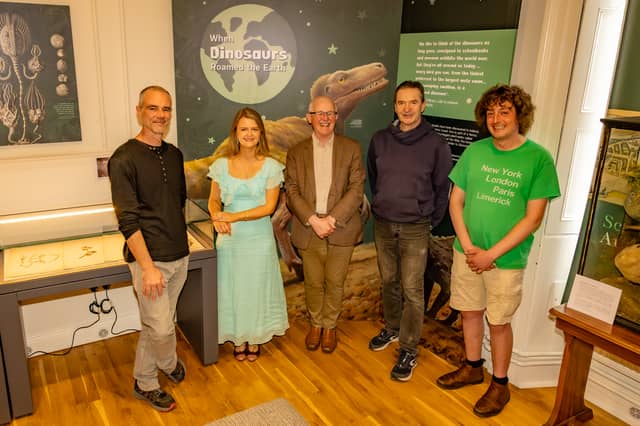

Rarely seen fossils, animals and plants feature in Limerick Museum’s new display
SPECIMENS of Change, an exhibition of Limerick Museum’s Natural History Collections, curated by Dr Zara Power had officially opened in Limerick Museum.
The new exhibition invites the public to engage with rarely seen natural history collections. The collection is diverse and includes examples of palaeontology, zoology, oology, entomology, and botany in the form of an important herbarium amassed by the renowned Limerick botanist Charlotte O'Brien of Mount Trenchard, Foynes.
The exhibition on display in Limerick Museum until December 31 will highlight that the Museum is not merely a storehouse of 'old things' but a tangible record of a changing planet.
Dr Zara Power, Assistant Curator of Limerick Museum commented: “This exhibition is an exploration and consideration of our extraordinary natural world in all its complexity and colour.
"This display celebrates the remarkable diversity of life around us. For in the words of the great David Attenborough, ‘the future of all the natural world, on which we all depend, is in our hands.”
Dr Matthew Potter, Curator of Limerick Museum added: “I am particularly grateful to Zara for her tireless professionalism and enthusiasm in curating this wonderful exhibition for the people of Limerick. I also want to acknowledge the generous funding provided by the Heritage Council under its Heritage Stewardship Scheme, which enabled Limerick Museum to mount the exhibition.”
Via the medium of Limerick Museum’s natural history collections, this exhibition will explore changes within Ireland’s ecosystem over many millions of years.
Natural history collections have been used to study many important scientific questions, including disease outbreaks, climate change, extinction, pollution, and evolution. These collections include preserved animals, skeletons, fossils, and plants stored in museums and universities worldwide.
Some of the species on display no longer exist in the natural world.