

‘It’s very hard to compete with clubs who can help out with jobs’
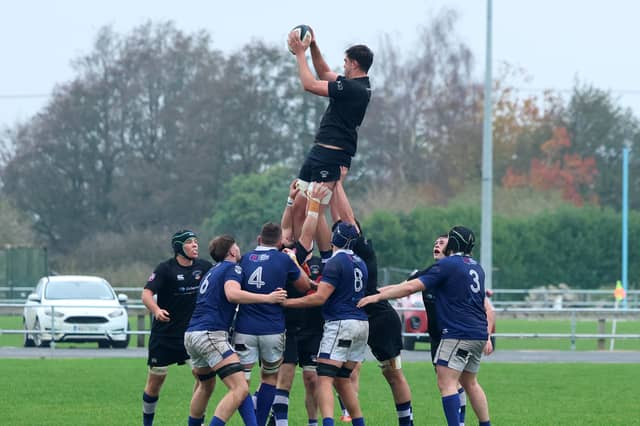

After six games in seven weeks, Limerick’s seven Energia All-Ireland League clubs have a first opportunity for some respite as the competition sits in the middle of a three-week break.
The league tables don’t make for pretty reading for local sides, however.
Limerick’s lone Division 1A side, Young Munster sit in eighth place in the early-season standings. The only local side in Division 1B are Garryowen who sit in ninth spot, only UCC propping them up the board.
In Division 2A, UL Bohemian sit in seventh, one place above Shannon.
There are three Limerick sides in the newly-created Division 2B South. Old Crescent and Bruff are both in the top half of the table in fourth and fifth place respectively with Thomond enduring a difficult start to the campaign with only one win from six.
It is a league increasingly dominated by sides from Dublin. The top seven teams in Division 1A are from the capital with Munsters, Ballynahinch and Cork Con the bottom three sides.
On a recent appearance on Off The Ball, Irish Times rugby correspondent Gerry Thornley spoke about the decline on Limerick rugby - pointing the finger at the success of the county’s hurlers.
Those close to the game locally admit that young athletes are more likely to choose hurling over rugby - but there are many other factors at play.
“A lot of those kids at 14 or 15, they’ve picked hurling because they are in academies. It definitely plays a factor,” said Bruff head coach Andrew O’Byrne.
“You look at the Limerick hurling team - Kyle Hayes, Gearoid Hegarty, they're all men who would have a great physique for rugby.”
A teacher and coach at St Munchin’s College, O’Byrne is in a good position to assess the state of the game locally.
“It filters down from Leinster being ahead of Munster and the schools up there being a step ahead of the schools here,” he outlined. “I think it all kind of factors in to one another.
“You just have a bigger playing pool out of the schools in Dublin and if they are not going into the Leinster academy they are filtering back into the clubs. It’s very difficult for the Limerick clubs, especially with the young guys from Limerick going to Dublin for work and things like that. The playing pool here just isn’t as big.”
While Dublin has the population, the playing pool in Cork is mostly condensed between two big rugby schools - Christian Brothers College and Presentation Brothers College.
“It doesn’t help in Limerick that there are so many schools, the player pool is diluted. In Cork, you have the two big schools and most of the kids living in Cork city - who have a bigger population - go to one of the rugby schools whereas here they are split between five or six schools.
O’Byrne added it’s also hard for schools in Limerick and Cork to compete with the “infrastructure and facilities” of the Dublin schools. This also comes through to the club game.
“The clubs up there are in wealthy regions of Dublin and they’d have people involved that would get involved, it’s the same with the schools.
“The budgets for some of the schools in Dublin for their Senior Cup teams could be higher than our budget in Munchin’s for all six years.”
Difficult to compete, but not impossible says Young Munster Chair of Rugby Mark Connolly.
"We're probably one of the teams in the country who are punching so far above our weight,” he says. “Since the formation of 1A, Young Munster and Cork Con are the only two teams not to be relegated.
"We're a small club but very ambitious. We've consistently finished in that top six and we've gotten top four. Outside of Dublin, Young Munster are the top ranked club in the country and that should be our motivation for the season.
"We have to travel nine times. We've to get a bus nine times out of the 18 fixtures. The cost of leaving the clubhouse on a Saturday morning, going to Dublin primarily, it's just very expensive."
UL Bohemian head coach Simon Malone admits that a number of external factors have the club “under pressure” in both recruiting and then keeping players at the club.
"Once players graduate from college and they get to that age, looking for jobs and things, there are just a lot more opportunities in Dublin,” he said. “It's very hard to compete with clubs who can help out with things like accommodation and jobs, there's just a lot more going on in Dublin.
"It can happen as well where one or two players from Limerick go up and they see what it's like in Dublin, they then say to their friends that they could make the move up with them and it's very hard to compete with that.
"Player recruitment is a challenge as well because a lot of the teams in Limerick are fighting for the services of the same pool of players. We're trying to sign the same players as Garryowen and that wouldn't have always been the case. At times we need one or two of the schoolboys to help us out in the senior team, that would have been unheard of a number of years ago.
"When you go to college in Limerick, you finish and you can look at Terenure, St Mary's, Wanderers and you can get a really good job and career opportunity out of it and I personally can't begrudge that.”
Garryowen chair Conan Doyle has also seen the same issue with young men moving to Dublin after finishing college.
"I think everyone is probably in a similar situation. A challenge in Limerick rugby is in regards to players being around and the logistics around that. We'd have some players come to Limerick, for college being the main reason. That age bracket, they come at 18/19 and then leave again when they finish college,” he said.
"There's always going to be a decent crop of players coming out of school. Rugby is still a very popular sport within the county. I think it is more down to the playing age of squads.
"There are job opportunities or even just getting out of Limerick, there are more things going on in Dublin but certainly there are job opportunities and I'm sure more of those come up for lads who are a good rugby player and players are right to take advantage of that if they can.”