

Decision made on controversial Limerick greenway plan


National planning authority rejects council’s bid to install greenway along river bank near University of Limerick
A CONTROVERSIAL project from council to build a new riverside greenway between University of Limerick (UL) and National Technology Park has been rejected by national planners.
Limerick City and County Council had sought permission from An Coimisiún Pleanála to develop the new path, which would stretch for more than four kilometres.
It was envisaged the first 3.3km would be a shared cycle path and footpath between the college campus in Castletroy and McLaughlin Road, with the final 1km-or-so being dedicated Active Travel infrastructure, comprising separate pathways and footpaths.
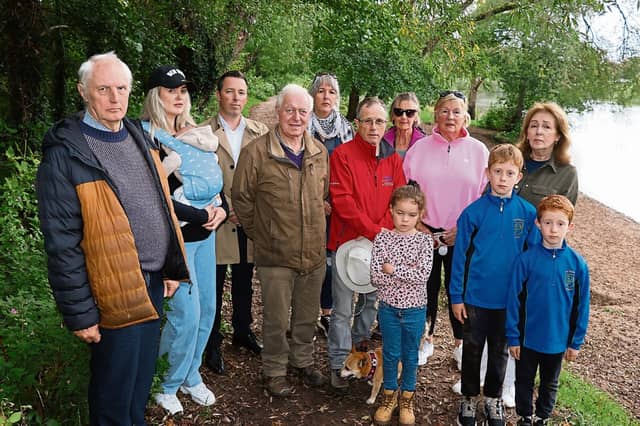
But a number of parties objected to the proposal, including local residents who were upset at the plans to build on the riverside walk which stretches from UL’s Boat Club to behind Cook Medical.
Agents for UL themselves questioned the route of the proposed greenway, while also expressing concern at the potential loss of trees from the riverside.
An Coimisiún Pleanála identified what it described as “insurmountable deficiencies in the design proposals, scientific information and mitigation proposals" from the local authority.
The national planning appeals body raised “significant concerns” about the “constructability of the proposed greenway in such an ecologically sensitive environment, where there is considerable risk of pollution and disturbance during the construction stage, and continued disturbance to Annex II species during the operation of the greenway”.
Constructability is a project management technique that evaluates a project's design to ensure it can be safely and efficiently constructed in the real world.
In simple terms, Annex II species are plants and animals that the European Union considers important enough that special areas should be protected specifically for them.
For its part, in a submission to An Coimisiún Pleanála, Limerick City and County Council stated the proposed greenway would meet a number of sustainability goals, including encouraging the use nature-based play.
They added it will “protect important habitat and provide a corridor for people and wildlife”.
Council suggested the project can link to a future greenway across the Black Bridge.
But the refusal of permission has been welcomed by some of those who opposed the plans.
Castletroy woman Brid Kennedy, who walks the route several times a week, said: “It's a big relief as it would have been a horrendous destruction”.
"From the word go, I was hugely concerned about the enormous damage to the environment, to the local eco-system and also the fact it is such a historic walk. It is enjoyed by huge numbers of people - hundreds every day, as there are so few places left near the city where you can enjoy a country walk,” she added.
Councillor Sean Hartigan was the only local representative to write in opposition.
He said: “As a Green Party councillor, I’d usually be for greenways. But putting a greenway through a natural area next to the river where it could have a considerable impact on the environment isn’t desirable.”
The City East councillor said he welcomed that An Coimisiún Pleanála appear to have taken his objections on board in its response.
"I don't think given how robust the refusal from the Commission is, there is a way out of this," he added.
Environmental group An Taisce Limerick also objected, saying while it too would be in support of a network of greenways in the city, these “must be designed and developed with due concern for ecologically sensitive areas."
"The decision by An Coimisiún Pleanála is considered and comprehensive and rightly protects an area of outstanding natural beauty in a special area of conservation on the Lower River Shannon,” the group chairman Seán Mc ilfatrick said.
He said the decision will lead to the saving of 60 trees, which were forecast to be felled if the application had been green-lit.