

Then & Now: Let May bring us new hope in Limerick

THE FIRST of May is the beginning of summer. We move into the light half of the year when the sun grows to its height at midsummer and then begins to wane until at Samhain (November 1) the dark half of the year begins again. Flowers and foliage are in full bloom, and the rural landscape is getting brighter by the day, though later than usual this year after a wet few months.
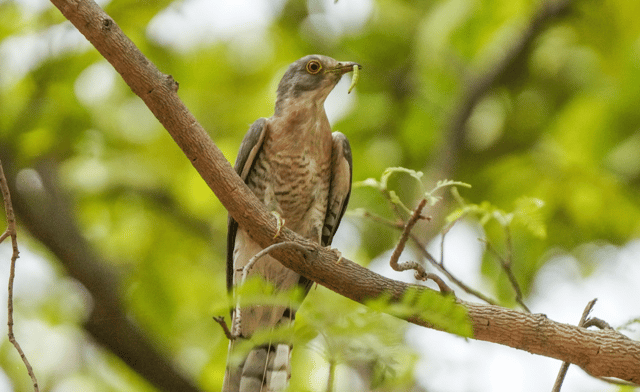
By now, the heralds of summer - the cuckoo, corncrake, swallow and the martins, should have returned from their winter sojourn in Africa. The cuckoo arrived in my locality on Wednesday April 19 which was sunny and cold. The poet William Wordsworth welcomes the arrival of the cuckoo in his poem To the Cuckoo:
Oh, blithe newcomer I have heard!
I hear thee and rejoice
O cuckoo, shall I call thee bird
Or but a wandering voice?
The cuckoo is a newcomer returning each year to its old haunts to be heard. It is only seldom seen. For Wordsworth it is a wandering voice, a bundle of associations, folklore and superstitions. Sadly, the number of cuckoos has greatly reduced like so many other birds. The corncrake has disappeared for many a day from our locality and the swallows are not as plentiful as in the olden days. We are lucky that a few cuckoos still visit us from southern Africa from April to August each year.
Cuckoos are just as well known for their unique cuck-oo call as they are for their habit of laying eggs in other bird's nests-though it is the males who do the cuckooing and the females who lay the eggs. Males cuck-oo at the beginning of the season to attract a mate, their whole bodies expanding and contracting with the effort. Once this has been achieved, they become much quieter for the rest of the season.
A hen cuckoo may lay several eggs in different nests. She may even discard an existing egg to make room for her egg, so it is no wonder she is not liked by other birds. If the nest is situated so that she cannot position herself to lay directly in it, she will lay the egg nearby on the ground and carry it to the nest in her bill. A young, hatched cuckoo systematically removes any remaining eggs from the nest to gain the complete attention of its surrogate parents. For this reason -and perhaps because they look like hawks - they are frequently attacked or mobbed and harassed by smaller birds.
Cuckoos lay in several birds’ nests including dunnocks, meadow pipits, reed warblers, robins, pied wagtails and blackcaps. It is part of the cuckoo’s mystery that young cuckoos migrate alone and know where to go without any teaching and can also recognise their own species to mate, despite never having seen another cuckoo.
There are several old beliefs regarding the cuckoo and its call. If you heard the cuckoo first with your right ear, you would have good luck all summer long, but if you heard it with your left ear, the summer would not be much fun for you. It was considered lucky to hear the cuckoo on the morning of your wedding. It was thought very bad luck to kill a cuckoo or destroy its eggs.
In west Cork the last three days of April and the first three days of May were called the Cuckoo Days, and a storm at that time was called a Cuckoo Storm. Cuckoo oats were oats that weren't sown on account of bad weather or laziness, until the time the first cuckoo arrived. The cuckoo appears as a symbol of female beauty in some Irish legends, probably from a play on words due to the Irish word cuach which means both cuckoo and curl or ringlet. In one story a very beautiful princess called Crédhe, daughter of King Cairbre, was described as Crédhe, for whom the cuckoo calls. An only child used to be called Éan na cuaiche (cuckoo’s chick-an only child).
The cuckoo also appears in some traditional sayings. In Donegal anything strange, rare or unexpected was called a 'winter cuckoo'. In Scotland they say, you will get it when you find the cuckoo's nest, which meant that the person would never get it.
Flowers and insects are also connected with the season of the cuckoo. The cuckoo spit is a secretion from a number of insects, which looks like froth and is found on the stems and leaves of several plants. It appears around the same time that the first cuckoo is heard and so was believed to be the spit of the cuckoo.
I always enjoy the call of the cuckoo, which can brighten up the lives of the people who are lucky to be residing in an area that they visit each summer.
Queen of the May
EVERY year in Ireland the month of May is marked on various radio stations with the beautiful and popular hymn Bring Flowers of the Rarest also known as Queen of the May sung by Canon Sydney Mac Ewan.
The hymn was composed by Mary E Walsh who was a pupil of the Sisters of Notre Dame, and it was published in 1871. Sydney Alfred MacEwan the Scottish tenor was born on October 19, 1908, in the Springburn area of Glasgow. His Irish mother was from Portadown, County Armagh, and his father was from Patrick in Scotland.
His mother managed to pay for music lessons for Sydney and his brother despite their poor circumstances, and both won scholarships to good schools. He commenced his studies to become a Jesuit priest in London aged 18, and later at Glasgow University. On the advice of Sir Compton McKenzie, and Count John McCormack he commenced his singing career in 1934. He recorded for Parlophone and in 1936 he toured America, Canada and Australia with success.
He was ordained a priest in St Andrew's Cathedral, Glasgow in 1944 and he continued to record and tours to north America and Australia continued up to 1956. Funding from these tours was used to build a Cathedral in Oban and for renovations to the Church of St Margaret in Lockgilphead.
He visited Ireland many times and sang in the Savoy Theatre in Limerick on a number of occasions.
He returned to holiday in Limerick during his retirement years. He had a beautiful pure voice and was one of the most popular tenors of his time.
At fifty years of age, he retired from singing because in his own words, his voice had lost its bloom. He died on September 25, 1991, aged 82 years. Canon Sydney MacEwan successfully combined his career as a priest and a singer, and his beautiful and spiritual rendition of Queen of the May is both uplifting and nostalgic for so many people.
Bring flowers of the Rarest
Bring Blossoms the Fairest
From Garden and Woodland
And Hillside and Dale
Chorus
O Mary, we crown thee with blossoms today
Queen of the Angels and Queen of the May.