

MOTORING REVIEW: Jogger offers SUV comfort with estate versatility
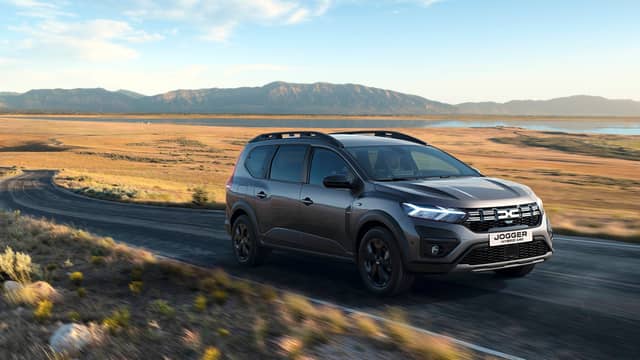

DACIA were renowned for their budget priced cars with very few frills onboard to keep the price down. That has evolved in recent years with models offering more comfort and spec. Prices have increased accordingly.
The recent addition of a hybrid motor to the Dacia Jogger line-up is a first for the brand in any of its models, not least because up to now, only a manual transmission gearbox was available. Dacia claims the hybrid allows you drive in urban areas in electric mode for up to 80c of the time and achieve up to 30pc in fuel savings.
Jogger is best described as having the length of an estate, the spaciousness of an MPV and the robust styling of an SUV, wrapped up in a 7-seater family car. It’s an attractive and modern looking motor from every angle, with elevated ground clearance, marked wheel arches and 16-inch black alloy wheels with copper-brown logo and exterior door mirrors which all looked really smart. You also have a copper-brown Dacia logo on the high opening tailgate.
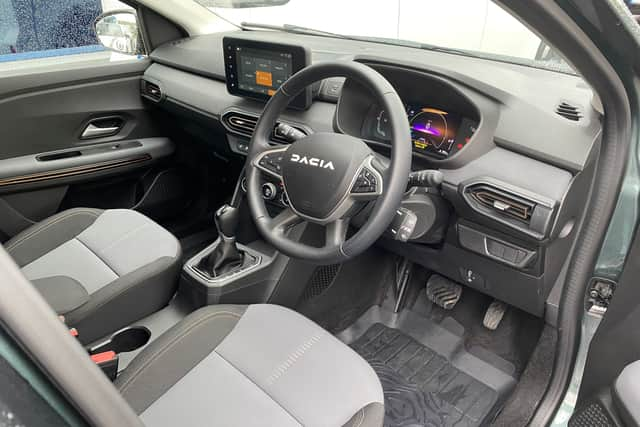
The interior is functional, versatile and spacious with excellent head and legroom for everyone. The copper accents are carried inside on the door panels, ventilation grilles, and on upholstery. The spec includes front and rear rubber mats which I would replace with non-slip mats as the soles of my shoes slipped on the mats and on the pedals after getting into the car in wet weather. Also, there was a lot of plastic in the interior and the exposed screws in the door pulls wasn’t a good look.
The 8-inch infotainment screen, with built in navigation and radio apps, Bluetooth linkage to smartphone systems in my top specced car looked quite dated in comparison to screens in most new cars but it worked absolutely fine and was simple to use while the 7-inch driver’s instrumentation cluster has been upgraded to Renault standards and looks the business. I’m not a fan of the stubby stalk for volume control located out of sight at the lower right side of the steering wheel. A control knob on the dash would be so much better.
There’s a USB port and a 12V plug on the dash. While the glovebox only consists of a small space, there are good sized door bins.
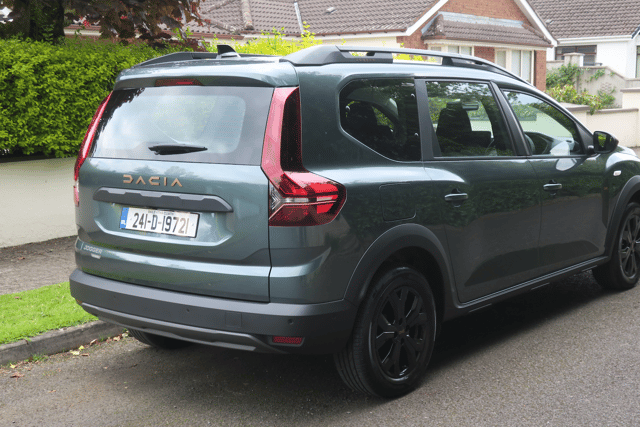
My Extreme spec had keyless entry, rear view camera, blind spot monitors, front and rear parking sensors, Automatic emergency braking, Hill start assist, and door sills with lovely topographical patterns.
The powertrain is the Renault-familiar system of a 1.6 petrol engine paired with two electric motors — a 49hp traction motor and a smaller high-voltage Starter Generator, plus a smart automatic gearbox that optimises gear changes for a smooth power delivery. You have full electric starting and very good acceleration. The battery recharges by itself when you decelerate and brake. The car felt quite solid on the road with five adults onboard and I enjoyed how well it drove. It was economical too, recording just 4.8 L/100kms over my time with it, driving on all sorts of roads. Driving in B mode allows greater regenerative engine braking. Annual road tax is €120.
This is a sensible car that you can adapt to your own, or your family’s needs. I believe most Joggers will be bought as an affordable second family car to be used for short commutes like the school run or for shopping. But there’s also a more adventurous model for those who like the outdoor life and camping.
The starting price is €25,040; price with metallic paint is €33,285 for the Extreme HEV 145. Without metallic paint, €32,640.