

Limerick writer pens heartbreaking memoir
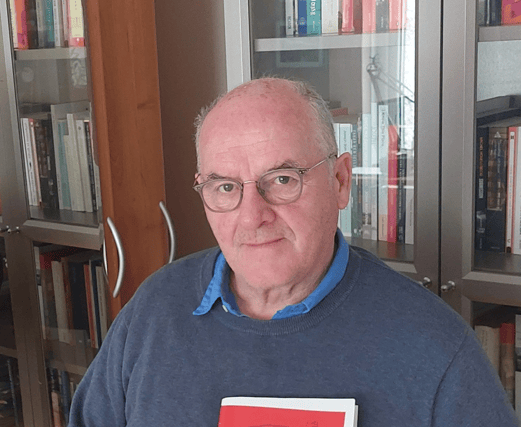

FROM the Ireland of the sixties to the London of the seventies, Limerick writer Dermot O’Sullivan takes us through the journey of a young man navigating adolescence and adulthood.
In his memoir, Nothing To Be Done, the Pallasgreen native tells a warm yet heartbreaking story.
Dermot had always been interested in writing, but he always was a “reader first.”
“I did some creative writing classes but I never really got stuck into it. I didn't think it was any good, but I just kept at it and the courses certainly helped. You realise as time goes on that you spend a lot of time editing,” he said.
One of the most difficult stories he penned was about his late mother.
“The main story in the collection is from a difficult time, it was when my mother died. The phrase that I heard at the time was ‘there's nothing can be done’. She had cancer and she had been sick for a while. There was hope that an operation would have cured it, but it didn’t. It came back two years later, so that dominated almost all of my time in secondary school. She died in October 1969, my last year at school,” he said.
Dermot’s collection of stories can be divided in two halves. The first one covers his childhood in Pallasgreen, then his life as a young immigrant in London.
As he recalls his time in London, he says: “I remember that I really wanted to get away from home and that had a lot to do with my mother's death. It was a running away from something that I couldn't handle.
“The excitement of London in the early days with other guys my age and going around and all the rest of that sort of postponed the effect of my mother's death. And then after that I went into a certain depression, and it was probably a passive unhappy type person and that lasted a few years, and then I eventually pulled out of that.”
A big hurling fan, Dermot couldn't help but also write about the Limerick hurlers.
“Another thing that gets a mention is when Limerick won the All-Ireland final in 1973. They won, and everyone was complaining that it had taken so long to win an All-Ireland. Little did they know that it would take 45 years for them to win the next one,” he concluded.