

Green Fingers: Lifting and dividing herbaceous plants
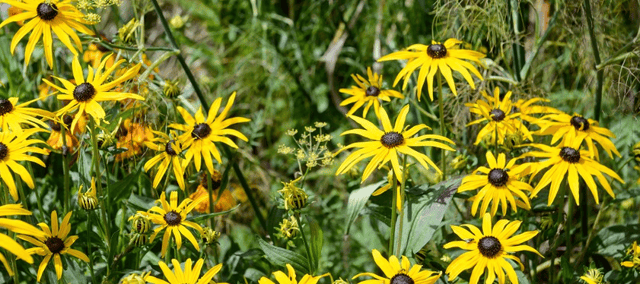

A JOB that I have been doing plenty of lately is lifting and splitting my herbaceous perennials. Herbaceous Perennials are plants such as Sedum, Rudbeckia, Aster, Crocosmia and Nepeta. Herbaceous Perennials are plants which grow every year but never get woody - unlike trees and shrubs. In winter the plants die down to roots below ground. In the spring these plants sprout shoots, and these continue to grow and provide summer flowers.
If plants are chosen correctly you can ensure that you have colour in your garden from March right up until November.
For your own reference, Aster are probably the last Herbaceous Perennial to flower each year-flowering as late as November. One of the earliest to flower are perennial primrose. My all-time favourite Herbaceous Perennial is Nepeta (cat mint) and the variety is ‘Six Hill Giant’. It is a tough, low growing plant with masses of blue flowers all summer long- which the bees just love. All herbaceous plants can be split after they form large enough clumps.
This is also a way of obtaining extra plants for free. You can either start a new bed or share and swap with friends and neighbours.
Jobs in the Veg Garden
If you are on-schedule with your vegetable garden, then you will have been looking at seed catalogues. This is the time of year to start planning for the year ahead in the garden and in the veg patch.
The risk of frost is still great and will continue to be so for the next few months. The idea would be to start seeds in seed trays, indoors, in the next few weeks. Then when the risk of frost has passed, they ca be planted out. This is a simple way of getting a head start.
The dry weather earlier this week has made it ideal for preparing vegetable beds in readiness for planting. If you wish, in a few weeks you could also plant veg seeds either in a glasshouse or on a sunny windowsill. This will ensure you get a little bit ahead of the weather.
For a beginner, the easiest vegetables to grow from seeds are: Spring Onion, Radish and Beetroot. Simply sow the seeds in compost in shallow trays. Keep the seed trays covered until the seeds germinate.
Once germinated, move the seedlings into a light filled windowsill. Keep seedlings moist until ‘true’ leaves appear. These are the second pair of leaves to appear. Once the ‘true’ leaves appear they are safe to move to larger pots. Once the soil is ready for planting, plant the young plants out. Remember to keep them watered, especially on sunny or windy days.
Contact James