

House prices in Limerick City rise by almost 6% year on year

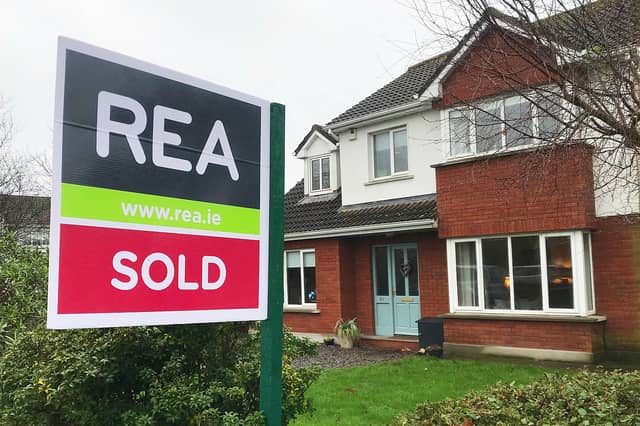

Prices for Limerick City three-bed semi-detached houses have risen by 5.8% year on year, according to a report from Daft.ie
A THREE-BED semi-detached house in Limerick City has an average price of €376,000.
This is a 5.8% increase year on year in listed prices, according to new data from Daft.ie.
Meanwhile, in County Limerick, listed prices in the third quarter of 2026 were on average 2.8% higher than a year ago.
The typical price of a four-bedroom detached house listed in the county was €414,000.
The average price of a property nationally in the third quarter of 2026 was €445,000.
The new figures from Daft.ie show that listed prices are 44% above pre-Covid levels and 7.5% below the Celtic Tiger peak.
Analysis of transactions registered in the Property Price Register and matched to the Daft.ie database suggests that prices rose by just 0.8% in the year to September – the slowest rate of increase since 2020.
With list prices now rising faster than transaction prices, the typical gap between the initial listed price and the ultimate transaction price – a measure of market heat – narrowed to 2.6% nationally, down from 6.8% a year earlier and the smallest gap since 2023.
National average list prices rose 3% year-on-year to September 2026, roughly half the rate of inflation seen a year earlier.
Average price of a property nationally (all types) in Q3 2026 was just under €445,000.
Listed prices are 44% above pre-Covid levels and 7.5% below the Celtic Tiger peak.
Transaction prices rose 0.8% annually - the slowest rate of increase since 2020.
The typical gap between the initial listed price and the ultimate transaction price – a measure of market heat – narrowed to 2.6% nationally, down from 6.8% a year earlier and the smallest gap since 2023.
Dublin and Leinster are cooling fastest: Dublin list prices are up just 2.7% year-on-year, Leinster (ex-Dublin) up 2.1%.
Inflation remains stronger elsewhere: Waterford up 11%, Cork Galway Limerick and Galway cities up just under 6%, Munster (ex-cities) up 4.6%, Connacht-Ulster (ex-Galway) up 3.6%.
The four other major cities combined have now passed their Celtic Tiger peak — the first region to do so.
13,800 second-hand homes for sale nationally on September 1st, up 12.5% year-on-year but still only about half the pre-pandemic norm of 26,000+.
Flow of new listings unchanged: ~52,700 second-hand homes listed in the year to August, in line with the prior two years.
Listings leaving the market fell 3%, meaning homes are staying on the market longer.
Transaction volumes diverge: second-hand home sales fell 1% in the year to June, while new home sales rose 13%.
On September 1, there were just under 13,800 second-hand homes for sale nationwide, up 12.5% on a year ago – although still only around half the pre-pandemic average of over 26,000.
The flow of second-hand homes on to the market has not changed: just under 52,700 second-hand homes were listed in the year to August, the same as in each of the previous two years.
The number of listings leaving the market fell by 3%, meaning homes are staying on the market for longer. Transaction volumes tell a similar story: in the year to June, sales of second-hand homes fell by 1%, while sales of new homes rose by 13%.
Commenting on the report, its author Ronan Lyons, author of Brittle: How the Housing Crisis Is Breaking Ireland – And How to Fix It which comes out October 1, said: “The clearest message from the third quarter is that house price inflation is easing – visible in both list prices and transaction prices.
“A year ago, the typical home ultimately sold for 6.8% more than the initial list price. Now, with list prices rising faster than sale prices, that ‘market heat’ measure has fallen to 2.6%. Ideally, price pressures would ease because second-hand supply has finally recovered after collapsing during covid. However, for second-hand homes at least, the figures say otherwise: the flow of homes coming onto the market has been flat for three years.
“What has changed is how quickly those homes sell. Outside Dublin, at least some demand has switched to new homes but in Dublin, sales of both new and second-hand homes fell. That is the clearest sign of genuinely softer demand, and a signal to watch in the coming quarters.”