

University of Limerick and Department of Health to collaborate on migrant and refugee health
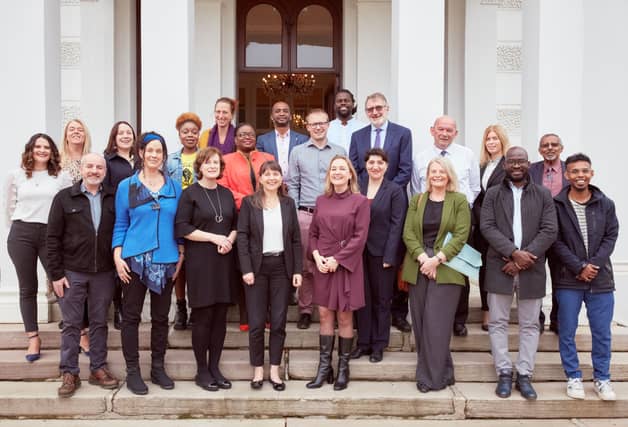

AN INNOVATIVE new collaboration between University of Limerick (UL) and the Department of Health will involve refugees and migrants directly in the development of public health policy.
UL has launched a new public health partnership between the World Health Organisation (WHO) Collaborating Centre for Refugee and Migrant Health, based in UL’s School of Medicine, and the Department of Health.
The Refugee and Migrant Health Partnership is funded by the Department of Health and is designed to involve refugees and migrants directly in the development of public health policy and will also fund bursaries for related teaching programmes and scholarships.
The WHO Collaborating Centre in UL is a designated centre of expertise that seeks to improve refugee and migrants’ meaningful involvement in health research.
The Centre is committed to Participatory Health Research (PHR) which positions migrants and refugees as expert partners in the co-production of evidence about their health.
The collaboration was launched by UL President Professor Kerstin Mey, who said; “We are so proud to have the WHO Collaborating Centre, led by Professor Anne MacFarlane, here at UL. It is a unique centre that positions migrants and refugees as expert partners in the co-production of evidence about their health.UL is highly committed to the United Nations Sustainable Development Goals and this partnership meets a number of those goals and more.This partnership will mean that the Department of Health is directly informed by the perspectives and lived experiences of refugees, migrants and their advocacy organisations.
Professor Mey continued; “The partnership will also contribute to further building the capacity of refugees and migrants to become involved as active agents in national and international public health responses, with the Department of Health, the HSE and specialist researchers in the Higher Education sector.We thank the Department of Health for funding the partnership and it will and has already made a genuine difference to the scholars and the quality of research conducted in this area – and ultimately to the health service itself.”
The launch heard from refugees, migrants and NGO partners linked to the WHO Collaborating Centre, the Department of Health, UL academics, students as well as colleagues from the WHO Health and Migration Office in Europe and from the Irish World Academy of Music and Dance at UL.
The launch was also a celebration of Public Patient Involvement (PPI) in research, taking place as one of the first events of the month-long PPI Ignite festival, a network of universities, statutory and community partners committed to embedding PPI in research.
See here for more information about the range of events taking place throughout October.