

'We're screaming!': Urgent plea to Government to open purse strings for Limerick's hospital

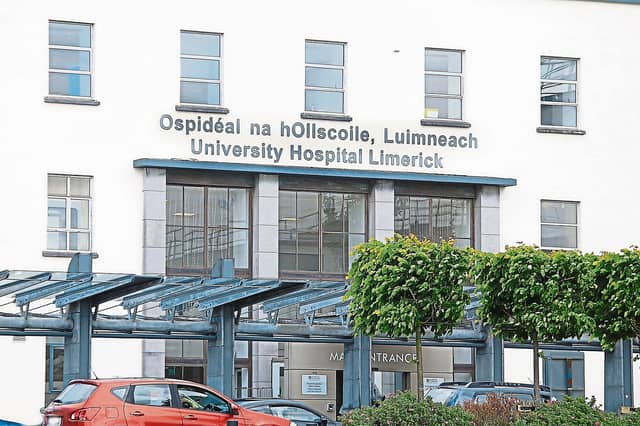

‘Time for action’: Regional plan needs to be devised for University Hospital Limerick as a matter of ‘extreme urgency’ to protect patient safety.
The MID-WEST is “screaming” for Department of Health funding to tackle overcrowding at University Hospital Limerick (UHL), with an action plan for the region needing to be devised as a matter of “extreme urgency” to protect patient safety.
That’s according to John Wall, chairman of the region’s Patient and Service User Council, who has warned that UHL cannot afford to wait for another patient to lose their life before further action is taken, as he called for hundreds of additional staff to be recruited, including up to 100 consultants across the Mid-West.
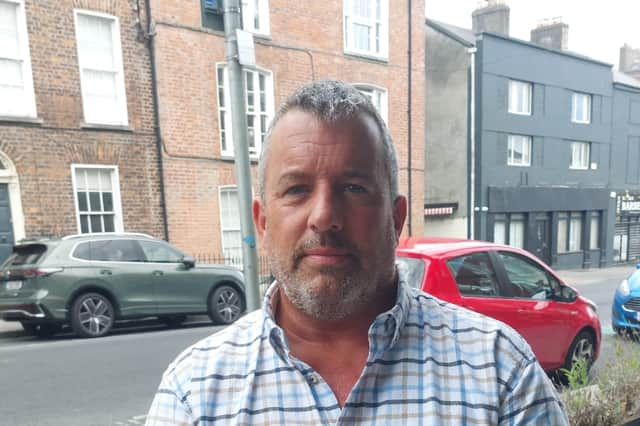
"On behalf of the people of the region: we are screaming, we are screaming here. We are issuing an instruction to the Department [of Health]: you need to release the funding necessary to the HSE, in particular to the Mid-West, to recruit the resources we need,” he told the Limerick Leader.
Health watchdog Hiqa has in the past estimated that UHL needs between 155 and 221 additional inpatient beds and Mr Wall's comments come after more than 1,350 people attended UHL's emergency department over four days earlier this month.
It meant what is known as a ‘surge protocol’ was activated.
This is a set of emergency measures activated when demand exceeds normal capacity, including opening additional beds, reallocating staff from elsewhere in the hospital and accelerating patient discharges and transfers to ease pressure on the ED.
The fact the surge happened outside the winter peak, when the ED is at its busiest, has caused shock, with Mr Wall saying: “It was a real eye-opener. You expect it during the winter. We've almost normalised it at that time of the year, as it's expected. Then it happens during the summer, and despite every ability to forecast, it just happened.”
"When something like this happens in August, we cannot stand idly by and wait for it to happen again, and wait for another headline that someone else has sadly lost their life. We have a responsibility to lobby and target those who can help us in the here and now," Mr Wall added.
Mr Wall said the situation at UHL is now worse than when HIQA examined the hospital and the wider Mid-West healthcare system, following years of concerns over overcrowding and patient safety, including those highlighted after the death of 16-year-old Aoife Johnston in December 2022.
With UHL now operating at “beyond saturation point”, the time has come for the Mid-West health region to be made a special case, he believes.
"The occupancy across the hospital is running at 120-odd percent. The recommended maximum is 85% and we are running consistently at 120%,” he said.
“In nearly every aspect of staffing, we are below par. We need to be staffed adequately in the region to provide the service. Unless we are, this problem will exist for the next several years,” Mr Wall added.
Asked how many new staff are required for UHL, he said: “All I know is from the conversations I have had and the council has had with the senior management team, you’re certainly talking in the hundreds. They need to lift the ban on agency staff: the management team are not allowed to hire agency staff. Yes, they cost more, but what cost do you put on a human life?
“We are short in the region of 20 consultants per 100,000 of population. If you consider the population of the region is 420,000 expanding to 450,000 up to half-a-million, you’re looking at 60 to 100 consultants,” he said.
These measures, he warned, would only bring the Mid-West – with its sole Model Four hospital at UHL – up to the same level of provision as other regions across Ireland in terms of healthcare.
“The pay-and-numbers strategy that has been adopted is out-of-date. The resources necessary in terms of staffing to alleviate the problems in the here and now – the budgets do not exist to allow the management team to hire the staff they they need. We are robbing Peter to pay Paul in every instance. You’re trying to shift resources across the region, but ultimately you are using the same resources for the vast majority of time,” Mr Wall stated.
There’s another factor at play, the chairman of the patients’ council argues.
That is that Limerick is suffering from a “funnel effect”, with people heading to UHL from across the region due to a lack of front-line medical services in their own areas.
“There’s no denying we do not have enough step-down and respite beds. There’s no denying we have an ageing population. There is a huge problem in rural parts of the region, because the rural GP numbers are nowhere near what they should be. It leads to that funnel effect,” he explained.
As for the around 4,000 staff who are working in UHL, he said: “The burnout is extraordinary”.
“The sustained levels and intensity of the workload staff are having to deal with. When I say staff, I’m going from the top to the bottom, it’s unsustainable. Do I have a concern for the welfare of staff and patients? Yes. Am I saying it’s unsafe? No. But I can quote the HIQA report which stated it was necessary to mitigate the ongoing risk to public safety. That’s still there - it’s worse.”
In a detailed statement, the Department of Health said it recognises the pressures facing health services in the Mid West and is committed to continuing investment in services across the region.
“The region has received substantial additional resources in recent years. The budget for the region has increased by €85 million (7.7%) in 2026 to €1,183 million, compared to the 2025 budget of €1,098 million. The Health Service Executive (HSE) workforce in the region has increased from just over 9,100 Whole Time Equivalent (WTE) at the end of 2020 to more than 12,200 WTE by June 2026, representing an increase of over 3,100 staff, or 34%. More than 300 additional staff have been recruited in the region during the first six months of 2026 alone.”
“Substantial progress is being made to increase capacity across the region. This includes the delivery of additional inpatient beds at University Hospital Limerick (UHL), the development of further bed capacity across Ennis, Nenagh and St John's Hospitals, and the opening of the Mid West Surgical Hub in Q4, which will significantly enhance access to elective care and reduce pressure on acute services,” the spokesperson added.
“The acquisition of the Raheen site by the HSE in March 2026, will enable the future expansion of healthcare infrastructure in the Mid West and provide additional capacity for the region. Central to the long-term strategy is the establishment of the Mid West Health Planning Board. The Board brings together senior HSE leaders, clinical experts, specialists in infrastructure and finance, and patient and service-user representatives. Its role is to provide strategic direction and oversight in developing a comprehensive Mid West Service and Infrastructure Plan that will ensure a sustainable, integrated, region wide model of care.”
“The Board will examine how services can be organised across acute hospitals, community healthcare, primary care and pre-hospital services to ensure patients receive the right care, in the right place, at the right time. Importantly, it will consider how services can be delivered closer to home where appropriate, reduce pressure on UHL, and ensure that existing and future healthcare facilities work together as part of an integrated regional network. The board will begin its work in September and finalise the delivery of the Service and Infrastructure Plan for the Mid West within nine months. While significant investments in infrastructure and workforce continue, the Board's work represents an important opportunity to put in place a credible roadmap for safe, accessible and sustainable healthcare in the Mid West, ensuring that decisions are informed by evidence, with regional input, and the needs of patients and communities.”
“Through this process, the Board and its members will look across short-, medium- and longer-term horizons, including five, ten, fifteen and twenty-year needs for services and infrastructure necessary to support the delivery of safe, high-quality and accessible healthcare for the people of Limerick, Clare and Tipperary. The Department will continue to work closely with the HSE to ensure that available resources are directed towards improving access, reducing waiting times and enhancing patient care throughout the Mid-West. Under Sláintecare, HSE Health Regions have devolved responsibility to prioritise staffing and services within their allocated budgets, ensuring resources are directed to greatest need while delivering efficiencies and reducing reliance on agency staffing. Within the funding and workforce resources allocated to them, Regional Executive Officers and their management teams are responsible for determining local priorities and deploying resources across services and settings,” the statement concludes.
Earlier this year, the Government moved to develop additional hospital capacity in Raheen, after the HSE secured a 44-acre site around 2km from UHL.
While welcoming the move, Mr Wall said it would not address the immediate crisis and would only alleviate pressure once the new facilities are operational.
When that happens is unclear with some forecasts pointing up to 15 years.