

Research from Limerick doctors proves that robotic surgery improves recovery

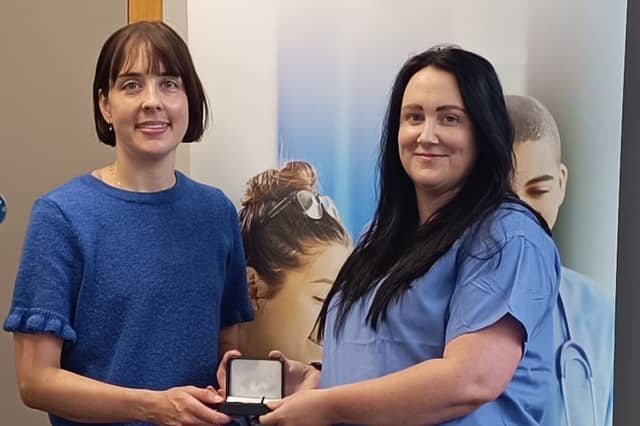

The research showed that patients who underwent robotic colorectal surgery in University Hospital Limerick or St John’s, in the Mid-West, had reduced post-operative inflammation
A CONFERENCE in Limerick has heard that patients who undergo robotic colorectal surgery benefit from reduced post-operative inflammation.
The annual Non-Consultant Hospital Doctor (NCHD) research conference in University Hospital Limerick (UHL) saw a record amount of interest from researchers.
Dr Taya Keating presented the winning paper at the research conference, showcasing research activity, audit and quality improvement initiatives completed by Non-Consultant Hospital Doctors working and training in the Mid-West.
Dr Keating is a general and colorectal surgery Senior House Officer (SHO) at UHL, which is one the country’s leading centres for robotic colorectal surgery.
Since the robotic programme was first set up in 2016, approximately 400 patients have had robotic colorectal procedures in UHL.
Robotic surgery is widely considered the international gold standard and is associated with improved patient outcomes and shorter recovery times.
The development of the robotic surgery programme, at both UL and St John’s, now includes colorectal, urology, gynaecology and general surgery and this has made the Mid-West a more attractive place for surgeons to work and train in.
Dr Keating and her colleagues presented their winning research, which compared post-operative markers of inflammation in colorectal patients who had undergone either robotic or laparoscopic (traditional keyhole) surgery.
Eight prior studies involving 1,706 patients were included in the review.
While both robotic and laparoscopic procedures are considered minimally invasive, the analysis showed that the enhanced precision of the robotic approach showed clear benefits with reduced tissue trauma and post-operative inflammation.
The analysis found in particular that CRP (C-reactive protein) levels, a surrogate marker for inflammation, were significantly lower post-operatively in patients who had undergone robotic as opposed to laparoscopic procedures.
“The adoption of robotic platforms has transformed colorectal surgery over the past decade,” explained Dr Keating.
“The high-definition 3D camera is superior in terms of visualisation and depth perception, in comparison with the conventional 2D laparoscopic camera. The surgeon can control all four arms from the robotic console and so these systems offer improved dexterity and precision.
“This aids in reducing tissue handling thus minimising local tissue stress and inflammation. These advantages translate into meaningful clinical benefits, including less post-operative pain, shorter hospitalisation, and fewer complications, compared with the laparoscopic approach,” she added.
Now in its sixth year, the conference is initiated by lead Non-Consultant Hospital Doctors (NCHD) in UHL in partnership with the postgraduate medical education and training office, under the leadership of Professor John McManus.
There was a record submission of 258 abstracts for this year’s conference - an increase of 13% on last year.
Abstracts were received from various disciplines including anaesthetics, emergency medicine, medicine, surgery, paediatrics, psychiatry, obstetrics and gynaecology, radiology, the intern network, general practice and public health.
Among the specialty winners this year were research projects on insulin pump therapy and socioeconomic background; ambulatory cellulitis management; quality of life of patients on dialysis; primary care prescribing patterns for GLP-1 medicines (e.g. Ozempic); and peri‑menopausal and menopausal symptoms in women with enduring severe mental illness. This year’s winners and abstracts also reflected the growing interest in the role of artificial intelligence in clinical research and decision-making.
Keynote speaker at this year’s conference was Professor Dara Byrne, HSE national clinical lead for simulation, who also participated in a clinical skills simulation for NCHDs on the day of the conference.
Professor Margaret O’Connor, deputy regional clinical director, education training and research HSE Mid-West said: “I extend huge congratulations on this year’s NCHD Conference, which achieved record attendance, record engagement with abstract submissions, and publication of the top 80 abstracts in the Irish Journal of Medical Science.
“The simulation workshops and Professor Dara Byrne’s keynote - on simulation and improving patient and system safety - were key highlights. This work is central to bringing research into clinical practice and promoting better care for patients.
“My sincere thanks to Mairead de Brún and Bryan Dunne from the training lead office for their excellent organisation, and to Professor John McManus, Alan Watts and the training lead team for their leadership and commitment.”