

Green Limerick: Limerick Council encourage public to survey woodland mammals
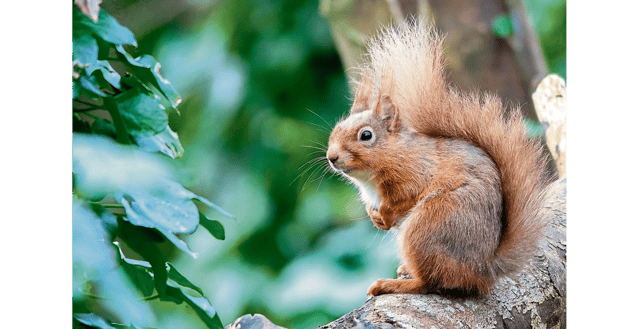

Members of the public are invited to record their sightings of the red squirrel, the grey squirrel and pine martens throughout, helping researchers build a detailed picture of how their populations are changing
LIMERICK City and County Council is encouraging the public to support the All-Ireland Squirrel and Pine Marten Survey to help track some of our most iconic woodland mammals – the red squirrel, the grey squirrel and pine martens.
Members of the public are invited to record their sightings of the three species throughout, helping researchers build a detailed picture of how their populations are changing.
The red squirrel is Ireland’s only native squirrel species, once widespread in forests and wooded areas. The introduction of the grey squirrel in 1911 has had devastating consequences on our native species through disease and competition for food, leading to the disappearance of red squirrels from large parts of the country.
For many years, the future of the red squirrel looked bleak. However, recent surveys have revealed a remarkable and unexpected turnaround, with the grey squirrel being knocked back in certain areas, and the reds showing signs of recovery.
In several regions, grey squirrel numbers have declined sharply, while red squirrels are showing encouraging signs of recovery.
Research linked this shift to the successful comeback of another native species, the pine marten - tree dwelling carnivores and one of the few predators that can successfully hunt grey squirrels.
Because the red squirrel evolved alongside pine martens, they are better adapted to avoiding them and can escape danger more easily.
Sinead McDonnell, biodiversity officer, Limerick City and County Council is encouraging Limerick participation in the survey.
“Encouragingly, very few grey squirrels have been reported in Limerick to date and sightings of pine martens are also low. We are hopeful that the continued relative absence of grey squirrels will persist. More reporting from the Limerick public will help to develop a clearer picture of the relationship between three species, she outlined.
Led by researchers in University of Galway, Ulster Wildlife and the Vincent Wildlife Trust, the survey aims to map the latest distribution of red and grey squirrels, and the pine marten across the island of Ireland. The 2026 survey is being delivered with the support of the National Biodiversity Data Centre in the Republic of Ireland and CEDaR in Northern Ireland.
Sightings of all three mammals can be recorded on the online survey form www.biodiversityireland.ie.
The survey is part of a long-running monitoring programme, with previous surveys carried out on four occasions since 1997, providing vital insights into long-term trends and conservation success.
Dr Colin Lawton of University of Galway’s School of Natural Sciences explained the significance of the new survey.
“In our most recent survey in 2019, we found that the grey squirrel had all but disappeared from 10 midland counties, and the red squirrel and pine marten were doing particularly well. However, the dynamics between the three species is finely balanced and we need to continue to monitor the animals to make sure things don’t change again. The greys continue to spread in the south and North-West, and they are doing particularly well in urban areas, where pine martens are very rare.”