

University of Limerick professor leads road safety research project
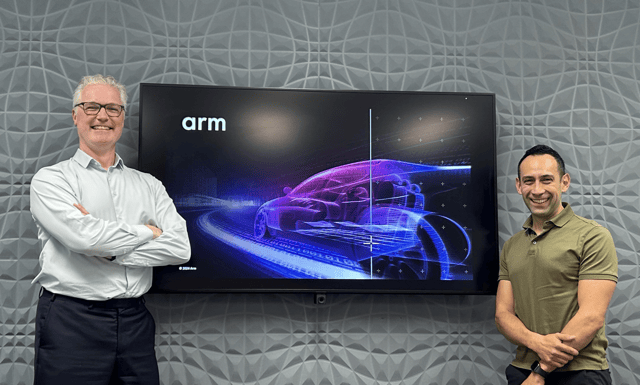

The collaborative project aims to develop next-generation car camera systems
UNIVERSITY of Limerick professor Patrick Denny is leading a new research project focused on the development of next-generation car camera systems.
Lero, the Science Foundation Ireland (SFI) Research Centre for Software, will work in partnership with Arm, the global semiconductor and software leader, for this four-year collaboration.
The research project, valued at €566,000, is designed to explore new technologies that will enable cars to see and react to their surroundings faster, more intelligently and more effectively.
The ARMADAS1 project will explore the optimisation of artificial intelligence to enhance how vehicles perceive their surroundings.
The project is designed to help reduce road accidents by modelling advanced imaging systems for vehicles that are more responsive than existing technology.
Professor Denny, of Lero, is associate professor in Artificial Intelligence, Machine Learning and Imaging at the University of Limerick and an expert in automotive imaging.
“As car camera systems become increasingly sophisticated and AI is deployed across the vehicle, this research aims to explore the potential of smarter, more responsive imaging systems optimised for computers rather than humans. The collaboration between Lero and Arm could revolutionise the way vehicles perceive their environments by optimising cameras and sensing systems for AI processing, enabling cars to sense and react faster to their environment,” explained Prof Denny.
“The automotive market is going through an unprecedented transformation and as part of this, we’re seeing an explosion in the demand for AI across the vehicle,” said Andy Rose, VP Technology Strategy and Fellow, Arm.
“Bringing together Arm’s technical expertise and market knowledge with Lero’s internationally recognised software and computer imaging research capabilities, this project has the potential to drive exciting new developments for next-generation automotive vision systems,” he added.
This research aims to benefit drivers, the public, and vulnerable road users. The project’s advancements have the potential to help make cars smarter and empower chip manufacturers to develop innovative new products for this market.