

Limerick college-led study on disinformation reaches a conclusion

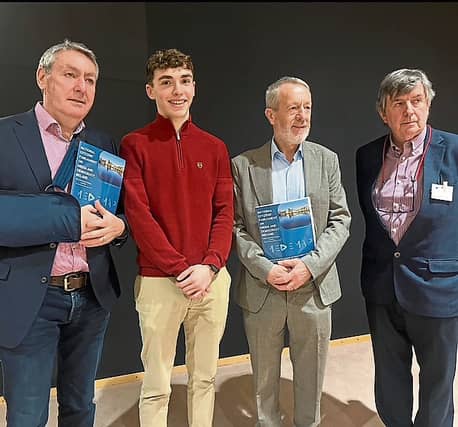

Citizens Assembly convened at Mary Immaculate College in spring of 2025
A MAJOR programme hosted by Mary Immaculate College and aimed at tackling misinformation and disinformation in the media across the world has reached its conclusion.
Mary Immaculate College joined nine other third-level colleges across Europe for MeDeMap, short for Mapping Media for Democracy.
It was a three-year European research project funded through the European Union’s (EU) Horizon programme.
It set out to identify future-proof pathways to strengthen democracy by improving accountability, transparency and effectiveness in media production, while expanding active and inclusive citizenship.
The central focus of the research examined what people make of their media and how they use it in their everyday lives.
Focus groups and in-depth interviews conducted across Europe provided a wealth of insight in how audiences engage with news and what they believe needs to change in order to better support democratic life.
Mary Immaculate College flew the flag for Ireland, and its research was led by Dr Rosemary Day, head of media and communication studies.
She was joined by researchers Jude McInerney and media studies lecturer Kathy Cush.
At the heart of the college’s research was the convening of a citizens’ parliament on media and democracy. Twenty local people selected from 60 applicants met across four sessions last spring.
Here, they deliberated how media can better serve democracy.
Their discussions explored the organisation of the Irish media landscape, the role of content in supporting democratic values and ways to enhance citizen participation in and through the media.
Some 22 resolutions came from that parliament, which were then presented to Limerick’s local authority, the Oireachtas, and members of the European Parliament and Commission in Brussels.
Recommendations included introducing media literacy and strengthening protections for journalists.