

Micheál Martin ‘not contemplating’ Omagh bomb inquiry in Republic
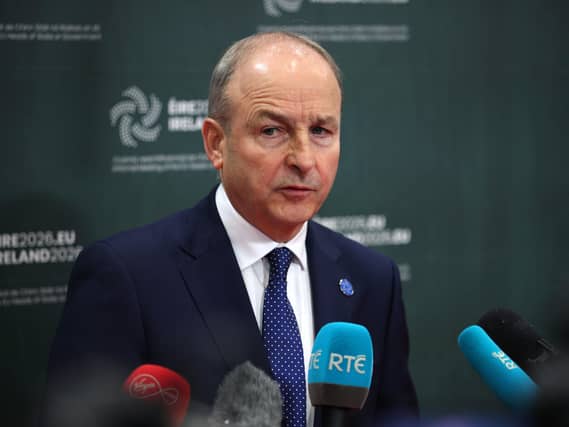

Irish deputy premier Simon Harris said it would be ‘unfair to rule out any further action’ after the current inquiry.
Irish premier Micheál Martin has said he is “not contemplating” a Government inquiry into the 1998 Omagh bombing, after evidence was heard relating to state entities in the Republic.
The Taoiseach said the Irish Government is “co-operating 100%” with the inquiry sitting in Belfast and added that he is surprised by the “daily commentary” on the proceedings.
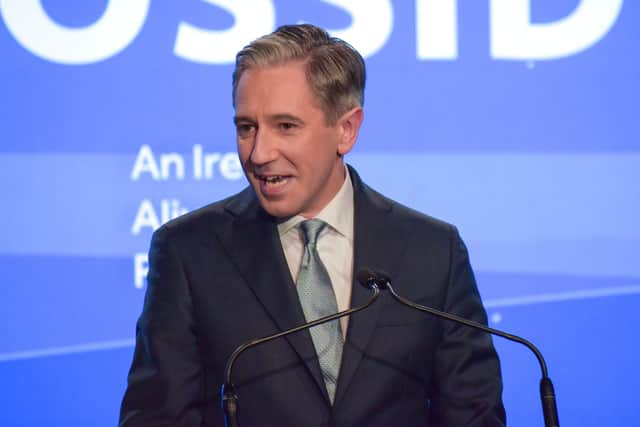
Tánaiste Simon Harris said it would be “unfair to rule out any further action” after the current inquiry.
On August 15 1998, a dissident republican car bombing in Omagh killed 29 people, including a woman who was pregnant with twins, in the worst atrocity of the Troubles.
The Omagh Bombing Inquiry, chaired by Lord Turnbull, is holding evidential hearings to determine whether the incident could reasonably have been prevented by UK state authorities, but has also heard evidence in recent weeks relating to Irish state agencies.
A former RUC/PSNI officer who was the lead investigator into the bombing, told the inquiry a “Garda-M15 source” had driven the car used in the attack across the border from the Republic.
Norman Baxter also said there were “strong indications that the Garda and the Irish Republic had knowledge of dissident Republican activity” which was not shared with the RUC or the PSNI, and expressed his belief that the Irish Government was “aware that a bomb was imminent”.
Bereaved families have reiterated calls for the Irish Government to launch their own public inquiry in light of what has emerged from the Belfast proceedings.
The Dáil passed legislation this year to allow sworn testimony to be given by current or former members of the Garda and the Irish army, as well as departmental officials or ministers, to the proceedings in Belfast.
Asked about evidence heard by the public inquiry, including about potential involvement of a Garda agent, Mr Martin said the probe must be allowed “to run its course”.
“Evidence will be given, we have to wait for the inquiry to adjudicate on that evidence and the totality of that evidence,” he said.
“I’m somewhat surprised that we’re now entering into a scenario of daily commentary on what transpires at an inquiry – that has never been the way.
“So we wait and see. We are co-operating 100% with the inquiry and we’ve sent thousands of documents to the inquiry, and that to me is sensible.
“Two parallel inquiries at the one time to me never made sense, and the key issue is that we work fully and 100% transparently with the Omagh inquiry, which we’ve agreed to do, and we are doing.
“And the important point is, let the inquiry get on with its work. Let the inquiry assess the evidence that’s been presented to it and come to its conclusions.”
Asked if he was “leaving the door open” to an inquiry by the Irish Government he said: “I’m not contemplating that at the moment. I think we should allow the current inquiry to complete.”
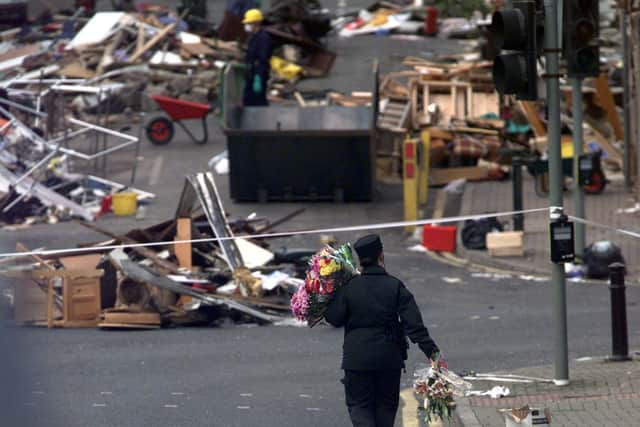
Mr Harris described the bomb attack as “one of the appalling moments on this island in terms of the loss of life”.
“I’ve been there representing the Irish Government on occasion with families and survivors, and the trauma and the pain and the quest for truth and justice is real, is profound, and must be addressed,” the Irish deputy premier said.
“The Irish Government’s position on this has always been very clear: while there is an inquiry ongoing in the north, we think it’s best to let that inquiry conclude its work, and then let’s see if there are questions that it has not been in a position to answer.
“We’ve obviously passed legislation through the Department of Justice to make sure that this jurisdiction complies fully with that, and I think now that that inquiry is up and running, we should allow that inquiry to conclude its work.
“I actually think there could be unintended consequences in the adverse if you were to run two parallel inquiries at the same time.
“So we keep a very, very close watch and brief on this matter.”
Asked if he would rule out an inquiry in the Republic once the Northern Irish inquiry had concluded he added: “The intention is to co-operate in full with the inquiry in the north. What I’m saying is, it would be premature, and I think I think quite frankly unfair to rule out any further action after that inquiry, people should allow that inquiry, and we should read the findings of that inquiry.
“The Irish Government, the people of Ireland, north and south, want answers to that most horrific, horrific situation… that took place in the north.”